Start with cockpit clearance and mounting, then decide whether a 34-inch, 21:9 screen suits your simulator and PC. Consider an OLED ultrawide if its stated response and contrast characteristics matter enough to you to manage persistent HUDs; consider a VA ultrawide if you want the same wide format with a conventional LCD panel. For either route, check the monitor’s dimensions, mount requirements and refresh rate on the connection you intend to use.
Who this choice affects
Drivers with limited cockpit space
A wider single screen is appealing only if it clears the wheelbase and fits the monitor mount. BenQ specifies its 34-inch EX3410R at 795.7 mm wide without the base, showing why the diagonal measurement alone cannot settle fit.
Drivers considering OLED for long stints
Fast manufacturer-stated pixel response and OLED contrast may matter to these drivers, while repeated sessions with fixed timing or telemetry displays make the monitor’s panel-care guidance part of the decision.
Drivers choosing a conventional LCD panel
A curved VA ultrawide keeps the single-screen, 21:9 format in consideration. These drivers still need to check the chosen model’s mounting details, adaptive-sync support and refresh rate on their intended input.
What to check when choosing
Measure the cockpit and establish the PC’s usable display mode before comparing OLED and VA panels. The priorities below distinguish the main need a consumer might put first; the checks remain relevant whichever panel type they choose.
| Concern |
What to check |
Who this matters to |
| Cockpit fit and mounting |
Compare width without the stand and monitor weight with the available clearance and mount rating; match the VESA pattern. |
If the wheelbase and monitor support leave little room, I need to know the screen can sit safely in the intended position. Around 20% of consumers put physical fit first. |
| Single-screen driving view |
Check 21:9 and 3440 × 1440 support in the simulator, then set the in-game view for the seating position. |
Without space for a triple-screen installation, I want more horizontal screen area from one display. For around 25% of consumers, that wide view is the primary concern. |
| Motion and connections |
Confirm the refresh rate at native resolution on the intended port, adaptive-sync compatibility and the PC’s attainable frame rate. |
During a long stint, I care more about a usable, consistent display mode than the largest headline Hz figure. Motion and connection compatibility come first for around 20% of consumers. |
| OLED and persistent HUDs |
Review the model’s OLED-care guidance and whether fixed HUD elements can be reduced or moved. |
If contrast and fast stated pixel response draw me towards OLED, I also need a plan for repeated sessions with fixed interfaces. Around 15% of consumers prioritise those OLED characteristics. |
| Conventional LCD ownership |
Compare the exact VA model’s panel, input modes and mounting details rather than assuming all VA monitors behave alike. |
I may prefer a conventional LCD panel while keeping the 34-inch ultrawide format. For around 20% of consumers, that panel choice is the leading priority. |
Mistakes to avoid
-
Buying by diagonal size alone
A 34-inch label does not tell you how much mounting width the screen needs. BenQ specifies the EX3410R at 795.7 mm wide without its base.
Measure the mounting span and wheelbase clearance, then check the monitor’s VESA pattern and weight against the mount’s limits.
If the existing support cannot position the screen safely, a different monitor arm or cockpit mount may be needed.
-
Assuming every port offers the headline refresh rate
Dell UK specifies the Alienware AW3423DWF at 3440 × 1440 up to 165 Hz through DisplayPort but 100 Hz through HDMI.
Check native-resolution refresh and adaptive-sync modes for the exact monitor input, PC output and cable you plan to use.
-
Treating OLED care as a guarantee
Long endurance sessions can leave timing and telemetry elements in fixed positions. ASUS describes its OLED-care features as measures intended to reduce burn-in risk, not eliminate it.
Follow the chosen monitor’s panel-care guidance and consider whether the simulator lets you change persistent HUD elements.
-
Choosing a display mode the PC cannot use well
A monitor’s native resolution and maximum refresh rate do not establish what a particular racing PC will deliver in a simulator.
Check your simulator’s frame rate at the intended resolution and graphics settings before making a higher refresh target central to the choice.
Reaching the intended frame rate may require changing graphics settings or PC hardware.
Relevant brands to consider
Alienware
Its documented 34-inch models include both VA and QD-OLED ultrawides.
- Dell UK lists the 3440 × 1440 AW3426DWM VA model at 240 Hz and the AW3426DW QD-OLED model at 280 Hz.
- Check the chosen model’s port-specific modes and physical fit; those figures do not establish how either screen will perform in your simulator.
LG UltraGear
The 34GS95QE-B is a documented curved OLED option for a single-screen cockpit.
- LG UK specifies a 34-inch, 3440 × 1440, 21:9 OLED panel with 800R curvature and 240 Hz refresh.
- Its stated specifications do not replace a cockpit-fit check or the panel-care decision for repeated static-HUD use.
ASUS ROG
The PG34WCDN is relevant when high-refresh OLED and its connection options are priorities.
- ASUS ROG UK specifies a 34-inch, 3440 × 1440 QD-OLED panel at 360 Hz, with DisplayPort 2.1a and HDMI 2.1.
- ASUS describes OLED Care Pro as a panel-care feature; confirm the PC’s usable display mode and follow the model’s static-image guidance.
BenQ MOBIUZ
The VA-based EX3410R has published dimensions and mounting details useful for cockpit planning.
- BenQ UK specifies 3440 × 1440 resolution, VESA 100 × 100 mm mounting and a width of 795.7 mm without the base.
- BenQ lists 144 Hz through DisplayPort and 120 Hz through HDMI, so the intended connection matters.
Samsung Odyssey
The Odyssey OLED G8 G85SD is another documented 34-inch OLED ultrawide option.
- Samsung UK lists the G85SD as an Ultra WQHD OLED monitor with a 175 Hz refresh rate.
- Check its mounted dimensions, intended input mode and OLED-care guidance for the cockpit and session length.
Joybuy ultrawide options
These 34-inch ultrawides cover curved VA and OLED choices for a single-screen racing cockpit. Compare each monitor’s fit and connection requirements with your own setup before choosing.
 No image available
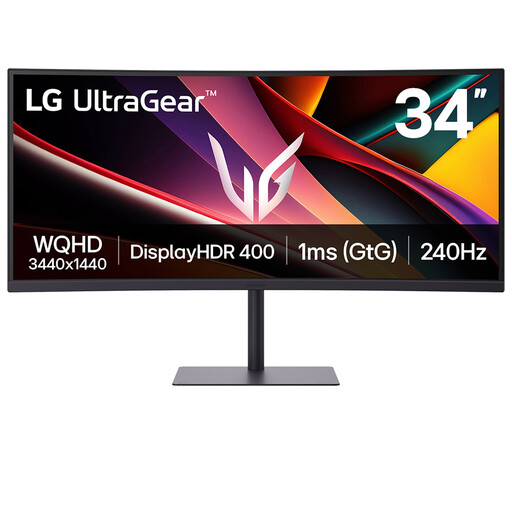
LG UltraGear 34G630A-B 34-inch VA monitor
A 34-inch VA choice for a single-screen cockpit where the wide format and a 240 Hz specification matter. Check the screen’s mounted width, the cockpit mount’s capacity and whether your PC and intended connection support the display mode you want.
View on Joybuy
 No image available
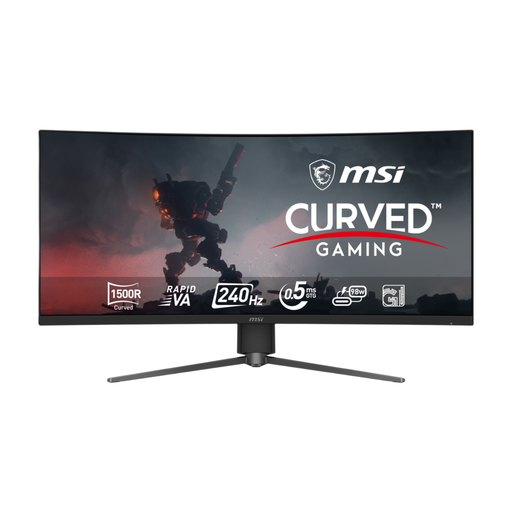
MSI MPG 346CQRF X24 34-inch curved Rapid VA monitor
A curved UWQHD option for drivers considering a conventional panel with 240 Hz and Adaptive Sync. Confirm the dimensions and weight for your intended mounting arrangement, as well as the mode supported by your PC and cable.
View on Joybuy
 No image available
Dahua 34-inch UWQHD 200 Hz curved VA monitor
A 3440 × 1440 single-screen option when physical-fit details help narrow the choice. The stated width without the base is 810.4 mm; check mount capacity and use the appropriate input if the 200 Hz mode matters, as the listed HDMI mode reaches 100 Hz at this resolution.
View on Joybuy
 No image available
LG UltraGear 34GX900A-B 34-inch OLED monitor
A 240 Hz OLED choice for drivers who prioritise this panel type in an ultrawide cockpit display. Persistent HUDs make its screen-protection guidance important; also confirm mounted dimensions and the 240 Hz mode available from your PC and connection.
View on Joybuy
 No image available
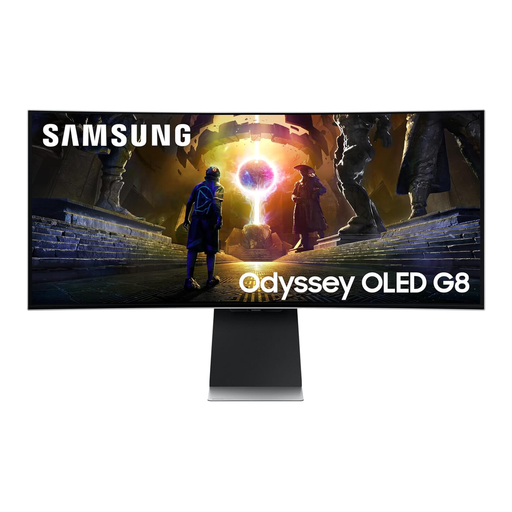
Samsung Odyssey G8 LS34DG850SUXXU 34-inch curved OLED monitor
A 175 Hz OLED ultrawide for a single-screen setup where that refresh target suits the PC. Confirm the mode available on your chosen input, mounted clearance and the model’s guidance for prolonged use with fixed HUD elements.
View on Joybuy
Questions about cockpit monitors
Will a 34-inch ultrawide fit a compact sim-racing cockpit?
It will fit only if its actual dimensions and mounting requirements suit your cockpit. Measure usable width and wheelbase clearance, then compare the mount’s pattern and load rating with the chosen monitor; BenQ specifies the EX3410R at 795.7 mm wide and 6.9 kg without its base, with VESA 100 × 100 mm support, but other models differ.
Should I connect an ultrawide racing monitor through HDMI or DisplayPort?
Use whichever connection supports your intended resolution, refresh rate and adaptive-sync mode on both the monitor and PC. Dell UK specifies the Alienware AW3423DWF at up to 165 Hz through DisplayPort but 100 Hz through HDMI at 3440 × 1440, so check the exact model and input rather than relying on its headline refresh rate.
Is OLED suitable for long sessions with a fixed racing HUD?
OLED remains an option if its display characteristics meet your priorities and you are prepared to follow the model’s care guidance for persistent images. ASUS describes OLED Care Pro and cooling features as measures intended to reduce burn-in risk, not as a guarantee against panel ageing.
Do I need 240 Hz or 360 Hz for endurance practice?
No particular refresh figure is necessary for every endurance setup. Check the frame rate your PC sustains in the simulator at the intended resolution and settings, then confirm that the monitor, input and cable support the mode you plan to use.


