
24/7 Customer Support

Free returns

Same-day & Next-day Delivery

Quality Guaranteed

Unlock Your Welcome Offers: FREE Delivery | Up to 80% OFF | Free 30-day JoyPlus trial
Download the APP
Capturing the thrill of a mountain bike descent, the serenity of an underwater dive or the winding roads from a motorcycle helmet requires a camera built for the job. A standard camera or smartphone often can't withstand the elements or stabilise the shaky footage. This is where a dedicated 4K action camera comes in, but navigating the market of different specifications and features can be a challenge.
This guide is designed to help you understand the key features that matter and to highlight a few standout models. Our goal is to provide clear, practical information so you can choose a camera that fits your adventures and your budget.
Before diving into specific products, let's break down the essential features. Focusing on these will help you narrow down your options and find the right tool for your needs.
For any activity involving movement, image stabilisation is arguably the most important feature. Shaky, jarring footage is difficult to watch. Most modern cameras use a form of Electronic Image Stabilisation (EIS), often enhanced by a gyroscope. An action camera with stabilisation smooths out the bumps and vibrations, which is essential whether you're using it as a vlogging camera while walking or as a helmet camera for motorcycle journeys. Look for models that specify 6-axis gyro stabilisation for reliable performance.
While "4K" is the headline feature, not all 4K is the same. The frame rate, measured in frames per second (fps), determines how smooth your video looks and your options for slow-motion.
Consider how and where you'll be using your camera. A waterproof action camera offers peace of mind against rain, splashes and full submersion.
Here are a few models that offer a compelling combination of features, performance and value for different types of users.
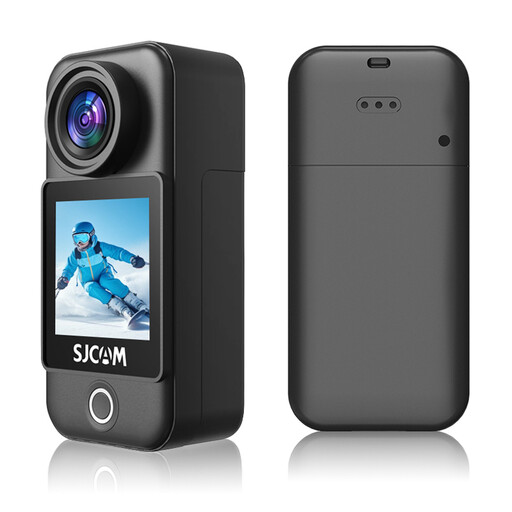
Why It Stands Out: The C300's main appeal is its incredibly small and lightweight design. Weighing only 55g, it's a true pocket-sized camera that doesn't compromise on core features. It's a strong contender for anyone seeking the best budget action camera that delivers solid 4K footage and reliable stabilisation without a hefty price tag.
Pros:
Who is it for? This is an excellent choice for beginners, casual vloggers or adventurers who want a simple, ultra-portable camera to capture moments without being weighed down. Its discreet size also makes it a great secondary or "B-cam" option.
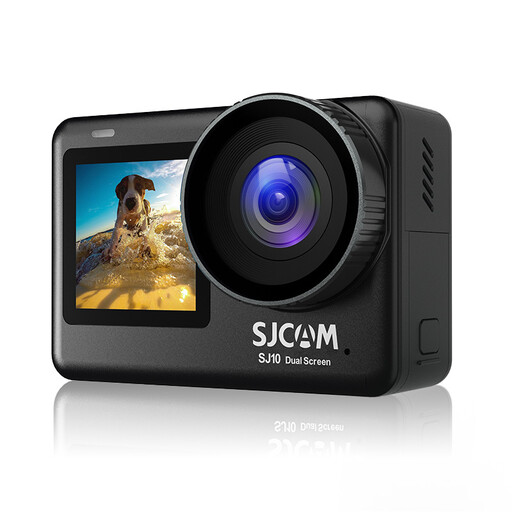
Why It Stands Out: The SJCAM SJ10 Pro steps up the functionality with its dual-screen design. The front-facing 1.3-inch display is a game-changer for vloggers and anyone who needs to frame their shots while in front of the lens. It combines this user-friendly feature with a more robust build and higher performance specifications.
Pros:
Who is it for? Content creators, vloggers and travellers who frequently film themselves will find the dual screens invaluable. It's a versatile mid-range option that balances advanced features with practical, rugged design.
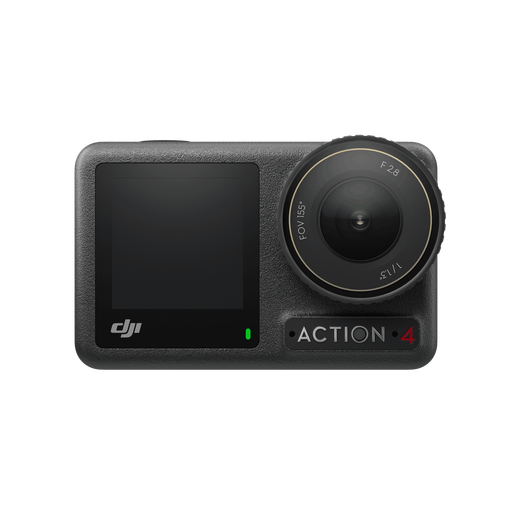
Why It Stands Out: The DJI Osmo Action 4 is geared towards users who demand high-end image quality and performance, especially in challenging conditions. Its large 1/1.3-inch sensor and 10-bit D-Log M colour profile allow it to capture stunning detail and dynamic range, particularly in low light. The Adventure Combo adds exceptional value with three batteries and a charging case, ensuring you're always ready to film.
Pros:
Who is it for? This camera is for serious adventurers, prosumers and content creators who prioritise image fidelity, low-light capability and a seamless workflow. It's an outstanding choice for diving, winter sports and producing professional-looking travel content.
While these three cameras cover a wide range of uses, your perfect match might have different specifications. If you need a camera for a specific purpose or simply want to compare more models, there are many other choices available.
Explore our complete collection to find a device that fits your exact needs. Discover a wider range of models on our Waterproof Action Camera category page.
The primary differences are design and purpose. Action cameras are built for durability, compactness and capturing motion. They are typically waterproof or water-resistant, feature advanced image stabilisation, and use a wide-angle lens to capture an immersive field of view. Regular cameras, while they may offer 4K, are generally not designed to withstand the same level of impact, vibration or weather conditions.
For many users, 4K at 30fps is more than sufficient for creating high-quality videos for sharing online. However, if you film fast-paced sports or want the ability to create smooth slow-motion effects in post-production, 4K at 60fps (or higher) is a significant advantage. It provides a smoother, more lifelike feel to action sequences.
It is one of the most critical features. Without effective stabilisation, footage from activities like cycling, skiing or even walking can be unwatchably shaky. A good stabilisation system, like the 6-axis gyro systems found in many modern cameras, corrects for this movement in real-time, producing smooth, professional-looking video. It's what separates usable action footage from a jarring mess.