Cockpit-layout learners
You want the forward view alongside virtual instruments, maps or learning material. A 21:9 screen is worth considering if your simulator supports its resolution and places essential controls where you can read them.


Choose a 32-inch 4K monitor if reading small virtual controls in a conventional 16:9 layout matters most; choose a 34-inch ultrawide if keeping the forward view and side panels visible together matters more. A 45-inch 5K2K ultrawide offers a much larger single-screen layout, but needs more room and a source device capable of the resolution and refresh mode you intend to use. Check simulator interface support and the monitor's OLED-care terms before committing to either format.
You want the forward view alongside virtual instruments, maps or learning material. A 21:9 screen is worth considering if your simulator supports its resolution and places essential controls where you can read them.
You spend more time reading small labels, head-up-display elements and control panels than seeking the widest view. A 32-inch 4K layout gives you a conventional 16:9 format for that priority.
You are learning simulation controls but also play faster games. Compare refresh modes at the resolution you plan to use, then check whether your source device, port and cable can deliver them.
For a dedicated room used to learn virtual spacecraft controls, decide whether readable instruments or a wider simultaneous view is your priority. Then check the simulator, connected device and physical space against the format you prefer.
Consider it when: You mainly need to read dense controls in a conventional screen layout.
Trade-off: It has less lateral space for a forward view and side panels than a 21:9 display.
Consider it when: Keeping cockpit and reference panels beside the forward view is the main reason for changing screens.
Trade-off: The benefit depends on how your simulator handles ultrawide views and interface scaling.
Consider it when: You have room for a substantially larger single-screen cockpit layout.
Trade-off: Check desk or mount fit and graphics capability; on LG's 45GX950A-B, the 330Hz mode uses a lower resolution than its native 5120×2160 mode.
| Concern | What to check | Who this matters to |
|---|---|---|
| Cockpit workspace | Check the simulator's 21:9 resolution and interface support, and whether the screen fits your intended position. | I want the forward view and virtual panels visible together rather than switching between them. For around 36% of consumers, cockpit workspace would be the primary concern. |
| Control readability | Compare native resolution and screen size, then check interface scaling from your usual seat. | Small instrument labels need to remain comfortable to read while I learn the controls; around 29% of consumers would put readability first. |
| Motion and connections | Confirm the intended resolution and refresh rate together on your source device, port and cable; check variable-refresh compatibility if needed. | I also play faster games and want a mode my connected system can deliver. Motion and connection fit would lead the choice for around 21% of consumers. |
| Lighting and OLED care | Assess reflections at the screen position and read the exact model's panel-care guidance and warranty terms. | Persistent cockpit elements and room lighting affect how I would use the display; roughly 14% of consumers would make those ownership considerations their main concern. |
LG UK specifies 165Hz at WUHD and 330Hz at the lower-resolution WFHD mode for the 45GX950A-B. Samsung UK also notes that refresh and response results can vary with input-source performance.
Choose the simulation resolution you intend to use, then confirm that the connected device, output port and cable support it at your target refresh rate.
ASUS ROG describes the PG32UCDM's thermal design and OLED Care features as ways to reduce burn-in risk, not eliminate it. Persistent cockpit controls make the exact model's guidance relevant.
Read its panel-care instructions and warranty wording before deciding how you will use a long-running interface.
A 21:9 specification tells you the screen shape, not whether a particular simulator positions menus, instruments and training overlays well on it.
Check supported resolutions and current interface documentation or screenshots for the simulator you plan to use.
An optional protection plan has its own terms. Separately, the UK Consumer Rights Act 2015 provides remedies for faulty goods under applicable conditions, including repair or replacement as explained in the Act's Section 23 notes.
Compare any plan's coverage, exclusions and duration with the manufacturer warranty, without treating either as a replacement for statutory rights.
These examples illustrate different monitor formats and features; the specifications and limitations below concern the named models, not every screen from each brand.
Samsung UK lists both the 34-inch G85SD ultrawide and the 32-inch 4K G80SD, giving you two distinct layouts to compare for cockpit learning.
LG UK's 45GX950A-B represents the very large, curved 21:9 OLED route for a dedicated setup.
The PG32UCDM is another 32-inch 4K OLED route for readers considering a conventional 16:9 control layout.
These choices cover a 32-inch 4K layout for detailed controls and several 34-inch ultrawide layouts for a broader cockpit view. Compare the exact monitor and your simulator before choosing between them.
 No image available
Consider this 16:9 option when reading detailed virtual controls matters more than extra horizontal workspace.
 No image available
Consider its ultrawide format if you want a forward view alongside virtual cockpit or reference panels.
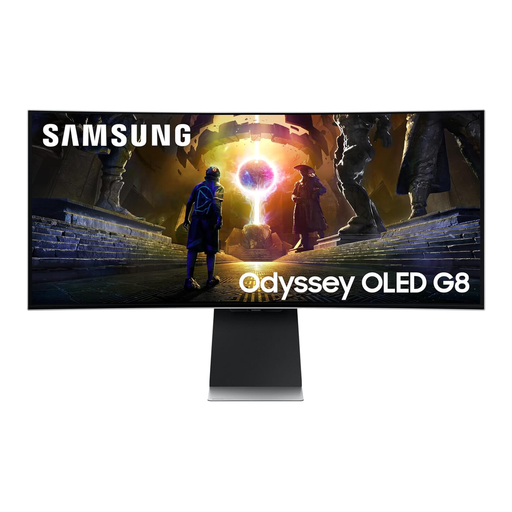 No image available
This is another 21:9 choice when keeping the forward view and cockpit panels on one screen is the priority.
 No image available
Its ultrawide layout is relevant if you want room for cockpit and reference material beside the forward view.
 No image available
Consider this 21:9 layout for a broad virtual cockpit, while checking how your simulator positions its controls.
Choose 32-inch 4K when small labels and a conventional 16:9 layout are your priority; consider 34-inch 21:9 when seeing a forward view and side panels together matters more. A 45-inch 5K2K layout also needs substantially more physical space and a source capable of your chosen mode. In every case, check how your simulator scales and positions its interface.
No: the available rate depends on the selected resolution and the connected device, port and cable. LG UK specifies separate 165Hz WUHD and 330Hz WFHD modes for the 45GX950A-B, while Samsung UK notes that refresh and response results can vary with input-source performance.
Read the exact model's panel-care instructions and warranty, and use its recommended care settings. ASUS ROG describes the PG32UCDM's heat-management and OLED Care features as reducing burn-in risk, not removing the need to consider persistent static content.
Statutory remedies may apply independently of a retailer's optional cover or change-of-mind policy. The explanatory notes to Section 23 of the UK Consumer Rights Act 2015 describe a consumer's right to require repair or replacement under the Act's applicable conditions, with the trader bearing the associated costs. Keep your order details and record the fault when contacting the seller.
Check an appropriate electrical-equipment collection or take-back route when replacing it. The UK Waste Electrical and Electronic Equipment Regulations 2013 address take-back of equipment from households; ask the retailer or your local authority which arrangement is available to you.