Map-and-UI clarity prioritiser
If small text, unit information and build menus need to stay readable, start with a 32-inch 4K screen. Check the game at your preferred interface scaling rather than judging clarity by screen size alone.


Choose a 32-inch 4K monitor if readable strategy-game menus and map detail in a familiar 16:9 layout matter most. A 34-inch ultrawide gives you more horizontal room, while a 45-inch 5K2K display calls for considerably more desk space and graphics capability. Whichever size you prefer, check the frame rates your PC can deliver at the resolution you intend to use before prioritising a very high refresh rate.
If small text, unit information and build menus need to stay readable, start with a 32-inch 4K screen. Check the game at your preferred interface scaling rather than judging clarity by screen size alone.
If you want room for a broad map or adjacent panels, consider a 34-inch ultrawide. A 45-inch 5K2K screen offers a substantially larger workspace, provided its size and native resolution suit your desk and PC.
If you also play faster games, compare refresh rates with the frame rates your PC produces at your chosen resolution. A higher monitor specification alone will not increase the frames the game renders.
Choose it when: Readable, detail-heavy interfaces and a conventional 16:9 layout come before extra width.
Trade-off: Running games at 3840×2160 places greater demands on the graphics card than 3440×1440.
Choose it when: Horizontal room for the game and adjacent information matters more than a 4K pixel count.
Trade-off: Check how your particular game handles a 21:9 interface.
Choose it when: A very large single-screen workspace is the priority and your desk and PC can accommodate it.
Trade-off: LG specifies its 45GX950A at 165Hz in native 5120×2160 mode; its 330Hz mode uses 2560×1080 instead.
| Concern | What to check | Who this matters to |
|---|---|---|
| Readable maps and menus | Compare native resolution, screen size and aspect ratio; check how your game displays small interface elements. | If I rely on small labels and dense map information, I want them legible without giving up useful screen area. Roughly 36% of consumers put this clarity need first. |
| Motion responsiveness | Check your game's frame rate at the intended resolution, then compare refresh rate and the stated response-time method. | Smooth scrolling matters to me, particularly if I also play faster games, but unused refresh capacity is less important than a setting my PC can sustain. Around 21% of consumers prioritise motion responsiveness. |
| Desk fit and connections | Measure desk depth and stand clearance; confirm that your PC output and cable support the intended display mode. | I need the larger screen to fit my desk and connect at the mode I plan to use. About 29% of consumers place setup compatibility ahead of the other concerns. |
| Panel care and electricity use | Read the exact OLED model's care and warranty terms; compare energy-label figures for the same SDR or HDR mode. | With persistent game panels on screen, I want to understand OLED care and ongoing electricity use before choosing a display. Roughly 14% of consumers make these ownership considerations their primary concern. |
A monitor's refresh rate is not the frame rate your PC produces. The product information notes very high refresh rates tend to matter more in fast shooters and racing games than in slower or turn-based strategy games.
Check performance results for your game, graphics card, resolution and settings before deciding how much refresh capacity you need.
Joybuy Insights notes that a 1ms MPRT figure can involve backlight strobing; it is not interchangeable with a grey-to-grey, or GtG, measurement.
Identify the measurement method and compare like with like rather than choosing on the lowest number alone.
A large curved screen needs enough desk depth and a usable viewing position. The Health and Safety Executive identifies poor workstation design as a contributor to discomfort and eye strain.
Measure the available space, including the stand or monitor-arm clearance, and check the adjustments offered by the exact model.
A different mount or changes to the desk setup may be needed to position a large display.
Strategy-game menus and heads-up displays can remain in place for long sessions. OLED care features should not be treated as a guarantee against burn-in.
Read the exact model's panel-care guidance and warranty terms. For electricity use, compare the same SDR or HDR mode on electronic-display energy labels.
LG's 45GX950A is a reference point for the very large ultrawide route.
Dell's Alienware AW3225QF illustrates the 32-inch 4K OLED route.
The ROG Swift OLED PG34WCDM represents the 34-inch 3440×1440 ultrawide OLED route.
The EX321UX is a 31.5-inch 4K alternative for buyers considering IPS Mini-LED rather than OLED.
These monitors cover 32-inch 4K and 34-inch ultrawide options for large-screen strategy play. Compare their exact display modes, desk fit and panel-care requirements against your own game and PC.
 No image available
Consider this 4K option if map detail and a conventional large-screen layout are priorities.
The product name specifies 3840×2160, 165Hz, 0.03ms GtG and USB-C with 65W power delivery.
For prolonged use with persistent game panels, check the exact OLED warranty and care guidance. Confirm that your PC connection supports the resolution and refresh rate you intend to use.
 No image available
Consider this ultrawide if horizontal workspace matters more to you than a 16:9 layout.
The product name specifies 3440×1440, a VA panel and 1ms MPRT; MPRT should not be compared directly with GtG figures.
The listed 200Hz mode at 3440×1440 uses DisplayPort; the stated HDMI limit at that resolution is 100Hz. Check your connection and the game's ultrawide interface before choosing it.
 No image available
This is another 34-inch ultrawide option if you want a wider strategy-game workspace.
Check the exact native pixel resolution if small interface text is decisive, as well as your game's ultrawide layout and the space available on your desk.
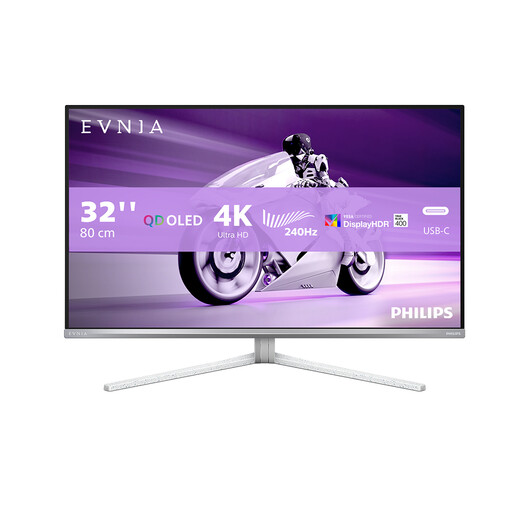 No image available
Consider this 32-inch 4K model if a conventional layout and detailed strategy-game interface are your priorities.
Confirm the refresh rate and response-time figures for the exact model before relying on them for your choice. For persistent menus and HUDs, read its OLED care and warranty guidance.
Not necessarily: choose a refresh target after checking the frame rate your PC can produce in your game at the intended resolution. The product information notes very high refresh rates generally offer a stronger case for fast shooters and racing games than for slower or turn-based strategy games.
Choose the 45-inch ultrawide for its larger workspace only if it fits your desk and your PC can handle its native resolution; choose 32-inch 4K when readable detail in a conventional 16:9 layout is the priority. LG specifies 5120×2160 for its 45GX950A, while Dell specifies 3840×2160 for its 32-inch AW3225QF.
Yes, but account for static-content care when choosing one for long sessions. ASUS describes measures intended to reduce burn-in risk on the PG34WCDM; check the exact monitor's care instructions and warranty rather than treating those measures as a guarantee.
Compare their electronic-display energy-label consumption figures in the same viewing mode, rather than relying on the energy class alone. Energy Saving Trust explains that these labels give consumption per 1,000 hours separately for standard dynamic range and high dynamic range.