
24/7 Customer Support

Free returns

Same-day & Next-day Delivery

Quality Guaranteed

Unlock Your Welcome Offers: FREE Delivery | Up to 80% OFF | Free 30-day JoyPlus trial
Download the APP
A5 wirebound notebooks are compact enough for a rucksack or handbag while providing more writing room than pocket notebooks. They suit students, teachers, office professionals, journal writers and anyone who prefers pages that can open flat.
However, product descriptions can make similar notebooks sound interchangeable. A low price may hide a small page count, while an attractive cover may be paired with thin paper or a binding that does not suit frequent use. Before choosing among A5 notebooks, check the specifications that affect day-to-day usability rather than relying on cover design alone.
Some listings describe the number of sheets, while others refer to pages. One sheet has two sides, so these figures are not always directly comparable. Check whether the listing states sheets or pages, and consider the ruling and margins as well. A notebook with fewer, thicker sheets may feel different from one with a larger total page count.
“Spiral”, “wiro” and “wirebound” can describe similar formats, but the construction and flexibility vary. A notebook that opens flat is more comfortable for lectures, meetings and desk-free note-taking. A 360-degree opening also allows you to fold the cover behind the pages, reducing the space needed on a small desk.
Paper weight is normally shown in gsm, meaning grams per square metre. 80gsm paper is common for everyday ballpoint pens and pencils, while 100g paper may offer a more substantial writing surface. Neither figure guarantees that every ink will avoid show-through, so users of fountain pens, gel pens or wet ink should still write carefully and check the product information.
A wirebound notebook can be more practical than a glued notebook when you need to turn pages quickly or write across a flat surface. Look for:
Wirebound notebooks are not automatically suitable for filing. If you need to archive notes, choose a product with pre-punched holes or removable pages.
For structured notes, lined notebooks are usually more convenient than plain paper. Check the ruling measurement where supplied; an 8mm line spacing, for example, gives a little more room for larger handwriting than a narrow ruling.
Also compare:
A flexible card cover keeps weight down, while hardcover notebooks provide more support when writing away from a desk. An elastic band can help keep loose notes enclosed in a bag.
For revision, projects or multi-subject use, notebooks with dividers or project books can reduce the need to carry several separate pads. A5 dimensions are approximately 148 × 210mm, although the outer cover may be slightly larger.
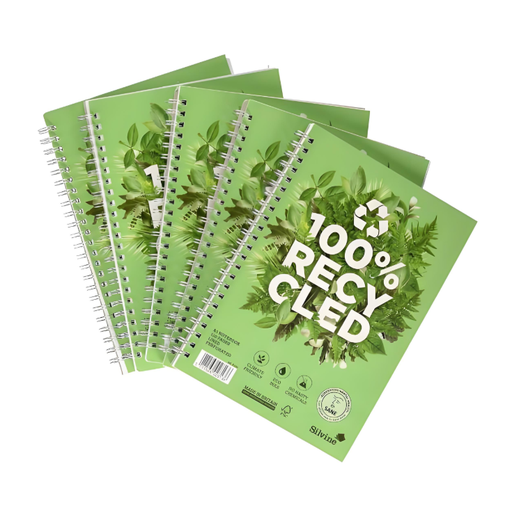
Why This Fits Their Persona: A five-pack gives students, home users or shared households several notebooks for lectures, lists and everyday notes without buying each one separately.
The listing specifies five notebooks, 120 lined pages per notebook and 80gsm recycled paper, making the quantity and paper format clear.
Four-hole punched pages, perforated sheets, 360° opening and UK-manufactured recycled paper.
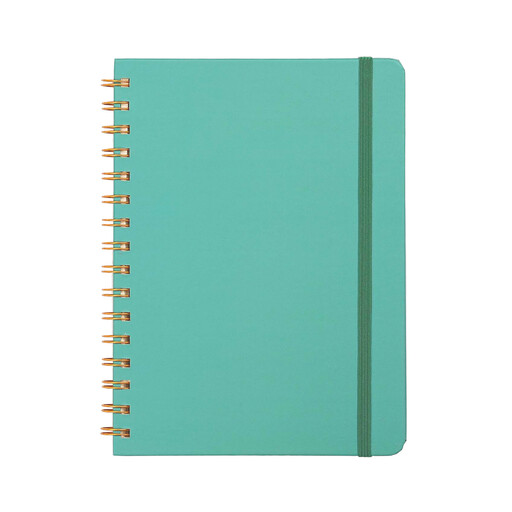
Why This Fits Their Persona: The hard cover and elastic closure suit office professionals, journal writers and gift shoppers who prefer a more structured notebook.
Its stated 100g cream offset paper and hardcover construction provide more specification detail than a listing focused only on appearance.
96 sheets of cream ruled paper, twin-wire binding, textured laminated cover and elastic closure band.
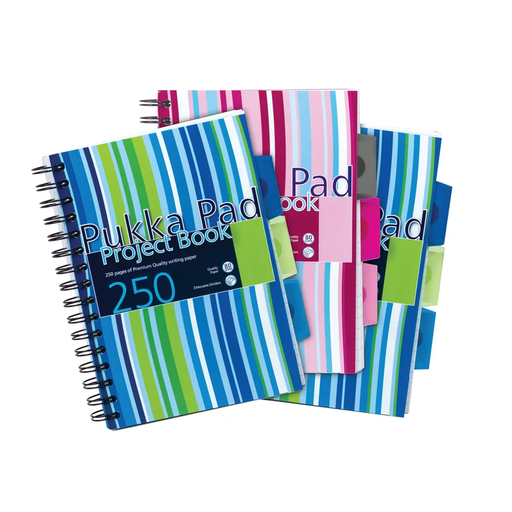
Why This Fits Their Persona: Students, teachers and project-heavy office users can separate subjects, meetings or tasks without carrying multiple loose folders.
The product states its organisation features clearly: three repositionable dividers with storage pockets and 250 pages per project book.
8mm lined, 80gsm FSC Certified paper, repositionable dividers, storage pockets and a three-pack format.
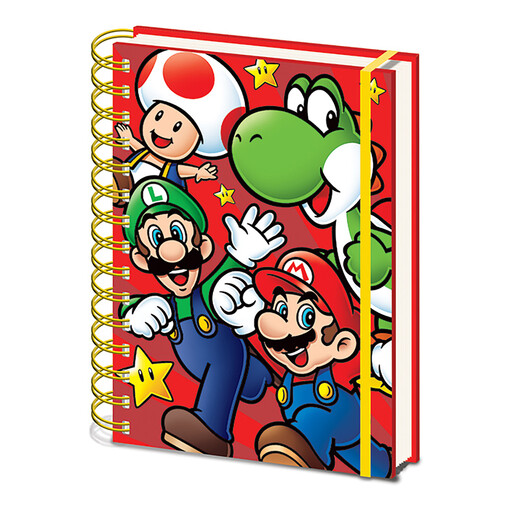
Why This Fits Their Persona: A recognisable licensed design can make everyday writing or gifting more personal for gamers and younger stationery shoppers.
The listing identifies the A5 format and wire binding, so the decorative cover is accompanied by practical size and page-handling information.
Durable wire binding, A5 portability and a Super Mario cover design for notes, sketches or schoolwork.
For lectures and revision, prioritise lined notebooks that open flat and are easy to carry between classrooms. A project book with dividers can be useful when several modules or subjects need to stay together.
For office notebooks, consider whether pages need to be removed or filed. Pre-punched and perforated pages can be more practical for reports, meeting notes and shared documents.
For journalling, a hardcover spiral notebook with cream paper and an elastic closure may offer a more enclosed, organised format. For Disney notebooks or a Super Mario notebook, check the product details for the actual binding, size and paper specifications rather than choosing on artwork alone.
We have compiled a complete, real-time list of products that fully satisfy these strict selection criteria and UK safety regulations.
Yes. Their approximately 148 × 210mm format fits many school bags, while wire binding allows pages to turn quickly and the cover to fold behind the writing surface. Students should compare page quantity, ruling and whether the notebook includes dividers or filing holes.
Lifespan depends on how it is carried and handled. A durable cover, intact wire loops and dry storage can help preserve it. Avoid overfilling the notebook, bending the wire or placing it under heavy pressure in a bag. Moisture can warp paper and affect printed covers.
Recycled paper can be suitable for ballpoint pens, pencils and many standard writing tasks. Check the stated gsm rating and ruling before buying. For wetter inks, test a page where possible, as paper behaviour varies between products even at a similar weight.