
24/7 Customer Support

Free returns

Same-day & Next-day Delivery

Quality Guaranteed

Unlock Your Welcome Offers: FREE Delivery | Up to 80% OFF | Free 30-day JoyPlus trial
Download the APP
Whether you are preparing a Sunday roast, baking for a school fête or organising a buffet, aluminium foil trays can reduce washing-up and make food easier to transport. However, not every tray suits every task. A shallow pie dish will not replace a deep roasting tray, while a flimsy disposable foil tray may struggle with a heavy casserole.
The right choice depends on more than price and pack quantity. Here are the main buying pitfalls to avoid, followed by practical recommendations for different UK kitchens and events.
A tray’s footprint does not tell you how much food it can hold. Depth and capacity matter just as much, particularly for lasagne, casseroles, curries and dishes with sauces.
For example, a 40mm-deep foil pie dish may be more suitable for a generous filling than a wider but shallow plate. If you are preparing food for a group, check the measurements and capacity before buying rather than relying on descriptions such as “family-sized” or “catering”.
Many ovenable aluminium trays are designed for conventional ovens, but that does not mean they are suitable for microwaves, open flames or direct contact with heating elements. Some products are also suitable for freezer storage, while others only provide oven and serving functions.
Always follow the product packaging and place flexible trays on a rigid baking sheet. This provides support when carrying liquid fillings in and out of the oven.
Aluminium is widely recyclable, but acceptance varies between UK councils and recycling collections. Trays generally need to be cool and reasonably free from food residue. Heavily soiled foil may not be accepted.
“Disposable” also does not necessarily mean the tray should be thrown away after one use. Some sturdier trays and foil serving platters can be washed and reused where appropriate. Check the product information and local recycling guidance rather than relying on a broad environmental claim.
Look for clear information about aluminium foil construction, food-contact suitability and oven use. Aluminium transfers heat efficiently, making it practical for pies, bakes and roasting. It is also lightweight for catering and takeaway service.
Do not place aluminium trays directly over gas burners or other exposed heat sources unless the packaging specifically permits it. Use oven gloves and handle the tray from underneath, particularly when it contains hot liquid or a large roast.
Match the tray to the food you plan to prepare:
For party food trays, also consider whether the shape fits your oven shelves, fridge and storage boxes. Rectangular trays often make efficient use of shelf space, while round foil pie dishes are useful for consistent baking.
A two-pack may suit a family meal, whereas a larger pack of disposable baking trays can be more economical for a bake sale or commercial kitchen. Foil trays with lids are particularly useful when food must be chilled, stacked or transported.
Lids should generally be fitted after hot food has cooled slightly, unless the product instructions state otherwise. This helps reduce condensation and makes storage more practical.
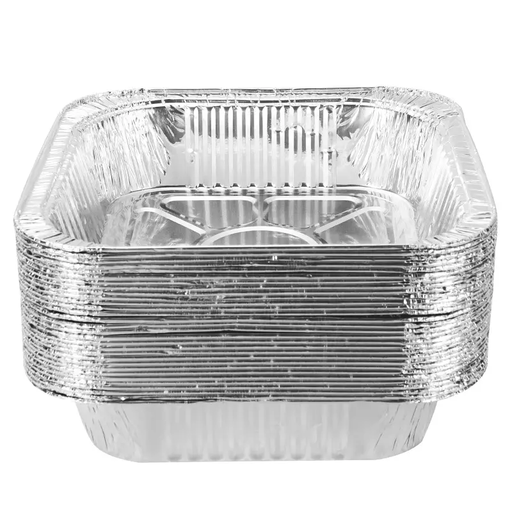
Why This Fits Their Persona: A 30-piece pack is suited to home bakers, party hosts and community events that need several small trays without buying catering quantities.
The stated 7-inch square format makes portion planning clearer than relying on vague size labels. Use a baking sheet underneath for stability.
30 pans per pack; square format for brownies, casseroles and individual bakes.
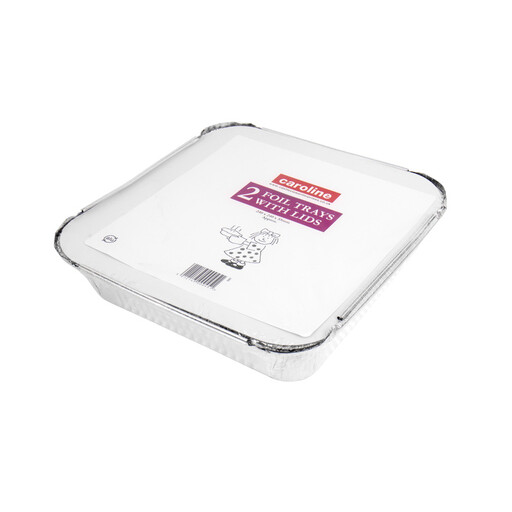
Why This Fits Their Persona: Useful for organised meal prep, office lunches and entertaining where cooking, storage and transport need to work together.
The listed 239 x 239mm size, 35mm depth and included lids provide measurable information for planning portions and carrying food.
Pack of two; ovenable and recyclable foil; matching lids for storage and transport.
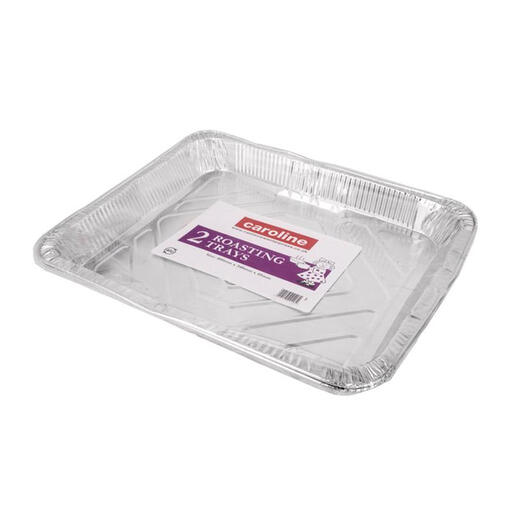
Why This Fits Their Persona: The larger footprint and deeper profile suit family meals, Sunday roasts, batch cooking and event preparation.
Its stated 400 x 340mm dimensions and 45mm depth make it easier to check oven fit and liquid capacity before purchase.
Pack of two; listed as oven-safe and freezer-safe; 45mm depth for substantial dishes.
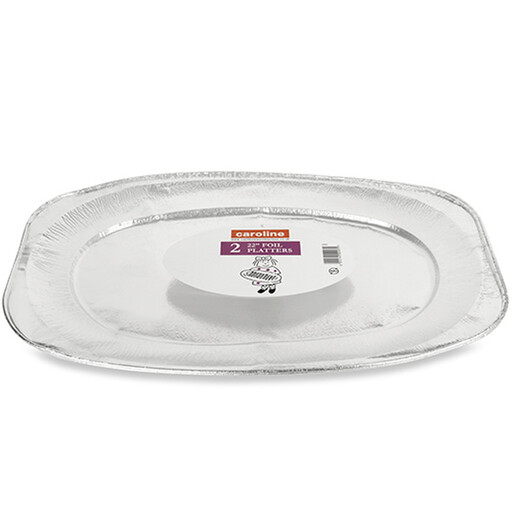
Why This Fits Their Persona: A broad serving surface suits buffets, weddings, community events and catering displays where presentation space is important.
The published 550 x 362 x 28mm dimensions clarify that this is primarily a large serving platter, not a deep roasting pan.
Pack of two; large presentation area; listed as reusable and recyclable.
We have compiled a complete, real-time list of products that fully satisfy these strict selection criteria and UK safety regulations.
Many products are designed for oven use, including ovenable aluminium trays, but suitability depends on the individual product. Check the label for temperature limits and use a baking sheet underneath when carrying filled trays.
Often, clean aluminium trays can be recycled, but collection rules differ between councils. Empty and wipe the tray where possible, then check your local authority’s guidance. A heavily food-soiled tray may not be accepted.
Some sturdier recyclable foil trays and foil serving platters can be washed and reused for suitable tasks. Inspect the tray after each use and do not reuse it if it is torn, badly creased or losing its shape.