
24/7 Customer Support

Free returns

Same-day & Next-day Delivery

Quality Guaranteed

Unlock Your Welcome Offers: FREE Delivery | Up to 80% OFF | Free 30-day JoyPlus trial
Download the APP
Frizz is rarely caused by one problem. UK weather can shift from dry indoor heating to rain and high humidity within the same day, while colouring, bleaching, frequent blow-drying and hard-water exposure may leave hair more porous and difficult to manage. The right anti-frizz hair products should match your hair texture, styling routine and the type of finish you want.
However, product pages often make smoothing sound simpler than it is. Before buying, watch for these common pitfalls.
A silicone-based serum or gloss can make the surface look smoother immediately, but a shiny finish is not necessarily the same as humidity resistance. A finishing product may be useful for flyaways and dull ends, yet it may not replace a heat-activated treatment or a dedicated humidity-resistant hair product.
Strong styling polymers may help straight styles stay in place, but too much product can make fine hair feel coated or leave curls stiff. Curly and coily hair usually benefits from moisture and flexible definition, while thick, straight hair may need stronger smoothing and controlled heat.
A heat protection spray is not automatically a blow-dry accelerator, straightening spray or conditioning serum. Check whether it is designed for damp hair, dry hair or both. Also look for clear instructions on temperature limits, application quantity and whether heat is required to activate the formula.
For daily frizz control hair products, consider the texture first:
Review the ingredient list if you are sensitive to fragrance, alcohol or particular preservatives. Cosmetic products should also carry appropriate usage directions and warnings. Stop use if irritation develops and avoid contact with the eyes.
If damp weather is your main concern, look for wording such as humidity resistance or moisture-blocking technology, but treat duration claims as product-specific rather than guaranteed for every head of hair. Application technique matters: some formulas need thorough blow-drying with tension to form a smoother finish.
For frequent heat styling, select products that clearly describe heat protection. A hair straightening spray may be suitable before blow-drying and flat-ironing, while a blow-dry spray may focus more on reducing drying time. Neither removes the need to use a sensible temperature and keep the tool moving.
When buying a straightener or multi-styler, check:
Never use electrical styling tools near water. Hair should be dry or only slightly damp if the instructions permit it; a conventional straightener should not be used on wet hair.
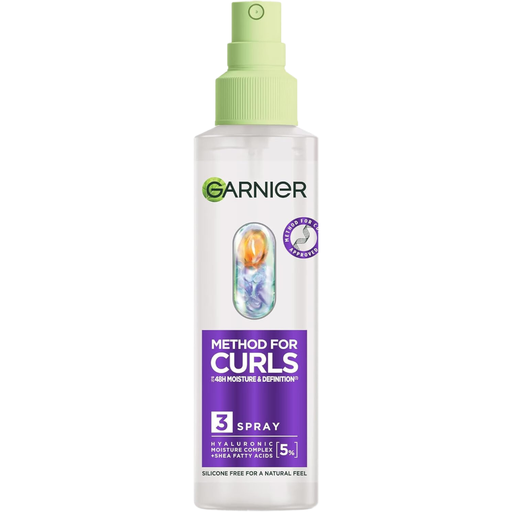
Why This Fits Their Persona: A straightforward starting option for shoppers who want moisture and curl definition without adding a separate cream and serum to their routine. It can be applied to damp or dry curly and coily hair.
Its spray format makes it easier to control the amount, reducing the risk of applying a heavy layer to curls.
Vegan formula; contains glycerin, shea butter and sodium hyaluronate; silicone-free according to the supplied product information.
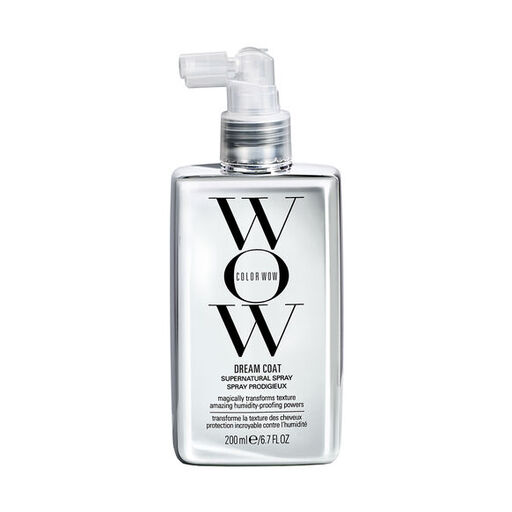
Why This Fits Their Persona: A suitable match for shoppers seeking a dedicated smoothing step before a polished blow-dry, particularly when rainy or humid UK conditions affect the finish.
The instructions clearly state that it is heat-activated and should be blow-dried with tension, rather than treated as an instant dry-hair gloss.
Lightweight spray; designed to resist humidity; supplied in a 200ml size and listed as suitable for colour-treated hair.
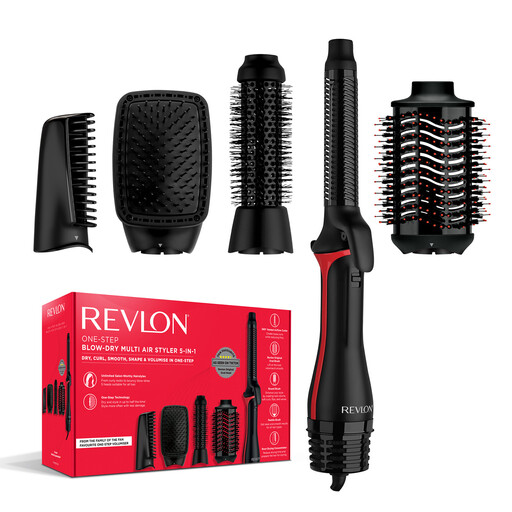
Why This Fits Their Persona: Designed for households that alternate between drying, smoothing, straightening, curling and root-volume styling rather than using one dedicated tool.
The five attachments have defined functions, helping buyers assess whether they will actually use the versatility rather than paying for unused accessories.
Includes low, medium, high and cool-shot settings; UK-standard voltage is listed; attachments cover drying, curling, smoothing and volume.
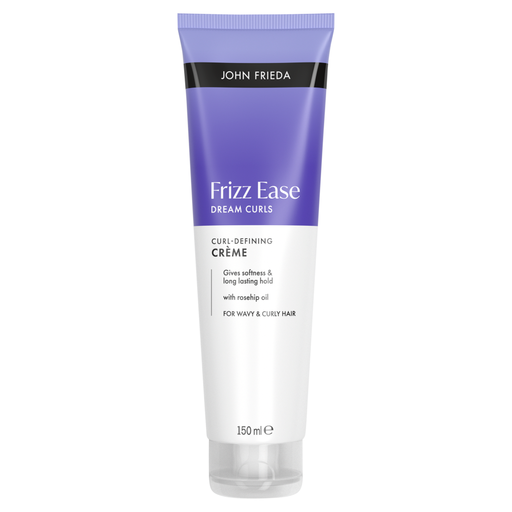
Why This Fits Their Persona: A practical choice for wavy and curly hair that needs shape, softness and manageable hold when air-drying or diffusing.
The recommended pea-sized starting amount helps prevent the heavy, crunchy feel associated with over-applied curl products.
Suitable for curl patterns listed as 2A–3C; can also be used sparingly to refresh second-day curls; vegan formula.
We have compiled a complete, real-time list of products that fully satisfy these strict selection criteria and UK safety regulations.
Start with a suitable shampoo and conditioner, then apply one main styling product to towel-dried hair. Avoid layering several heavy formulas before you know how your hair responds. For straight styles, a smoothing treatment or hair straightening spray can be followed by controlled blow-drying. For curls, use a curl defining cream and scrunch rather than brushing the hair repeatedly while it dries.
A small amount of hair serum for dry hair can be applied to mid-lengths and ends after styling. For non-wash days, a curl refreshing spray may restore shape without adding another full wash. Colour-treated hair should be handled gently, with lower heat and products whose packaging specifically discusses colour care.
Choose a product that specifically lists humidity resistance, then follow its application instructions closely. Heat-activated sprays generally require complete blow-drying, while a serum may provide surface smoothing and shine but less structural hold.
Longevity depends on the formula, hair porosity, washing frequency and weather. Some products specify performance through several shampoos; others are intended for every styling session or daily touch-ups. Treat any duration as an indication from the product information, not a universal guarantee.
It may reduce the need to buy and store multiple appliances, but electricity use depends on wattage, styling time and frequency. Check the appliance rating and avoid prolonged high-heat use. A cool-shot setting and lower heat options can help you adjust the routine to your hair rather than running every session at maximum temperature.