Who needs which kind of drive?

Small-desk artwork archivists

If the drive will sit beside a laptop, compare its physical dimensions and cables as well as its capacity. Kingston’s compact XS1000 and Crucial’s X10 Pro show why the exact model matters: their stated sizes and capacity ranges differ.

Cross-device creative users

If artwork moves between a Mac, Windows PC, tablet or phone, check which devices can read and write the drive, which cables come with it and whether its file system suits the workflow. Toshiba describes Canvio Flex support for compatible devices and supplies USB-A and USB-C cables; compatibility still depends on the devices used.

Active-project backup users

If you repeatedly copy large, layered projects as well as finished work, an SSD’s rated transfer speed may matter. Samsung and Crucial both specify host requirements for their portable SSDs, so a USB-C-shaped socket alone does not establish the speed you will get.

What matters when choosing?

Compact portable SSD

Choose it when: The drive needs to occupy little desk space and you often move large artwork files.

Trade-off: A particularly small line such as Kingston XS1000 tops out at 2TB; check your archive size before choosing it.

Rugged portable SSD

Choose it when: Your artwork archive also travels and stated resistance features matter to you.

Trade-off: Samsung says its T7 Shield resistance claims come from controlled tests, actual resistance can vary, and liquid, dust and drop damage are not covered under its warranty.

Portable HDD

Choose it when: The drive will mainly hold finished artwork in one place and fast active-project transfers are less important.

Trade-off: A mechanical HDD is not the choice for SSD-class transfer performance; compare the actual capacities available rather than assuming every HDD holds more than every SSD.

Concern What to check Who this matters to
Desk footprint Compare the exact drive’s dimensions and supplied cable ends with the space and ports beside your laptop. If the archive must stay beside my laptop without crowding my work area, its size and connection are my first concern. Around 30% of consumers put desk footprint first.
Active-file transfers Check the computer’s documented USB mode against the drive’s speed requirements, including UASP or USB 3.2 Gen 2x2 where specified. When I copy large working projects regularly, waiting for transfers matters more to me than a headline speed my computer cannot use. Roughly 30% of consumers make active-file transfers their primary concern.
Archive capacity Compare your existing artwork and expected new versions with the exact model’s capacity options; retain an independent copy. If I want to keep a growing collection of finished files together, I need enough room before adding or rotating drives. For about 20% of consumers, archive capacity comes first.
Cross-device access Confirm the required devices, cable ends and file system before loading files; reformatting erases existing contents. If I open artwork on both Mac and Windows, I need the archive to work with the devices I actually use. Around 20% of consumers put cross-device access first.

Mistakes to avoid

  • Treating the external drive as the only archive

    The National Cyber Security Centre describes ransomware incidents affecting both original data and connected USB or network backups. A drive left connected can be exposed alongside the computer.

    Keep another copy in a separate location or service, disconnect one backup when it is not needed, and check that important artwork opens from the backup.

    Lost artwork can take time to recreate, and some files may be irreplaceable.

  • Choosing by the USB-C socket or headline speed alone

    A drive can work without reaching its stated maximum speed. Samsung specifies USB 3.2 Gen 2 and UASP requirements for T7 Shield speeds; Crucial specifies a compatible USB 3.2 Gen 2x2 host for full X10 Pro performance.

    Look up the computer’s actual port specification and compare it with the requirements for the exact drive.

  • Reformatting after loading the artwork

    Formatting erases files on the disk or volume, as Apple’s Disk Utility guidance explains. Crucial also warns that reformatting its exFAT-shipped X10 Pro causes data loss.

    Decide which devices must use the archive before copying files. If you must reformat later, first make another copy and check that it opens.

  • Using a rugged rating as a backup plan

    Samsung says the T7 Shield’s resistance figures reflect controlled testing and that actual protection can vary; its warranty does not cover liquid, dust or drop damage.

    Handle the drive carefully and keep a separate copy even if you choose a model with stated resistance features.

Relevant brands for reference

Samsung

The T7 Shield line is a portable SSD option when an artwork drive will move between the desk and other locations.

  • Samsung lists 1TB, 2TB and 4TB variants, with sequential speeds of up to 1,050MB/s read and 1,000MB/s write when the required USB 3.2 Gen 2 and UASP setup is available.
  • Its IP65 rating and stated 3-metre drop condition come from controlled tests; actual resistance varies, and Samsung excludes liquid, dust and drop damage from warranty cover.

Kingston

The XS1000 is a very small portable SSD option if a 1TB or 2TB archive meets your needs.

  • Kingston specifies dimensions of 69.54 × 32.58 × 13.5mm, a weight of 28.7g, and a Type-C-to-Type-A cable with a Type-A-to-Type-C adapter.
  • The XS1000 range stops at 2TB, so it does not meet a requirement for a single 4TB drive.

Toshiba

Canvio Flex is a portable HDD line to consider for a mostly stationary archive used with compatible devices.

  • Toshiba lists 1TB, 2TB and 4TB options and includes USB-A and USB-C cables.
  • Canvio Flex is a 2.5-inch mechanical HDD, not an SSD; check device and file-system compatibility before relying on its preformatted setup.

Crucial

The X10 Pro is a portable SSD line for an archive that also carries active, large-file projects.

  • Crucial specifies 1TB, 2TB and 4TB options, a 65 × 50mm footprint and speeds of up to 2,100MB/s read and 2,000MB/s write.
  • Full stated performance needs a compatible USB 3.2 Gen 2x2 USB-C host. The drive ships in exFAT, and reformatting erases its contents.

Seagate

One Touch HDD is a conventional portable-drive option for a computer setup centred on USB-A.

  • Seagate’s manual describes a supplied USB 3.0 Micro-B-to-USB-A cable and Toolkit backup-plan features.
  • A Micro-B-to-USB-C cable must be bought separately for a USB-C connection, and the manual limits backup-plan creation to Windows.

Joybuy drive choices

These portable SSD and HDD options cover desk-side artwork storage, with different capacities and connection details. Check the size of your collection, the ports on your computer and your backup plan before choosing a drive.

Samsung T7 Portable SSD 4TB, grey

Samsung T7 Portable SSD 4TB, grey

Consider this portable SSD if you want a 4TB desk-side artwork archive rather than a smaller-capacity drive.

The listed variant specifies USB Type-C 3.2 Gen 2. Check your computer’s USB capability and the file system needed by your devices before moving the archive.

View on Joybuy

Samsung T7 Shield MU-PE1T0S 1TB, black

Samsung T7 Shield MU-PE1T0S 1TB, black

This 1TB portable SSD is an option when the artwork drive also leaves your desk and you value the T7 Shield’s stated resistance features.

Samsung specifies USB 3.2 Gen 2 and UASP conditions for its rated speeds. Its resistance claims come from controlled tests; liquid, dust and drop damage are not covered under Samsung’s warranty. Check that 1TB meets your archive needs.

View on Joybuy

SanDisk Portable SSD 2TB

SanDisk Portable SSD 2TB

Consider this 2TB portable SSD if that capacity fits your artwork collection and you prefer an SSD for desk-side storage.

Before choosing it for a particular computer, check the connection and cable arrangement, as well as the format needed to open the archive on your devices.

View on Joybuy
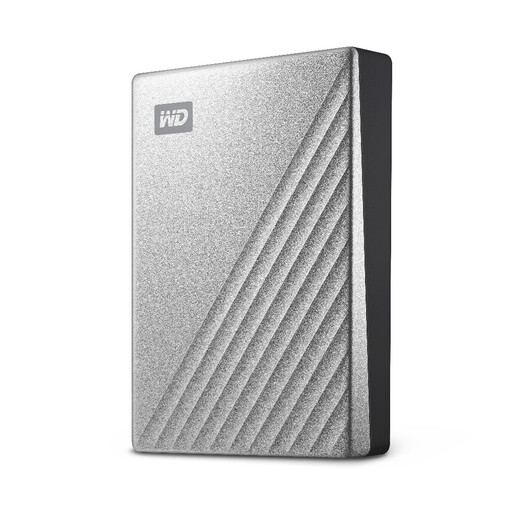
Western Digital My Passport Ultra Portable HDD 4TB, silver

Western Digital My Passport Ultra Portable HDD 4TB, silver

This 4TB portable hard drive suits a capacity-led archive when SSD-class transfers are not your priority.

It is a mechanical HDD. If a Mac must write to the drive, confirm the intended macOS version and file-system arrangement before copying artwork; do not assume a USB connection alone provides the access you need.

View on Joybuy

Lexar ES4 Portable SSD Magnetic Set 1TB

Lexar ES4 Portable SSD Magnetic Set 1TB

Consider this 1TB portable SSD if a smaller artwork archive meets your needs and the Magnetic Set variant interests you.

Its title specifies USB 3.2 Gen 2 and advertised speeds of up to 1,050MB/s read and 1,000MB/s write. Check the host connection, physical dimensions and required file system before relying on it for a small-desk setup.

View on Joybuy

Common questions

Can one external drive be my only artwork archive?

No: keep another copy of valuable artwork. The National Cyber Security Centre warns that connected USB or network backups can be affected alongside original files during ransomware incidents; disconnect one backup when it is not needed and check that you can open files from it.

Is exFAT suitable for artwork shared between Mac and Windows?

Apple’s Disk Utility guidance identifies exFAT for a disk over 32GB intended for use with both Mac and Windows. Confirm the requirements of your devices and applications before formatting, because formatting erases files already on the disk or volume.

Can a Mac Photos library share a drive with Time Machine backups?

No. Apple says a Photos library cannot be stored on a storage device used for Time Machine backups. If your artwork workflow includes a Photos library, use a separate appropriately formatted drive for that library and keep an independent backup.

Does a USB-C portable SSD always reach its advertised speed?

No. Samsung specifies USB 3.2 Gen 2 and UASP requirements for the T7 Shield’s stated maximum, while Crucial requires a compatible USB 3.2 Gen 2x2 host for full X10 Pro performance. Compare the computer’s port specification with the exact drive’s requirements.

What should I do with an old drive containing client files?

Deal with the data before disposing of the drive. For organisations handling personal data, the Information Commissioner’s Office says personal data must not be left on old equipment and points to deletion software or specialist wiping services. In the UK, use an appropriate electrical-waste route for the device once the data has been addressed.