
24/7 Customer Support

Free returns

Same-day & Next-day Delivery

Quality Guaranteed

Unlock Your Welcome Offers: FREE Delivery | Up to 80% OFF | Free 30-day JoyPlus trial
Download the APP
Choosing Asian fish cakes online can be less straightforward than it appears. Product names may include fish balls, fish tofu, kamaboko, narutomaki or seafood patties, yet the texture, cooking method, pack size and allergen profile can vary considerably.
As the Joybuy Product Recommendation Officer, I focus on the information that helps shoppers avoid unsuitable purchases rather than relying on exaggerated packaging claims.
Some Japanese fish cakes, such as certain kamaboko, chikuwa and fried fish cakes, may be ready to eat or suitable for reheating. Other frozen products, including fish tofu buns, fish balls and fish paste, require thorough cooking.
Always check the usage instructions. A product may look similar to a chilled snack but still need to reach a safe internal temperature before serving.
A 500g bag of frozen fish cakes can offer useful value for family hot pots, meal preparation or catering. However, smaller 120g–200g packs may be more practical for students, couples or occasional cooks who want to avoid storing an opened product.
Also check whether the item is supplied as individual pieces, a block of fish paste, sliced fish cake or filled pieces. These formats suit different recipes.
Fish cakes often contain more than fish paste. Depending on the recipe, ingredients may include wheat, soya, egg, molluscs, crustaceans, milk or sesame. For example, filled fish balls may contain pork and soya sauce, while seafood patties can include squid and shrimp extract.
Read the current packaging before purchase and use. Online ingredient information can change, and it should not replace the product label.
The fish percentage gives useful context, but it does not describe the whole eating experience. Thai fish cakes often include herbs, chilli, onion, lemongrass or French beans, creating a firmer patty suitable for frying or grilling. Japanese fish cakes such as kamaboko, narutomaki and chikuwa are generally milder and springy, making them suitable for ramen, udon, bento and soups.
Fish balls and fish tofu are designed to hold their shape in broth. Fish paste is more flexible: it can be shaped into homemade seafood patties or fish balls, then fried, steamed or simmered.
Frozen fish cakes should normally be kept at -18°C or below. Do not refreeze once thawed unless the packaging specifically says otherwise. Plan delivery and freezer space carefully, particularly when ordering several 500g packs.
Chilled products, such as some ramen fish cake slices and chikuwa, usually need refrigeration at or below 4°C and should be consumed within the stated period after opening.
Match the format to the dish:
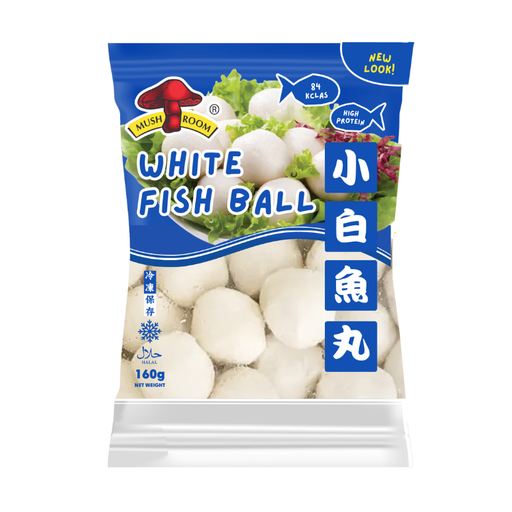
Why This Fits Their Persona: A compact pack for students, couples or first-time cooks trying fish balls in soup, noodles or a small hot pot.
The 160g size reduces the risk of buying more frozen food than you can use. The listing clearly identifies cooking methods and storage requirements.
Small pieces suit soups, stir-fries and noodles; the product contains 52% Nemipterus fish and is stored frozen at -18°C or below.
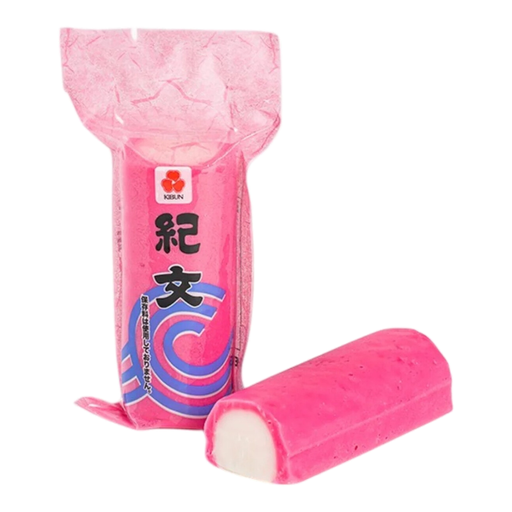
Why This Fits Their Persona: A Japanese-style steamed fish cake for cooks who value presentation, mild flavour and a springy slice in ramen, hot pots or bento.
Its format is clearly described as a steamed fish cake rather than a frying-only patty, helping shoppers select it for Japanese-style dishes.
The 160g pack has a red-and-white appearance, threadfin bream fish meat and a stated soft, springy texture.
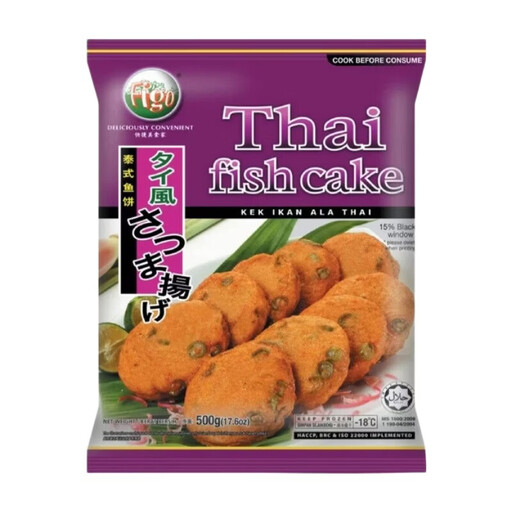
Why This Fits Their Persona: A larger pack for families, meal preparation, Thai-style appetisers, noodle soups and repeated hot pot cooking.
The product specifies a 500g quantity, frozen storage and several cooking methods, making it easier to plan portions and freezer use.
The recipe lists 60% fish meat, chilli and French beans; it can be fried, steamed, stir-fried or simmered according to the instructions.
We have compiled a complete, real-time list of products that fully satisfy these strict selection criteria and UK safety regulations.
They can be added to ramen, udon, noodle soups, hot pots, stir-fries and steamed dishes. Thai fish cakes also work as appetisers, while seafood patties can be served with rice, salad or dipping sauce.
Some are cooked or partially cooked, but this does not apply to every product. Check the label for “cooking required”, cooking time and whether the item can be added directly from frozen. When instructions require cooking, heat until piping hot throughout.
Keep unopened frozen products at -18°C or below until the stated best-before date. Once thawed, do not refreeze. After opening, follow the packaging guidance and use clean utensils to reduce cross-contamination.