
24/7 Customer Support

Free returns

Same-day & Next-day Delivery

Quality Guaranteed

Unlock Your Welcome Offers: FREE Delivery | Up to 80% OFF | Free 30-day JoyPlus trial
Download the APP
As a Joybuy Product Recommendation Officer, I often see shoppers navigating the confusing world of baking ingredients. Choosing the right baking flour can feel like a shot in the dark, but it's the foundation of any successful bake. Get it wrong, and you could end up with a flat loaf or a tough cake. Before you buy flour online, it's worth understanding a few common pitfalls that can lead to disappointing results and wasted money.
Many home bakers fall into a few simple traps:
all purpose flour UK can be misleading. Unlike the standardised American product, what we call plain flour in the UK has a lower protein content. Using it for a chewy sourdough bread recipe that calls for high gluten will likely result in a dense, disappointing loaf.plain flour and self raising flour is fundamental. Accidentally using plain flour in a scone recipe without adding a raising agent will leave you with hard, flat discs instead of light, fluffy treats.Understanding these points is the first step to becoming a more confident baker.
To ensure your baking is a success, focus on these key characteristics when selecting your flour for baking.
Protein, specifically gluten, is what gives dough its structure and elasticity. The amount of protein dictates what the flour is suitable for.
This is a straightforward but critical distinction for any UK baker.
Beyond standard wheat, a variety of grains offer unique flavours and properties.
wholemeal flour in plain, self-raising and strong bread varieties.gluten free flour blend is designed to mimic the properties of wheat flour and can be used for everything from cakes to bread, making it essential for those with coeliac disease or gluten sensitivity.Based on these practical considerations, here are a few recommendations matched to different types of home bakers.

Why This Fits Their Persona: For anyone serious about making crusty loaves, pizza dough or chewy bagels at home, a high-protein flour is non-negotiable. This flour is specifically milled to provide the gluten structure needed for an excellent rise and satisfying texture.
It directly solves the pitfall of using standard plain flour for bread. Its 14g protein per 100g provides the necessary strength that "all-purpose" or plain flour lacks, ensuring your yeast-leavened bakes don't fall flat.
Milled from selected Canadian wheat known for high protein. Provides a reliable and vigorous rise for doughs.
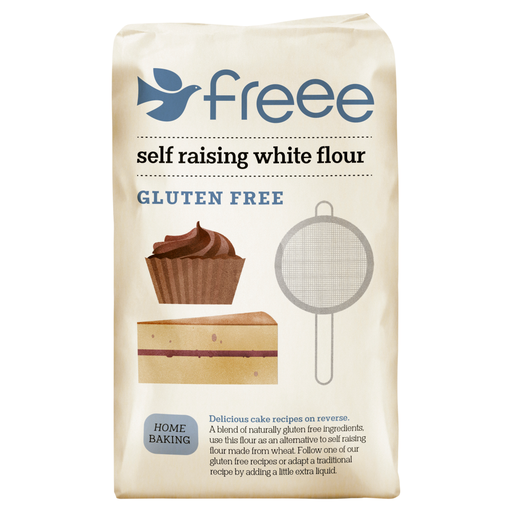
Why This Fits Their Persona: For those with coeliac disease or a gluten intolerance, baking can be challenging. This flour blend is specifically created to be a reliable, direct substitute for conventional self-raising flour, removing the guesswork from adapting recipes.
It prevents the mistake of buying a standard wheat flour. This blend of rice, potato, tapioca, maize and buckwheat flour is naturally gluten-free and includes raising agents and xanthan gum to help replicate the structure and rise of wheat flour.
Certified by Coeliac UK for peace of mind. Pre-blended with raising agents for convenience in cakes and scones.
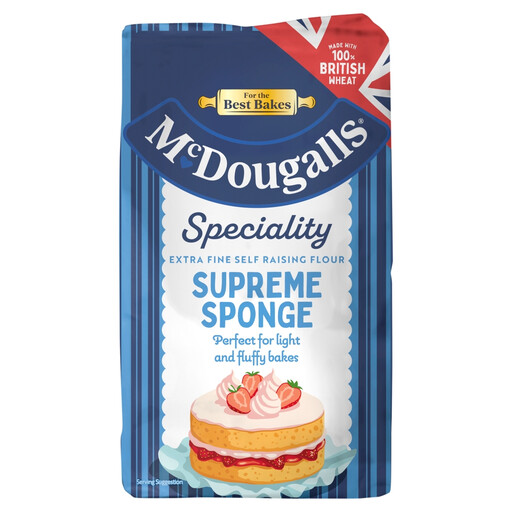
Why This Fits Their Persona: This baker loves making light, airy sponge cakes, cupcakes and Swiss rolls. They need a flour that guarantees a soft, tender result without the risk of a tough or dense texture. This is a specialised cake flour with raising agents included.
It avoids the trap of using a higher-protein flour for delicate bakes. It is milled from soft wheats for a lower protein content (9.3g per 100g) and is extra-sifted for an exceptionally fine texture, ensuring a lighter bake than standard self-raising flour.
Specially formulated for sponge cakes. Includes raising agents for convenience and a consistent rise.
We have compiled a complete, real-time list of products that fully satisfy these strict selection criteria and UK safety regulations.
Yes, you can. This is a common substitution. The general rule is to add 2 teaspoons of baking powder for every 150g of plain flour. Sift the baking powder with the flour to ensure it is evenly distributed throughout your mixture.
Flour should be stored in a cool, dry place away from direct sunlight. Once opened, it is a good idea to transfer the flour from its paper bag into an airtight container. This protects it from moisture, pests and absorbing strong odours from other foods in your pantry, helping to maintain its quality for longer.
The main difference is the protein content. While both are high-protein flours suitable for bread making, 'very strong' bread flour typically has an even higher protein percentage (often 14% or more). This extra gluten-forming potential provides a more robust structure, which is particularly useful for heavy, wholemeal loaves or recipes with a lot of additions like seeds and fruit, as it helps the dough hold its shape during rising.