
24/7 Customer Support

Free returns

Same-day & Next-day Delivery

Quality Guaranteed

Unlock Your Welcome Offers: FREE Delivery | Up to 80% OFF | Free 30-day JoyPlus trial
Download the APP
The secret to a truly memorable homemade cake often lies in an ingredient that’s easily overlooked: the flour. If you’ve ever followed a recipe to the letter yet ended up with a dense, heavy sponge instead of the light, airy creation you dreamed of, the type of flour you used might be the culprit. With so many options on the shelf—from plain and self-raising to more specialised baking flour—it can be confusing to know which one is right for your bake.
This guide is designed to help you navigate the world of flour for cakes. Whether you're a seasoned baker aiming for a professional-quality chiffon or a beginner looking for a simple, reliable cake mix, we’ll help you understand the key differences and select the right home baking ingredients for a perfect result every time.
Before you fill your basket, here are a few practical points to consider. Understanding these will help you choose with confidence.
The main difference between standard plain flour and a dedicated cake flour is the protein content. Cake flour is milled from soft wheat and is considered a low-gluten flour, typically containing around 7-9% protein. Less protein means less gluten development when mixed, which is the key to achieving a soft, tender crumb and a light, fluffy texture. For delicate bakes like angel food cake, chiffon or Victoria sponge, using a soft flour for baking can make a noticeable difference.
Your choice here depends on how much time you have and how much control you want over the recipe.
cake flour or sponge flour give you a high-quality base. You have full control over the amount of sugar, eggs and leavening agents, allowing you to tweak recipes to your exact preference. This is the preferred route for baking enthusiasts.cake mix is the ultimate convenience. It contains pre-measured flour, sugar and raising agents. You simply add a few wet ingredients like eggs and oil. It’s a fantastic option for beginners, baking with children or when you need a delicious cake in a hurry without the fuss.In the UK, we are familiar with the distinction between plain and self-raising flour. This also applies to the world of cake flours. Some products are pure low-gluten flour, meaning you will need to add your own baking powder or bicarbonate of soda. Others, often labelled as sponge flour, come with raising agents already blended in for convenience. Always check the ingredients list to see what’s included so you don’t accidentally double up on leaveners.
Here are three excellent options that cater to different baking needs and skill levels, from complete control to ultimate convenience.

Why It Stands Out: This flour from Xinliang is a dedicated cake-specific low-gluten flour, formulated to help home bakers achieve that sought-after delicate and soft texture. With a protein content of just 8.5g per 100g, it’s engineered to produce a fine, even crumb in everything from light chiffon cakes to classic sponges and cupcakes. It provides a professional-grade foundation for your baking projects.
Pros:
Who is it for? This is an ideal choice for the baking enthusiast who wants to build their cake from scratch and have precise control over the final texture and flavour.
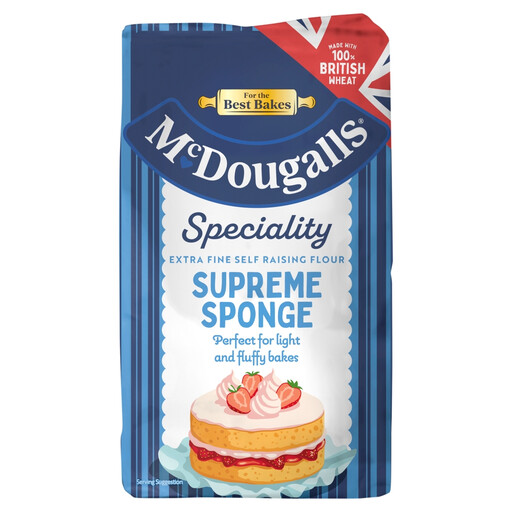
Why It Stands Out: McDougalls Supreme Sponge Flour is a household name for a reason. It’s a finely milled soft flour for baking that also contains raising agents (dicalcium phosphate, sodium bicarbonate). This two-in-one approach simplifies the process of making a classic sponge. The flour is designed for high water absorption, which helps create a moist, light cake with an even structure, taking the guesswork out of achieving a perfect rise.
Pros:
Who is it for? Perfect for bakers who love making traditional sponge cakes and appreciate the convenience of a baking flour that already includes the leavening.
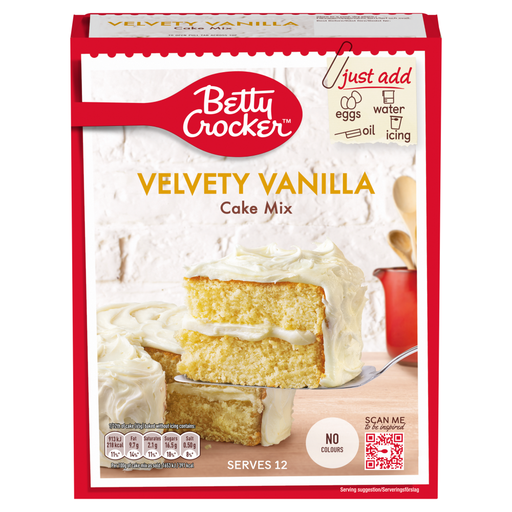
Why It Stands Out: For those moments when you need a delicious cake without the time or effort, the Betty Crocker Velvety Vanilla Cake Mix is a reliable choice. With a heritage of over 100 years, the brand is synonymous with consistent, easy-to-achieve results. You just need to add oil, water and eggs to get a light, fluffy vanilla cake that tastes homemade. It’s also made with no artificial colours or preservatives.
Pros:
Who is it for? This is the go-to option for beginners, busy parents or anyone who wants a guaranteed crowd-pleaser with minimal fuss.
If these selections aren't quite what you're looking for or if you're curious about other specialised home baking ingredients, there are many more choices available.
? Explore our full range of sponge flour and cake flours to find your perfect match.
The primary difference is protein content. Cake flour is a low-gluten flour, typically with 7-9% protein, which creates a lighter, more tender cake. UK plain flour has a higher protein content (around 10-12%), which is great for general use but can result in a denser, chewier crumb in delicate cakes.
While you can substitute it in a pinch, the texture will be different. Self-raising flour contains leavening agents but also has a higher protein content than cake flour. For recipes where a very fine, delicate crumb is essential, such as a chiffon cake, a dedicated soft flour for baking will produce a noticeably better result.
They are very similar and the terms are often used interchangeably, as both are low-gluten flours designed for cakes. However, in the UK, products marketed as sponge flour often come with raising agents already included, making them a convenient, self-raising version of cake flour. Always check the packaging to see if you need to add your own leavening.