
24/7 Customer Support

Free returns

Same-day & Next-day Delivery

Quality Guaranteed

Unlock Your Welcome Offers: FREE Delivery | Up to 80% OFF | Free 30-day JoyPlus trial
Download the APP
Buying a new freezer might seem straightforward, but a few common oversights can lead to thawed food, high energy bills or an appliance that simply stops working when you need it most. Many shoppers get caught out by assuming all freezers are built the same, only to discover their mistake during the first cold snap or when a constant humming sound disrupts their open-plan living space.
Before you buy, be aware of these common pitfalls:
The most critical decision is choosing a style that fits your home and lifestyle. Each type offers distinct advantages in terms of capacity, footprint and organisation.
Beyond the basic type, a few key specifications will determine whether a freezer is a helpful appliance or a future headache.
This is a major dividing line. A manual defrost freezer is a simple, reliable system, but requires you to periodically switch it off and remove ice build-up to maintain efficiency. A frost free freezer (often labelled Total No Frost) automates this process entirely, saving you a messy chore and ensuring the appliance runs at peak performance.
If you plan to keep your appliance in an unheated space, you must choose a model specifically designated as a garage freezer. These units are equipped with technology (often called 'Winter Security' or similar) that ensures they continue to function correctly even when the external temperature drops as low as -15°C.
For any appliance in or near a living area, the noise level is crucial. A quiet freezer will typically have a rating of 40dB or less. Anything around 35dB is considered exceptionally quiet and will be barely noticeable. Always check this figure before purchasing.
To help you navigate the market, we have matched some practical freezer models to common UK household needs.
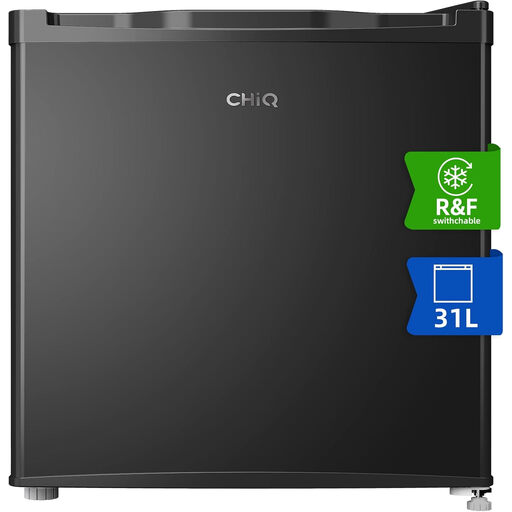
Why This Fits Their Persona: This compact mini freezer is perfect for adding crucial frozen storage in a flat, student dorm or home office without taking up any floor space. It sits neatly on a worktop or under a desk.
Its quiet 41dB operation avoids the noise pitfall, making it suitable for placement in or near living areas without causing a disturbance.
Delivers proper 4-star freezing performance in a tiny footprint, allowing you to safely store food long-term.
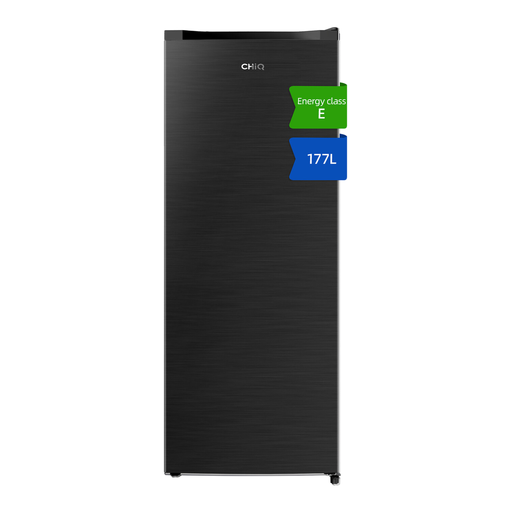
Why This Fits Their Persona: This stylish black freezer is ideal for families who batch-cook and need to keep different food types separate. The slimline freezer design fits well in modern kitchens without dominating the space.
The six transparent drawers of this upright freezer prevent the disorganised chaos of a deep chest freezer. Its very quiet 39dB operation also makes it perfect for open-plan living.
Excellent organisation with a generous number of drawers and a reversible door for flexible installation.
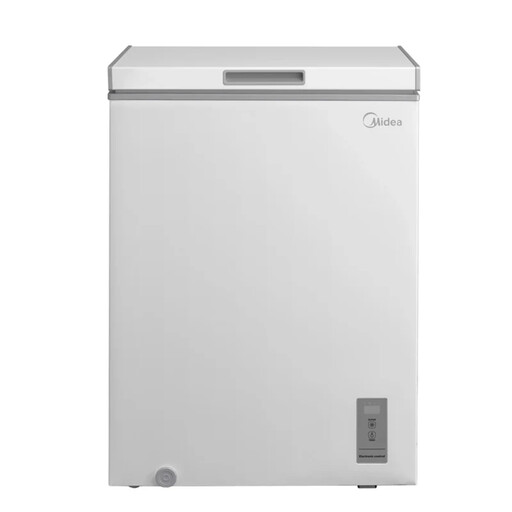
Why This Fits Their Persona: This is the ideal choice for anyone needing a reliable bulk storage solution for a garage, shed or utility room, where temperatures can fluctuate dramatically.
It is engineered with 'Winter Security', meaning it is fully garage-safe and will operate correctly in ambient temperatures down to -18°C. This directly solves the 'garage trap' where standard freezers fail.
Features a convertible design, allowing you to switch it from a freezer to a fridge, offering fantastic flexibility for parties or seasonal needs.
We have compiled a complete, real-time list of products that fully satisfy these strict selection criteria and UK safety regulations.
No, this is a common and costly mistake. Most standard freezers are only designed to operate correctly in ambient temperatures between +10°C and +43°C. In a cold UK garage during winter, the external temperature can fall below this, causing the freezer's thermostat to shut down the compressor. You must look for a model that is explicitly advertised as being suitable for outbuildings or garages, often featuring technology called 'Winter Security' or similar.
A manual defrost freezer requires you to periodically turn it off to allow the ice that builds up on the interior walls to melt. A frost-free (or 'Total No Frost') freezer has an internal fan that circulates cold, dry air, which prevents ice from ever forming. This saves you a lot of maintenance and ensures the freezer runs more efficiently without its storage space being compromised by ice.
The running cost depends on the freezer's size, its energy efficiency rating and your electricity tariff. Since 2021, energy labels in the UK run from A (most efficient) to G (least efficient). An average E-rated under-counter freezer might use around 165 kWh per year. You can calculate the approximate annual cost by multiplying the kWh figure by the price per kWh on your energy bill. Choosing a model with a better energy rating can lead to noticeable savings over the appliance's lifetime.