
24/7 Customer Support

Free returns

Same-day & Next-day Delivery

Quality Guaranteed

Unlock Your Welcome Offers: FREE Delivery | Up to 80% OFF | Free 30-day JoyPlus trial
Download the APP
A quality hot brush promises to be the ultimate at-home blowout tool, giving you that fresh-from-the-salon bounce and smoothness without the hefty price tag or the arm ache of juggling a separate brush and dryer. Yet, the path to finding the right one is often cluttered with confusing marketing claims and hidden design flaws. Many of us have been tempted by a tool that promises miracle results, only to be left with frizzy, damaged hair or a styler that simply doesn’t suit our needs.
As the Joybuy Product Recommendation Officer, my role is to help you navigate this crowded market. We will look past the hype and focus on the practical details that determine whether a hot brush will become your daily go-to or gather dust in a drawer. Before you make a decision, let’s uncover the three most common pitfalls that UK shoppers encounter and how you can steer clear of them.
The single biggest point of confusion is the difference between a hot air brush and a heated thermal brush. They look similar but function very differently.
Buying the wrong type for your routine is a frequent and costly mistake. If you want to style from wet, you need a hot air styler. If you prefer to rough-dry your hair first or need a tool for second-day touch-ups, a heated brush is the correct choice.
Many lower-cost models come with only one or two high-heat settings. While this seems simple, it’s a major red flag. Hair types vary dramatically; the intense heat required to style thick, coarse hair will scorch fine or colour-treated strands, leading to breakage and dullness. A tool without adjustable temperature control forces you to compromise your hair's health for the sake of styling.
Brands often highlight materials like ceramic, tourmaline or titanium as proof of a superior product. While these materials have benefits—ceramic for even heat, tourmaline for its ionic hair brush properties that fight frizz—the material name alone means little. The true measure of quality is in the engineering. A poorly constructed barrel, regardless of its coating, can still have hot spots that singe hair. The key is to look for tools that specify even heat distribution and genuine ionic technology as functional benefits, not just as buzzwords.
To ensure you get a tool that delivers results without compromising hair health, focus on these non-negotiable specifications.
Based on these practical criteria, we have matched a few standout options to different user needs.
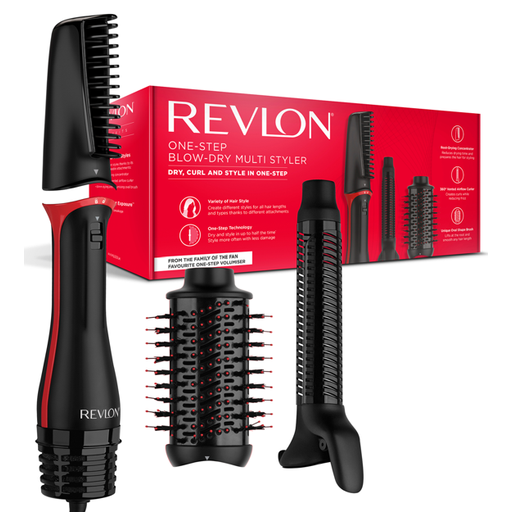
Why This Fits Their Persona: This user needs to get from shower to styled in the shortest time possible. This tool is a true hot air styler that dries, smooths and curls, consolidating multiple steps into one. The interchangeable heads offer versatility for different looks without cluttering the bathroom with multiple devices.
It clearly functions as a hair dryer brush, eliminating the "hot air vs. heated brush" confusion. With four heat settings, it avoids the "one-temperature-fits-all" trap, allowing for safer styling on different hair types.
Its 3-in-1 design with a drying concentrator, smoothing oval brush and curling barrel provides a complete styling kit in one purchase. The Ceramic Tourmaline Ionic coating helps reduce frizz.
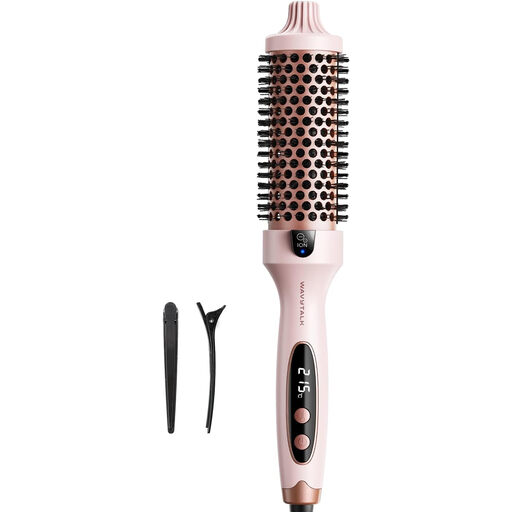
Why This Fits Their Persona: Perfect for someone who styles on dry hair to refresh a look or add polish. They might air-dry or use a standard hairdryer first. Their priority is control and minimising damage on their fine or colour-treated hair, making precise temperature settings essential.
This is a dedicated thermal brush for dry hair, preventing misuse. Its five temperature settings (from 150°C to 215°C) offer excellent control, directly countering the "one-temperature-fits-all" damage trap for delicate hair.
The wide range of heat settings allows for highly customised styling. Its negative ion technology and tourmaline ceramic barrel work together to deliver a genuinely smooth, frizz-free finish.
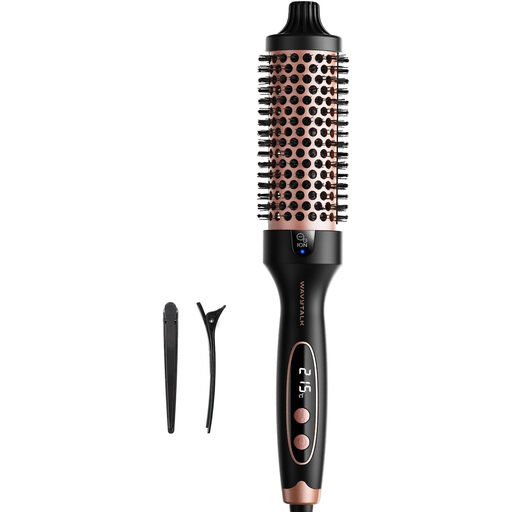
Why This Fits Their Persona: This user values aesthetics as much as performance. They want a reliable tool for creating polished looks on dry hair—perfecting a fringe, adding bounce to the ends, or creating soft curls. The elegant rose gold finish makes it a stylish addition to their dressing table.
It delivers on the promise of its materials. The tourmaline ceramic barrel provides genuinely even heat distribution and frizz-fighting ionic output, moving beyond the "overhyped coatings" trap by producing tangible, smooth results.
The 38mm barrel is a versatile size for detailed styling. Dual PTC heaters ensure it heats up quickly and maintains a stable temperature, saving time during morning routines.
We have compiled a complete, real-time list of products that fully satisfy these strict selection criteria and UK safety regulations.
It depends on the type. A hot air brush can certainly replace your hair dryer if you are aiming for a blowout finish, though it may not give the pin-straight look of dedicated straighteners. A heated thermal brush is not a dryer and is only for use on dry hair. It can be a great alternative to straighteners for adding volume, soft waves and smoothness.
Yes, they can be particularly effective. For best results on fine hair, choose a brush with an oval-shaped barrel to create more lift at the root. Always start with the lowest effective temperature setting to style the hair without causing heat damage or weighing it down. Using a root-lift spray on damp hair before you begin can also significantly boost volume.
To maintain performance and hygiene, you should clean your hot brush regularly. After unplugging the tool and letting it cool completely, wipe the barrel and handle with a soft, damp cloth. Use a comb or small cleaning tool to carefully remove any trapped hair and product residue from between the bristles. Aim to do this every one to two weeks, depending on usage, to prevent build-up that can cause snagging and interfere with heat distribution.