
24/7 Customer Support

Free returns

Same-day & Next-day Delivery

Quality Guaranteed

Unlock Your Welcome Offers: FREE Delivery | Up to 80% OFF | Free 30-day JoyPlus trial
Download the APP
An induction hob can transform your kitchen experience, offering rapid heating, precise temperature control and a safer cooking environment. However, the market is filled with technical jargon and features that can be confusing. Many UK households invest in a new hob only to face unexpected limitations or costs.
As a Joybuy Product Recommendation Officer, my role is to help you navigate these choices. This guide cuts through the marketing clutter to focus on what truly matters, helping you avoid three common pitfalls:
To make a sound choice, focus on these core parameters rather than just brand names or aesthetic appeal.
The most critical decision is between a plug and play induction hob and a hardwired model.
The right configuration depends on your space and cooking habits.
60cm induction hob: This is the most common size in UK kitchens, typically featuring a 4 zone induction hob layout. It provides ample space for everyday cooking with standard-sized pots and pans.Induction hob with flexible zone: For those who frequently use large griddle pans, fish kettles or multiple small pans at once, a flexible or "bridge" zone is invaluable. This feature allows you to link two adjacent zones to create one large, continuous heating area, offering far greater versatility.Regardless of price or brand, ensure your chosen hob includes these non-negotiable safety functions:
Here are our recommendations, matched to different household needs and priorities.
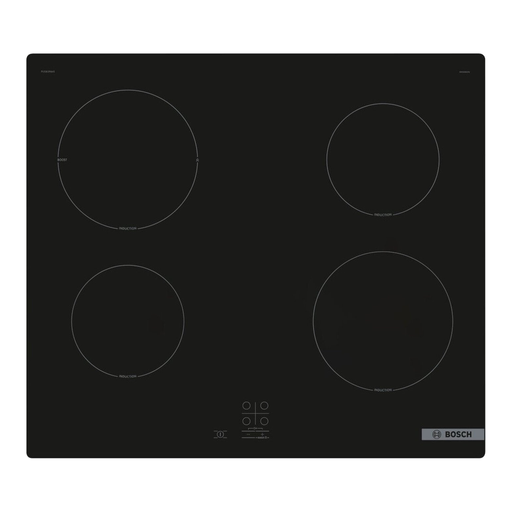
Why This Fits Their Persona: This model is designed for ultimate convenience. As a plug-and-play unit, it requires no specialist electrical work, making it ideal for rental properties or for those undertaking a straightforward kitchen update without the cost of an electrician.
It directly addresses the power limitation trap with an intelligent Power Management system. This feature automatically balances the 3.0 kW load, ensuring the hob operates safely within a 13A circuit's limits without causing trips, setting clear performance expectations from the start.
Features a PowerBoost function for rapid boiling and QuickStart for automatic pan detection. The frameless design is sleek and easy to clean.
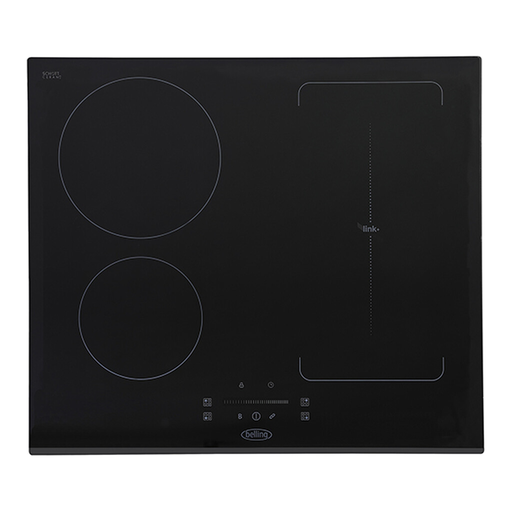
Why This Fits Their Persona: For the passionate cook who needs power and versatility, this hardwired hob delivers. Its high total power load (7.4 kW) and flexible cooking area are perfect for everything from searing steaks to simmering delicate sauces, accommodating a wide range of pan sizes and cooking techniques.
It avoids the "flexible zone" illusion by offering a genuine Link+ bridge function, which combines two zones into one large, powerful area. This provides true flexibility for griddles or large casserole dishes, unlike hobs that simply group two small zones.
Features a Boost mode on all four zones for intense power and intuitive slider touch controls for precise, quick adjustments across 9 power levels.

Why This Fits Their Persona: This **portable induction hob** is an excellent solution for those in flats, student halls or anyone needing an extra cooking surface without a permanent installation. Its ultra-thin, lightweight design makes it easy to store away when not in use, maximising precious counter space.
By being an explicitly portable, single-zone unit, it avoids any misleading promises. It is designed for what it is: a powerful and flexible supplementary cooktop, not a replacement for a multi-zone family hob. It delivers up to 2000W to a single pan, avoiding the power-sharing issues of multi-zone plug-in models.
Offers 8 power levels, 7 preset cooking functions and a 3-hour timer. It also includes a child safety lock, a feature not always found on portable models.
Remember the third pitfall? Before you buy your hob, check your existing cookware. Take a fridge magnet and see if it sticks firmly to the base of your pots and pans. If it does, they are ferromagnetic and will work on an induction hob. If it doesn't, you will need to invest in new induction compatible pans.
Materials like cast iron and many types of stainless steel are typically compatible. For specialised cooking like stir-frying, look for pans specifically designed for induction use.

A great example of compatible cookware, this carbon steel wok is designed to work on all hob types, including induction, allowing you to achieve authentic stir-fry results on a modern cooktop.
We have compiled a complete, real-time list of products that fully satisfy these strict selection criteria and UK safety regulations.
Yes, you do. Induction cooking works by creating a magnetic field that heats the pan directly. Therefore, your cookware must have a ferromagnetic base. The easiest way to check your current pans is with a simple magnet test: if a fridge magnet sticks securely to the bottom of the pan, it is induction-compatible. Cast iron, enamelled iron and many ranges of stainless steel pans work well.
Induction hobs are generally considered more energy-efficient than both gas and ceramic electric hobs. This is because around 85-90% of the energy is transferred directly to the pan, compared to roughly 50% for gas where a lot of heat is lost to the surrounding air. While the initial purchase price might be higher, the lower energy consumption can lead to savings on your utility bills over time.
This depends entirely on the type of hob. A plug and play induction hob with a pre-fitted 13A plug can be installed by the user, as it simply plugs into a standard wall socket. However, a more powerful, hardwired built in induction hob (which requires a 32A connection) must be installed by a qualified electrician to ensure it complies with UK electrical safety regulations and is connected correctly.