People scanning loose-note batches
If study notes arrive as stacks of loose, double-sided sheets, feeder capacity and automatic duplex scanning can reduce page turning and reloading when several people share the device.


Choose a multifunction printer around the notes the studio handles most often: an automatic document feeder (ADF) with duplex scanning helps with stacks of loose, double-sided sheets, while bound notebooks and delicate originals call for a flatbed. Then check whether the device can serve several users at busy times, and whether A3 scanning is needed often enough to justify a larger machine.
If study notes arrive as stacks of loose, double-sided sheets, feeder capacity and automatic duplex scanning can reduce page turning and reloading when several people share the device.
Choosing a device for several users means checking how computers and phones connect, where scans go, who manages settings and updates, and how paper and ink will be replenished.
A3 diagrams, artwork and bound notebooks need a different check from loose A4 sheets: confirm the scanner’s supported size and whether a flatbed is available, rather than relying on an ADF specification alone.
Start with the originals you need to scan, then consider the busiest shared-use period. Paper handling, access and consumables matter more once that workflow is clear.
| Concern | What to check | Who this matters to |
|---|---|---|
| Loose, double-sided notes | Confirm automatic duplex scanning, ADF capacity and supported original sizes; duplex printing alone is not enough. | When several people bring stacks of loose notes, I want to scan both sides without turning every sheet by hand. Around 33% of consumers put batch capture first. |
| Shared access and privacy | Check connections for the studio’s devices and how users select scan destinations, manage access and receive updates. | If we share one printer, I need everyone to reach it without leaving someone else’s scans in the wrong place. Around 27% of consumers make manageable shared access their primary concern. |
| Recurring supplies | Compare the exact ink system, stated yield basis, maintenance items and any restrictions on replacement cartridges. | With regular handouts and diagrams, I want to know which supplies the studio will need and how often they may need attention. For around 20% of consumers, that is the main purchasing concern. |
| A3 and awkward originals | Confirm the maximum scan size separately from print size, plus flatbed availability and ADF paper limits. | When diagrams are large or notes are bound, I need a way to capture them without forcing them through a feeder. This handling need comes first for around 20% of consumers. |
A printer that prints on both sides may still require users to turn originals over when scanning, adding work to every double-sided note pack.
Look for automatic two-sided scanning in the exact model’s specification, and check the feeder’s supported sizes and capacity.
ADF specifications apply to supported loose sheets. Bound notebooks, fragile pages and irregular originals need a suitable flatbed workflow instead.
Check how much studio material is bound, curled or larger than A4 before choosing a device chiefly for its feeder.
Manufacturer yields depend on stated test conditions and do not predict the studio’s particular mix of text, colour diagrams and printing habits.
Compare yields on the same stated basis and account for the exact replacement ink and maintenance items the model uses.
Replacement ink, paper and maintenance parts also need space in the studio’s supply plan.
HP states that dynamic-security measures on the OfficeJet Pro 9730 may block cartridges using a non-HP chip, including after firmware updates.
If third-party or remanufactured cartridges matter to the studio, read the exact model’s supply-compatibility policy before choosing it.
The MFC-J6955DW is a Brother option to examine when regular A3 work and shared network use are both important.
Canon’s MAXIFY GX models offer an A4 refillable-ink route for studios handling regular loose-note packs.
The EcoTank ET-4950 is an Epson A4 ink-tank option for a shared space that needs double-sided document capture.
The OfficeJet Pro 9730 is an HP option to examine when A3 flatbed capture matters alongside an automatic feeder.
These multifunction printers are choices to assess for loose-note capture and shared-studio use. Check each exact model’s scanning and original-handling features before treating it as a fit for double-sided sheets, bound notebooks or A3 scans.
 No image available
Consider this model for a shared studio scanning loose-note batches. Confirm automatic duplex scanning, supported feeder originals and flatbed handling before choosing it for double-sided sheets or notebooks.
 No image available
This A4 model is a choice to assess for loose-note batches and shared access. Check automatic duplex scanning, feeder paper limits and flatbed availability, then consider the ink and maintenance requirements for the studio’s workload.
 No image available
Consider this model if the studio needs A3 printing alongside loose-note scanning. Confirm A3 scan capability separately, along with automatic duplex scanning, flatbed handling and whether an additional paper tray is included.
 No image available
Consider this model where A3 originals and bound study material are part of the studio’s work. Confirm its scan sizes, flatbed and automatic duplex-scan functions, the feeder’s supported originals and whether an additional tray is included.
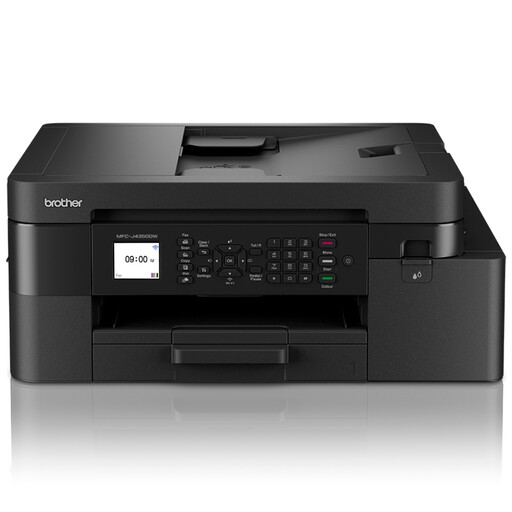 No image available
Consider this model for shorter loose-note batches where wireless shared access is useful. Confirm automatic duplex scanning, supported feeder originals and flatbed handling; check Ethernet separately if the studio needs a wired connection.
Prioritise a duplex ADF when most notes are loose, double-sided sheets scanned in batches, but keep a flatbed in the decision if notebooks, fragile pages or irregular originals are common. Check the exact feeder’s supported sizes: an A3 print specification does not establish A3 scanning.
Use a suitable flatbed for a bound notebook rather than feeding it through rollers intended for supported loose sheets. Check the printer’s manual before scanning unusual, fragile or loosely attached material.
No: a manufacturer’s yield is a figure under its stated test conditions, not a prediction for a particular studio. Compare models on the same stated yield basis and consider the studio’s print settings, colour coverage and maintenance requirements.