
24/7 Customer Support

Free returns

Same-day & Next-day Delivery

Quality Guaranteed

Unlock Your Welcome Offers: FREE Delivery | Up to 80% OFF | Free 30-day JoyPlus trial
Download the APP
A robot vacuum and mop can reduce the amount of daily floor cleaning, but the wrong model may create more work than it removes. UK homes often combine carpets, rugs, hard floors, thresholds, pet hair and tight furniture clearances, so a specification sheet needs careful reading.
The right choice depends less on a single headline figure and more on how the robot navigates, handles different flooring and manages its own dust and mop maintenance.
A high-suction robot vacuum may collect more loose dirt, but Pa figures alone do not explain cleaning performance. Brush design, airflow, carpet boost, floor clearance and navigation also matter. Hair can wrap around a poorly designed roller, while a robot with strong suction may still miss edges if it follows inefficient routes.
For pet owners, look for an anti-tangle brush or rubber roller, carpet suction adjustment and a dustbin or station that can handle frequent hair collection.
A self-emptying robot vacuum transfers dry debris to a larger station, but the dust bag or container still requires emptying. Mopping adds further maintenance: water tanks, mop pads, dirty-water reservoirs and filters need regular attention.
If you want less hands-on care, compare whether the dock offers automatic mop washing, drying, water refilling and dust collection. These functions are not included with every robot vacuum and mop.
Laser mapping can create a detailed map, but the robot still needs to physically move between rooms. Many models manage thresholds around 20mm, while taller door tracks, raised room dividers and thick rugs may stop them.
Check the robot’s height against the gap beneath your sofas and cupboards. Also use no-go zones around stairs, cables, pet bowls and areas where standing water could be present.
For a home with carpets and hard floors, compare:
A robot vacuum for carpets and hard floors should allow separate room or floor settings through its app.
A LiDAR robot vacuum scans its surroundings to plan routes and build maps. Look for multi-floor mapping if you live in a multi-storey property, along with room naming, scheduled cleaning and virtual no-go zones.
Obstacle avoidance is also important. However, even advanced sensors may not identify every cable, sock or small toy, so floors should be cleared before a cleaning cycle.
Check the physical dimensions of the dock, particularly in smaller UK hallways or kitchens. Also consider:
Runtime figures are generally stated as “up to” values and can reduce in turbo suction, carpet boost or intensive mopping modes.
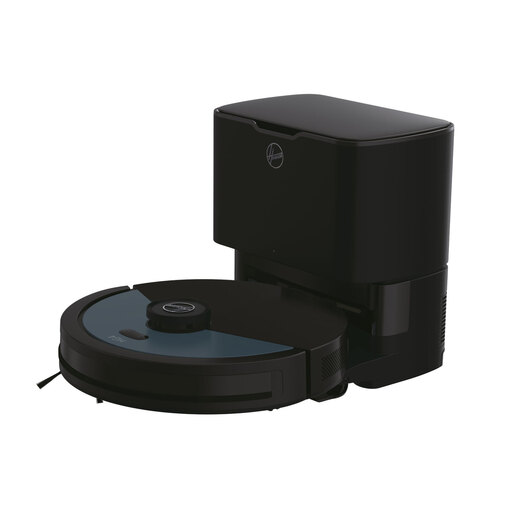
Why This Fits Their Persona: A practical option for households wanting laser navigation, app scheduling and a combined vacuum-and-mop function without immediately moving to a more complex multi-function dock.
Its specifications identify laser navigation, adjustable water release, obstacle sensors and a self-emptying base, rather than relying on suction power alone.
Up to 4,000Pa suction, customised maps, no-go zones, room naming and threshold clearance up to 2cm.
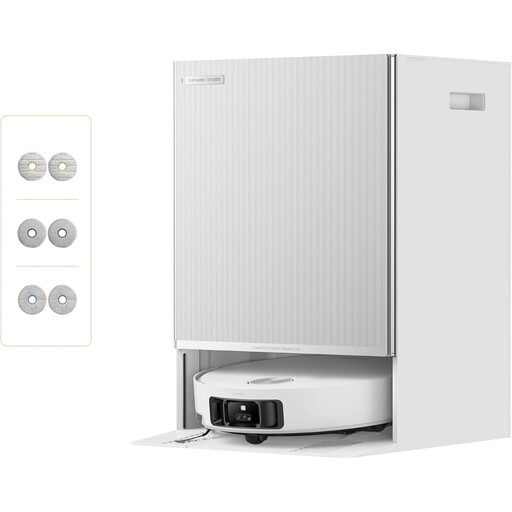
Why This Fits Their Persona: Designed for larger, mixed-floor homes where automated mop management, multiple cleaning settings and advanced obstacle handling are priorities.
The product details specify automatic mop switching, mop washing, drying, water refilling and carpet mop lifting, making the maintenance process clearer.
Up to 30,000Pa suction, three mop types, 100°C mop washing, 260-minute runtime and obstacle clearance up to 8cm.
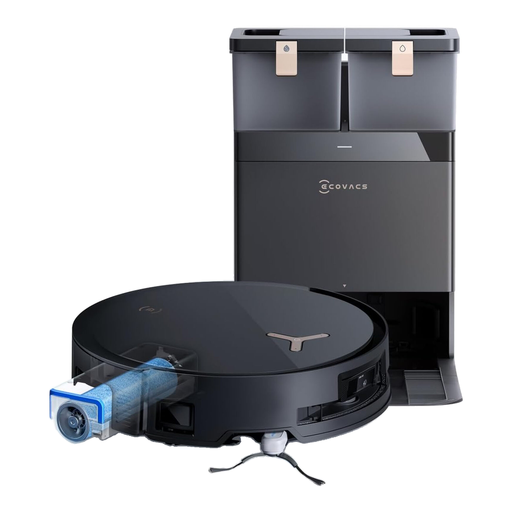
Why This Fits Their Persona: The combination of high suction, hair-management features and continuously self-washing mopping is suited to homes with frequent debris, pets and regular hard-floor cleaning.
ZeroTangle 2.0, automatic carpet lift and mop washing address common hair, damp-carpet and dirty-pad concerns.
18,000Pa suction, 200 washes per minute, 40–75°C mop-washing settings, 63°C hot-air drying and automatic cleaning-solution dispensing.
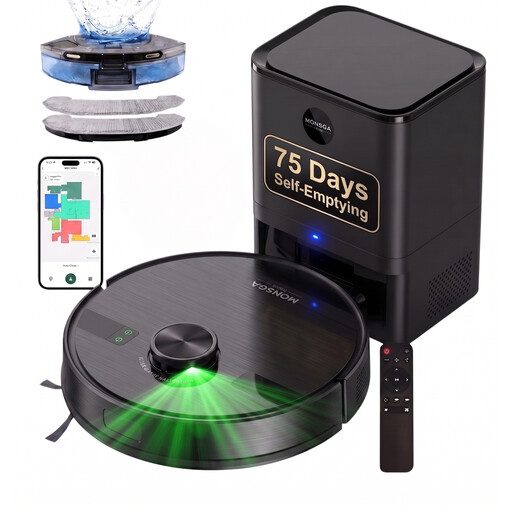
Why This Fits Their Persona: Its multi-map support and combination of app, remote, voice and button controls suit busy families and homes where more than one person operates the cleaner.
It lists five stored floor maps, adjustable water levels, auto-recharge and a sealed 4.0L dust bag, so key household requirements are visible before purchase.
Up to 9,000Pa suction, 180-minute runtime, LiDAR mapping and a compact 3.8-inch body height.
We have compiled a complete, real-time list of products that fully satisfy these strict selection criteria and UK safety regulations.
Place the dock against a wall with clear space around it and connect it to a suitable UK power socket. Before the first mapping run, remove cables, toys, loose rug tassels and small objects. Keep the robot away from standing water and do not use it to collect hot, sharp or flammable materials.
For reliable operation, clean sensors and charging contacts, inspect the roller and side brushes, empty or replace the station’s dust collection system and wash mop components according to the manual. Leave filters completely dry before reinstalling them.
Yes, provided it includes carpet detection, mop lifting or separate carpet no-go settings. A robot vacuum for carpets and hard floors should lift or avoid the wet mop on carpet and increase suction where appropriate. Always check the stated carpet type and threshold clearance.
Less than a standard robot vacuum, but not zero. You may still need to replace dust bags, clean filters and brushes, refill water, empty dirty-water tanks and wash mop components. Models with automatic mop washing, drying and water refilling reduce these tasks further.
Running costs depend on electricity use, cleaning frequency and replacement consumables. Check the price and availability of dust bags, filters, brushes, mop pads and cleaning solution before buying. A bagless station may reduce dust-bag purchases, while a larger station can reduce how often it needs attention.