Bakers with a tight kitchen gap
You need space for biscuit dough but have limited width, depth or room to open a freezer door. Measure the installation position before deciding how much capacity you want.


Measure the available space before choosing a freezer for biscuit dough: cabinet dimensions alone do not account for ventilation or the space needed to open the door. A narrow under-counter model suits a tight gap, while a larger under-counter model offers more room for separate dough portions if it fits; consider a tabletop unit when an under-counter position is not practical and limited storage is enough.
You need space for biscuit dough but have limited width, depth or room to open a freezer door. Measure the installation position before deciding how much capacity you want.
You freeze several labelled dough portions and want compartments that make different batches and frozen ingredients easier to keep apart.
You have room for an under-counter appliance but want to compare defrost systems, temperature controls and energy information before choosing a model.
Choose the freezer format that fits your kitchen first, then decide how much separated storage you need for biscuit dough and other food.
Consider it: When a standard-width under-counter freezer will not fit but a narrower model has adequate installation and door clearance.
Trade-off: The 47.5cm-wide LOGIK LUF48W26 is listed at 60L, compared with 91L for the Russell Hobbs RH85UCFZ552E1W and 95L for the Hotpoint H55Z1 112W UK.
Consider it: When the cabinet fits and you regularly need room for several dough batches and other frozen ingredients.
Trade-off: Check the internal layout as well as capacity: Russell Hobbs specifies four drawers for the RH85UCFZ552E1W, while Hotpoint specifies two drawers and a freezing flap for the H55Z1 112W UK.
Consider it: When there is no practical under-counter position and you only need space for a limited number of dough portions.
Trade-off: It takes worktop space instead of floor space, and its smaller storage volume may not accommodate regular bulk batches.
| Concern | What to check | Who this matters to |
|---|---|---|
| Fit and door clearance | Measure height, width, depth and the door-swing area; check the chosen model’s ventilation requirements. | If a freezer blocks a cupboard or cannot open fully, extra capacity will not help me. Around 36% of consumers put physical fit and clearance first. |
| Capacity and organisation | Compare usable drawer space and frozen-compartment capacity for the dough and other food you intend to store together. | When I freeze several biscuit recipes, I want to find each labelled portion without moving everything else. For around 29% of consumers, organised storage is the primary need. |
| Temperature and defrosting | Check temperature controls and whether the exact model is frost-free, Low Frost or manual defrost. | I freeze homemade food regularly and want to manage its temperature without more frost maintenance than I can accommodate. That is the leading concern for around 21% of consumers. |
| Energy information | Compare the exact models’ energy labels and stated annual consumption alongside the storage space you need. | Once a freezer fits and holds my dough, I want to compare its ongoing energy use. Around 14% of consumers place that comparison first. |
A freezer may fit the measured gap yet leave too little room for ventilation, pipework or a fully opening door.
Measure the complete installation area, then check the exact model’s clearance and hinge instructions before settling on a capacity.
Low Frost is intended to reduce ice build-up, not eliminate defrosting. Manual-defrost models also need upkeep that can temporarily interrupt storage.
Read the exact model’s defrost specification and plan for the maintenance it requires.
Suitability for a garage or outbuilding depends on the particular appliance and its permitted ambient conditions.
If you might move the freezer out of the kitchen, check its stated ambient-temperature range and installation instructions first.
Unlabelled portions are harder to identify, and one large batch can be awkward to arrange in a compact freezer.
Divide dough into usable portions, pack and label them, and follow UK government guidance to keep the freezer around -18°C. Cool warm food before freezing where relevant.
The H55Z1 112W UK is an under-counter option for buyers seeking more storage and reduced frost build-up.
The RH85UCFZ552E1W is a 55cm-wide under-counter option when separate drawers matter to your storage plan.
The I55Z1 112W UK is another under-counter model to compare when a 95L freezer fits the kitchen.
The LUF48W26 offers a narrower under-counter format for kitchens where width is the limiting factor.
These options cover built-under, tall built-in, freestanding under-counter and tabletop layouts. Choose by the space you can install them in, rather than treating the different formats as interchangeable.
 No image available
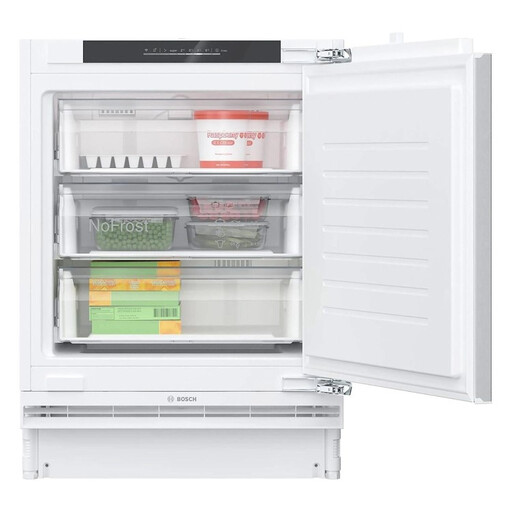
Consider this model if your kitchen has a suitable built-under position behind a furniture door. Its title specifies No Frost and an E energy rating; check the required cabinet opening, ventilation and door arrangement before buying.
 No image available
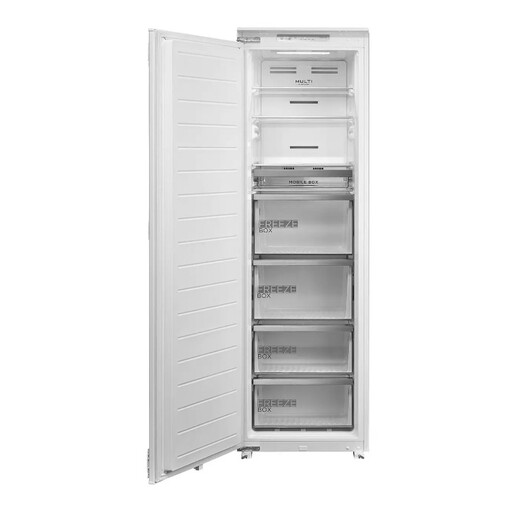
This tall built-in model is relevant if you have suitable full-height cabinetry, not an under-counter gap. Its title specifies Total No Frost, a sliding hinge and an E energy rating; check the housing dimensions and ventilation instructions.
 No image available
Consider this freestanding option if an under-counter position suits your kitchen. The title states 85L, 55cm width and an E energy rating; allow for the specified manual defrosting and check installation and door clearances.
 No image available
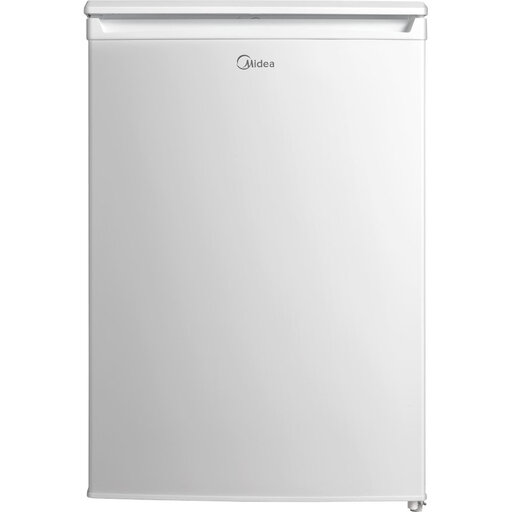
This freestanding under-counter format may suit a kitchen where separate dough storage is a priority. The title says 83L while the accompanying descriptions say 86L, so confirm the capacity for this exact model before deciding whether it holds enough; also allow for manual defrosting and check installation clearances.
 No image available
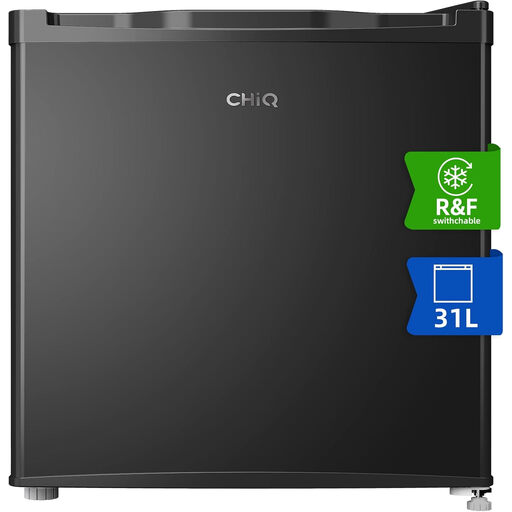
Consider this tabletop model when there is no suitable under-counter position and you need to freeze only a limited amount of dough. Its title states 31L and an E energy rating; check that the supporting surface and ventilation space meet its instructions, and allow for manual defrosting.
UK government home-food guidance says a freezer should be around -18°C. Divide dough into manageable portions, pack and label them, and cool warm food before freezing where relevant.
Consider one if bulk storage is your priority and you have measured space for the appliance and access to its lid. If you mainly need to find small, labelled dough portions in a restricted kitchen, compare under-counter drawer layouts and their installation clearances instead.
Yes: compare the energy label and product information for the exact models that fit your space and storage needs. For in-scope products offered for sale in the UK, the Department for Energy Security and Net Zero and the Office for Product Safety and Standards set out energy-information requirements, including display of an energy label at the point of sale.
Only if that exact model is specified for the intended location and temperature range. Hotpoint states that its H55Z1 112W UK can be used in garages or outbuildings down to -15°C; that condition does not apply to other freezers automatically.