Navigating the Sony Alpha camera lineup can be a complex task, especially when you are weighing the distinct advantages of different models. For many UK-based creators and photographers, the decision often comes down to a choice between the compact power of an APS-C model like the Sony A6700 and the renowned image quality of a full-frame mirrorless camera such as the Sony A7 III or A7 IV. Each camera offers a unique set of features tailored to different workflows and budgets.
This guide provides a straightforward Sony camera review, breaking down the key differences between these popular models. Our goal is to help you analyse the specifications that matter most, so you can confidently select the right tool for your photography and videography projects.
Key Considerations When Selecting a Sony Alpha Camera
Before diving into specific models, it's helpful to understand the core features that will influence your decision.
1. APS-C vs. Full-Frame: More Than Just Sensor Size
The debate between APS-C vs full-frame Sony cameras is a central point of consideration.
- APS-C Sensors (e.g., Sony A6700): These sensors are smaller, which allows for more compact and lightweight camera bodies and lenses. This makes them an excellent choice for travel photographers, vloggers and anyone who values portability. While historically seen as a step down, modern APS-C cameras deliver outstanding image quality that rivals older full-frame models.
- Full-Frame Sensors (e.g., Sony A7 III & A7 IV): A larger sensor captures more light, generally resulting in better performance in low-light conditions, a wider dynamic range and the ability to achieve a shallower depth of field (that sought-after blurry background). This makes them the preferred choice for professional portrait, event and landscape photographers.
2. Analysing Video Specifications for Your Needs
Sony Alpha cameras are well-regarded for their video capabilities, but the features vary between models. Key specifications to look for include:
- Resolution and Frame Rates: All three models here shoot in 4K, but the frame rates differ. The Sony A7 IV offers 4K at 60p, ideal for smooth motion, while the Sony A6700 provides 4K at 120p for high-quality slow-motion footage.
- Colour Depth (Bit Depth): 10-bit colour (found on the A6700 and A7 IV) captures billions of colours, compared to the millions in 8-bit (A7 III). This provides significantly more flexibility for colour grading in post-production, making it a crucial feature for serious videographers.
- Picture Profiles: Features like S-Log3 and S-Cinetone provide a flat, neutral image profile that retains maximum dynamic range, giving you greater control when colour grading your footage.
3. The Role of Autofocus and Processing
Sony's autofocus (AF) technology is a major selling point. The newer BIONZ XR processor in the A6700 and A7 IV powers a sophisticated, AI-driven AF system. This system offers advanced Real-time Tracking and Eye AF that can identify and lock onto the eyes of humans, animals and even birds with remarkable precision, a significant advantage for wildlife and portrait work. While the A7 III's AF is still highly capable, the newer models offer a noticeable performance improvement.
Top Sony Alpha Camera Picks
Here is a closer look at three standout models from the Sony Alpha range, each catering to different creative demands.
Sony A6700 APS-C Mirrorless Camera with 16–50mm Lens

View the Sony A6700 APS-C Mirrorless Camera with 16–50mm Lens & AI-Powered Autofocus
- Why It Stands Out: The A6700 packs many of Sony's high-end technologies into a compact APS-C body. It features the same AI-powered autofocus unit and BionZ XR processor found in more expensive full-frame models, delivering exceptional tracking performance. Its ability to shoot 4K video at up to 120p is a standout feature at its price point.
- Pros:
- Compact and lightweight design (493g body).
- Dedicated AI processing unit for advanced subject recognition autofocus.
- High-quality 4K video downsampled from 6K resolution.
- Fully articulating touch screen, ideal for vlogging and varied shooting angles.
- Who is it for: Content creators, vloggers and travel photographers who require a portable yet powerful camera that excels in both video and stills.
Sony Alpha 7 III Full-Frame Mirrorless Camera with 28–70mm Zoom Lens

View the Sony Alpha 7 III Full-Frame Mirrorless Camera with 28–70mm Zoom Lens
- Why It Stands Out: The A7 III is the camera that set the standard for the modern full-frame mirrorless camera. Even years after its release, it remains a formidable tool that offers tremendous value. Its 24.2MP sensor, reliable 693-point autofocus system and 5-axis in-body image stabilisation deliver professional results for a wide range of applications.
- Pros:
- Excellent full-frame image quality and low-light performance.
- Proven and reliable autofocus system.
- Dual memory card slots for backup or overflow storage.
- Outstanding value for entering the full-frame ecosystem.
- Who is it for: Enthusiasts and professionals moving to a full-frame system for the first time. It is also a popular choice for wedding photographers and event shooters who need a dependable workhorse camera or a second body.
Sony Alpha 7 IV Full-Frame Hybrid Camera with 28–70mm Zoom Lens
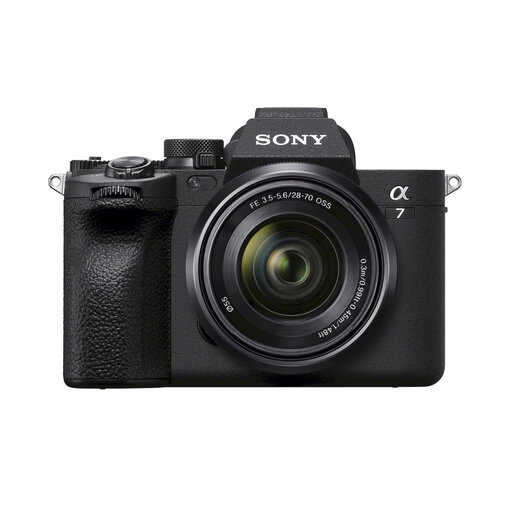
View the Sony Alpha 7 IV Full-Frame Hybrid Camera with 28–70mm Zoom Lens
- Why It Stands Out: The A7 IV is a true Sony hybrid camera, designed from the ground up to excel at both stills and video. It features a new 33MP sensor for greater detail and the powerful BIONZ XR processor for next-generation performance. Its video capabilities are a significant step up from the A7 III, with 4K 60p recording, 10-bit 4:2:2 colour and the S-Cinetone profile for cinematic colour straight out of the camera.
- Pros:
- High-resolution 33MP full-frame sensor.
- Class-leading Real-time Eye AF for humans, animals and birds.
- Advanced video features including 4K 60p and 10-bit internal recording.
- Vari-angle LCD screen for flexible monitoring.
- Who is it for: Professional hybrid shooters, videographers and commercial photographers who need the latest technology to meet demanding client expectations. It is arguably one of the best Sony cameras for video and high-resolution photography combined.
Looking for More Options?
If these models don't quite match your specific needs, or you're interested in exploring a wider range of bodies and lens kits, our full collection offers more choices. Discover our complete selection of video film cameras to find the perfect tool for your creative vision.
Frequently Asked Questions
Is the Sony A7 III still a good choice in 2026? Yes, absolutely. While newer models offer more advanced features, the Sony A7 III's combination of a full-frame sensor, reliable autofocus and strong 4K video capabilities provides exceptional value. It remains a very capable and relevant camera for both professional and enthusiast use, particularly for those working within a specific budget.
What is the main difference between the Sony A7 IV and the A6700? The primary difference is the sensor size. The Sony A7 IV is a full-frame camera, which generally provides better low-light performance and a shallower depth of field. The Sony A6700 has a smaller APS-C sensor, making the camera system more compact and lightweight. The A7 IV also has a higher resolution sensor (33MP vs 26MP) and more robust video codecs, while the A6700 offers impressive features like 4K/120p slow-motion in a smaller, more affordable package.
Which Sony Alpha camera is better for video? This depends on your priorities. The Sony A7 IV is a top contender for professional video work due to its 4K/60p recording, 10-bit 4:2:2 colour depth and S-Cinetone profile. However, the Sony A6700 is also an excellent video tool, offering beautifully detailed 4K video (downsampled from 6K) and an impressive 4K/120p slow-motion capability, making it a powerful and portable option for content creators and run-and-gun videographers.


