Choosing the right wok pan can feel overwhelming. With materials ranging from traditional carbon steel to modern non-stick and designs suited for different hobs, it’s easy to get lost in the options. A great wok should distribute heat evenly, allow for quick tossing of ingredients and suit your cooking style, whether you're a beginner or a seasoned home cook.
This guide is designed to simplify your decision. We'll walk you through the key factors to consider when buying a wok and present a few carefully selected options that cater to different needs and preferences.
How to Choose Your Ideal Wok Pan
Before you start browsing, consider these three practical points. Getting them right will ensure your new wok becomes a kitchen staple rather than a cupboard-filler.
1. Material Matters: Carbon Steel, Non-Stick or Stainless Steel?
The material of your wok directly impacts how it cooks and how you care for it.
- Carbon Steel Wok: The traditional choice for authentic Asian cooking. Carbon steel heats up very quickly and, once seasoned, develops a natural non-stick surface. It's durable and excellent for achieving the smoky 'wok hei' flavour. However, it requires regular maintenance (seasoning) to prevent rust.
- Non-Stick Wok: A popular choice for convenience. These woks are easy to use and clean, requiring less oil for cooking. They are ideal for beginners or anyone who wants a low-maintenance stir fry pan. The main consideration is the durability of the non-stick coating.
- Stainless Steel Wok: Known for its durability and non-reactive surface, a stainless steel wok is excellent for searing and browning. It doesn't require seasoning but can be prone to food sticking if not used correctly with sufficient oil and heat control. Some modern designs incorporate textured surfaces to improve food release.
2. Hob Compatibility: Is it a Wok for an Induction Hob?
Your type of hob is a critical factor. Traditional round-bottomed woks are designed for gas flames that can heat the entire base and sides. For electric, ceramic or induction hobs, you will need a flat bottom wok.
If you have an induction cooker, you must choose an induction wok made from a magnetic material like carbon steel, cast iron or magnetic-grade stainless steel. Always check the product specifications to ensure compatibility with your wok for induction hob.
3. Size and Features: Do You Need a Lid?
Woks come in various sizes. A 28cm wok is generally suitable for individuals or couples, while a large wok with lid (32cm or more) is better for families or batch cooking. A lid is a useful addition, trapping heat and moisture for steaming, braising or keeping food warm.
Top Wok Pan Recommendations
Here are our recommendations, selected to cover a range of materials and cooking styles.
For Everyday Convenience: Tefal Titanium Force Wok 28cm
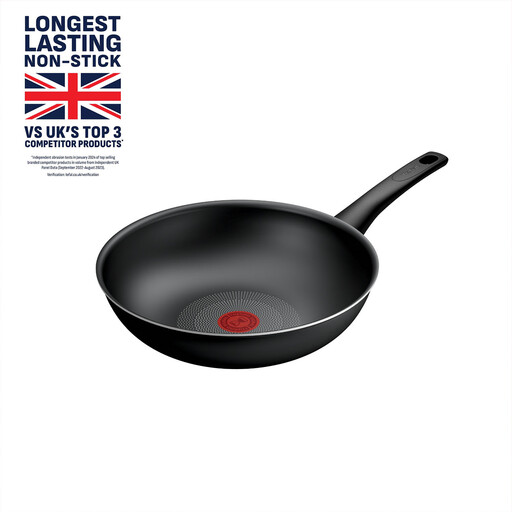
- Why It Stands Out: This Tefal wok focuses on durability and ease of use. Its key feature is the titanium-reinforced non-stick wok coating, which offers enhanced resistance to scratches and makes both cooking and cleaning straightforward. The aluminium body ensures heat is distributed evenly across the cooking surface, preventing hot spots.
- Pros:
- Durable titanium-reinforced non-stick surface.
- Lightweight and easy to handle.
- Aluminium construction provides even heating.
- Very easy to clean.
- Who is it for? Home cooks who prioritise convenience and want a reliable, easy-to-maintain wok for daily meals. It's an excellent starting point for those new to stir-frying.
For the Traditionalist: Maxcook No Coating Iron Wok 30cm
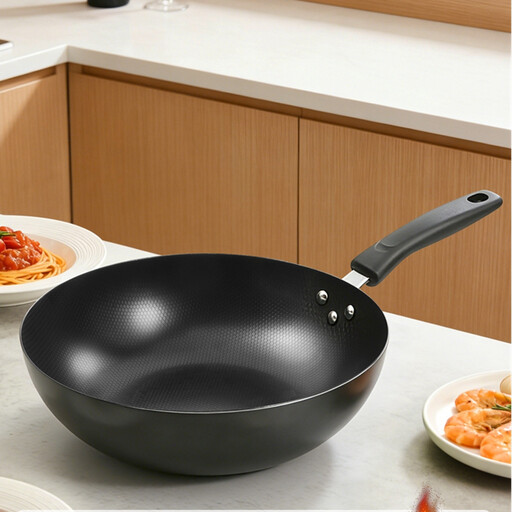
- Why It Stands Out: This is a classic carbon steel wok designed for those who love authentic cooking methods. It requires initial seasoning to build up a natural, chemical-free non-stick patina. Its construction provides the superior heat retention and responsiveness needed for high-heat stir-frying. Its flat bottom makes it a versatile induction wok, also compatible with gas and electric hobs.
- Pros:
- Made from durable carbon steel for excellent heat control.
- Develops a natural non-stick surface with use.
- Compatible with all hob types, including induction.
- Imparts a traditional 'wok hei' flavour to food.
- Who is it for? Cooking enthusiasts who appreciate the performance of traditional cookware and are prepared to invest time in seasoning and maintenance to achieve the best results.
For the Health-Conscious Innovator: PURE COOK Non-stick Stainless Steel Wok 32cm
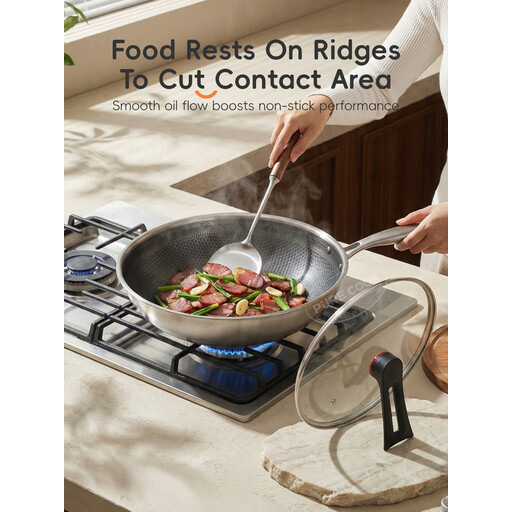
- Why It Stands Out: This large wok with lid offers a modern solution for non-stick cooking without chemical coatings. It uses a three-layer stainless steel construction with an etched honeycomb pattern on the interior. This texture creates a physical barrier, minimising food contact and sticking while allowing for the use of metal utensils. The 32cm size and included glass lid make it highly versatile.
- Pros:
- Physical non-stick surface without chemical coatings.
- Durable, scratch-resistant 304 stainless steel.
- Includes a glass lid for versatile cooking methods.
- Compatible with all hobs, including induction.
- Who is it for? Health-conscious individuals or experienced cooks looking for a durable, long-lasting wok pan that combines the searing power of stainless steel with a clever, low-stick surface.
Looking for Other Kitchen Essentials?
A great wok deserves a great hob. If you're considering a kitchen upgrade, a powerful and responsive cooker can make all the difference. Explore our range of kitchen gas cookers to find the perfect partner for your culinary adventures.
Frequently Asked Questions
1. How do you season a carbon steel wok? Seasoning creates a natural non-stick layer and protects the steel from rust. The basic process involves washing the new wok to remove factory oils, heating it until it changes colour, then applying a thin layer of a high-smoke-point oil (like sunflower or grapeseed oil) and wiping it around the interior. Heat the oiled wok for several minutes until it stops smoking, let it cool and wipe away any excess. This process is repeated to build up the patina over time.
2. Can you use a wok on an induction hob? Yes, but only if it is an induction wok. This means it must have a flat bottom and be made from a ferromagnetic material (a metal that a magnet will stick to). Carbon steel, cast iron and some series of stainless steel are all induction-compatible. Always check the product's specifications to confirm.
3. What is the difference between a wok and a stir fry pan? The main difference is the shape. A traditional wok pan has high, steeply sloped sides and a deep bowl shape, which is perfect for containing ingredients when tossing and creating different heat zones. A stir fry pan is essentially a large frying pan with deeper, straighter sides than a standard skillet but less sloped than a wok. It works well for stir-frying but offers less room for the classic tossing motion.


