
24/7 Customer Support

Free returns

Same-day & Next-day Delivery

Quality Guaranteed
Download the APP
Categories
Choosing the right wok pan can feel like a daunting task. With so many materials, shapes and sizes on the market, it's easy to get lost. You might be a home cook eager to recreate the authentic smoky aroma of a restaurant stir-fry, or perhaps you're looking for a versatile pan that can handle everything from searing to steaming. Whatever your goal, the right wok can transform your cooking.
As the Joybuy Product Recommendation Officer, my role is to help you navigate these choices. This guide cuts through the marketing clutter to offer clear, practical advice, helping you find a wok that fits your cooking style and your kitchen hob. We will look at key features to consider and highlight a few standout options available today.
Before you decide, it's helpful to understand the core differences between various types of woks. Focusing on material, shape and key features will ensure you select a pan that serves you well for years to come.
The material of a wok pan dictates its heating properties, weight and maintenance requirements.
Most UK kitchens have flat electric, ceramic or induction hobs, which makes the wok's base a critical consideration.
A couple of extra features can significantly enhance a wok's versatility. A wok with lid is invaluable for trapping heat and moisture, allowing you to steam vegetables, braise meats or keep food warm. The handle design also matters; a long handle is standard for tossing ingredients, while a smaller helper handle on the opposite side provides extra stability when lifting a full, heavy pan.
Here are a few recommendations that cater to different cooking preferences and kitchen setups.
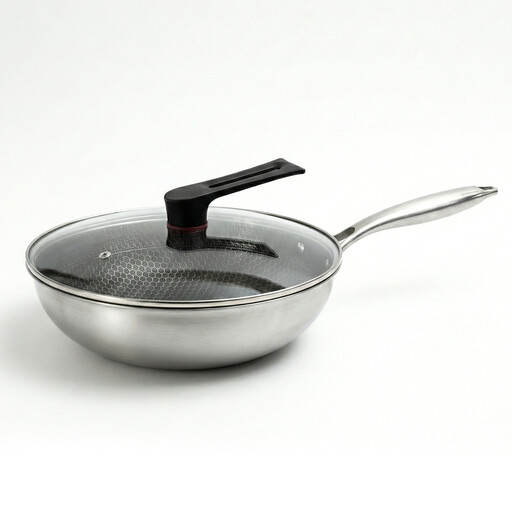
Why It Stands Out: This wok combines the durability of stainless steel with the convenience of a non-stick surface. It uses a unique honeycomb texture etched into the steel, which protects the underlying non-stick layer from scratches. This physical barrier means you can use metal utensils without damaging the surface, a rare feature for non-stick cookware. Its three-layer composite structure ensures fast, even heating across its large 32 cm surface.
Pros:
Who is it for? Home cooks looking for a low-maintenance, versatile stir fry pan that offers the benefits of non-stick cooking without the typical fragility. It's ideal for families and those who value convenience and durability.
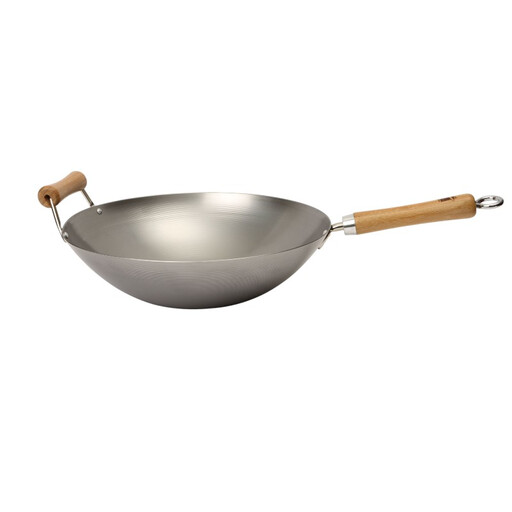
Why It Stands Out: Developed with Jeremy Pang of London's renowned School of Wok, this is a classic Chinese wok designed for authenticity. Made from uncoated 1.8mm carbon steel, it's built to achieve high temperatures and develop a natural non-stick patina over time. The large 36 cm size is perfect for cooking generous portions, and its flat bottom makes it suitable for all modern hobs.
Pros:
Who is it for? Culinary enthusiasts who are passionate about mastering traditional Asian cooking techniques and are willing to invest the time in seasoning and maintaining their pan for superior results.
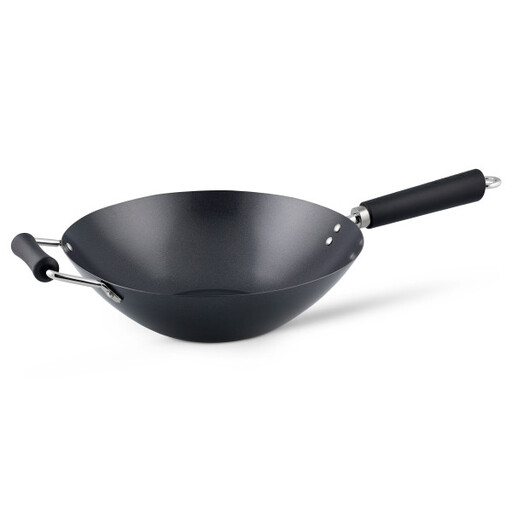
Why It Stands Out: This wok offers a practical middle ground, combining the rapid heating of carbon steel with the ease of a modern non-stick coating. At 1.5mm gauge, it's lightweight and easy to handle, perfect for fast-paced stir-frying. The three-layer non-stick coating is applied inside and out, making it durable and easy to clean. Its flat base ensures it sits securely on any hob type.
Pros:
Who is it for? The everyday home cook who wants the high-heat performance of a carbon steel wok but prefers the convenience and simple maintenance of a non-stick surface.
If you haven't found the perfect fit here or have specific requirements, such as a wok designed for a dedicated induction wok hob, there are many other models to consider. Exploring a wider collection can help you find the exact size, material and feature set that matches your culinary ambitions.
Explore our full range of wok pans and induction hobs
Seasoning creates a natural, non-stick surface on a carbon steel wok. The general process involves washing the new wok to remove the factory coating, heating it until it changes colour and then carefully swirling a high-smoke-point oil (like sunflower or rapeseed oil) inside until it polymerises into a thin, dark layer. Always refer to the manufacturer's specific instructions for the best results.
Yes, but only if the wok is induction-compatible. This means it must have a flat bottom and be made from a magnetic material like carbon steel or magnetic-grade stainless steel. Most modern woks labelled as a wok for induction hob are designed specifically for this purpose.
The main difference is the shape. A traditional Chinese wok has deep, high and sloping sides that make it easy to toss and move food around, which is essential for high-heat stir-frying. A stir fry pan is typically shallower with less sloped sides, functioning more like a large frying pan. While a stir fry pan is versatile, a wok's unique shape provides more distinct cooking zones and is better suited for classic stir-frying techniques.