
24/7 Customer Support

Free returns

Same-day & Next-day Delivery

Quality Guaranteed

Unlock Your Welcome Offers: FREE Delivery | Up to 80% OFF | Free 30-day JoyPlus trial
Download the APP
As a cyclist in the UK, whether you're commuting through city traffic or enjoying a weekend ride on country lanes, your visibility is paramount. A bike helmet with a light is a practical two-in-one solution for safety. However, the market is filled with options where the "light" feature can be more of a gimmick than a genuine safety enhancement.
Many riders find themselves disappointed by helmets with dim, short-lived lights or an uncomfortable fit that makes them a chore to wear. To help you make a sound investment, this guide breaks down the essential features to look for and highlights the common pitfalls to avoid.
Before you add a helmet to your basket, be aware of these frequent issues that can lead to buyer's remorse:
To ensure you get a helmet that genuinely improves your safety and comfort, focus on these three core parameters.
This is non-negotiable. A cycle helmet sold in the UK should be certified to CE EN 1078. This standard ensures the helmet's construction, shock-absorbing capabilities and strap system meet rigorous safety benchmarks. You may also see American standards like CPSC or ASTM, which are also indicators of robust testing and quality manufacturing. Always check the product description for these certifications.
An effective LED bike helmet is more than just a light. Analyse the specifics:
A helmet you forget you're wearing is one you'll use every time. Key components for a great fit include:
Based on these practical criteria, we've matched several helmets to different types of UK riders.
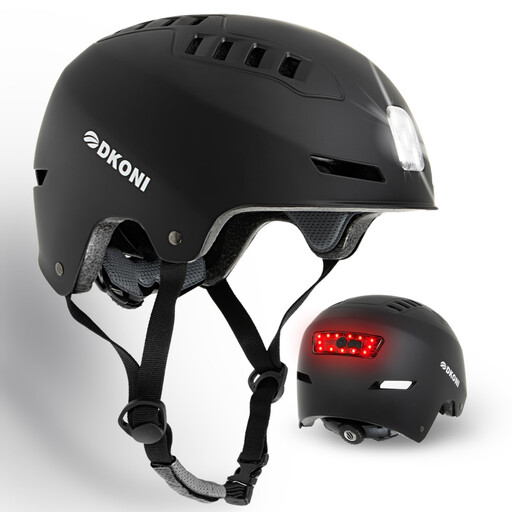
Why This Fits Their Persona: This helmet is built for the demands of daily travel. The inclusion of both front and rear lights provides 360-degree visibility in busy urban traffic, a key consideration for anyone navigating roundabouts and junctions in low light.
It features a comprehensive USB rechargeable lighting system, not just a token rear light. With 5 front LEDs and 13 rear LEDs, it provides substantial illumination. It is also certified to CPSC, CE and ASTM standards.
Front and rear lights for maximum visibility. 20 vents provide excellent cooling for everyday comfort. Removable and washable inner lining.
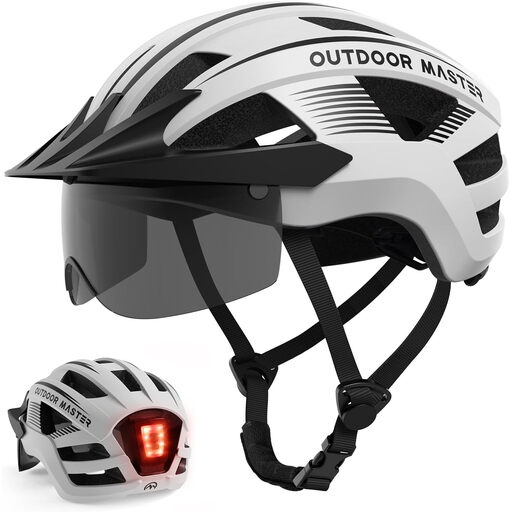
Why This Fits Their Persona: Perfect for riders who enjoy varied conditions, from sunny park paths to overcast country lanes. The detachable magnetic goggles and sun visor offer brilliant versatility, adapting to changing British weather in seconds.
This helmet features a proper adjustable dial fit system for a secure fit. The Type-C rechargeable rear light is a modern, convenient feature, and the helmet is certified to both CPSC and ASTM standards.
Includes magnetic goggles and a removable visor for all-weather riding. Features a modern Type-C charging port for the rear light.
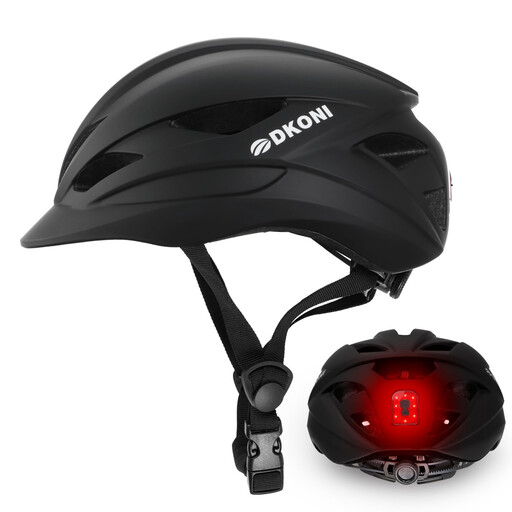
Why This Fits Their Persona: An excellent choice for new cyclists or those seeking a straightforward, reliable upgrade. It focuses on the core essentials: certified protection, a functional light and a comfortable fit, without overwhelming with complex features.
It avoids the "token light" pitfall with a removable USB rechargeable unit offering a practical 3-5 hours of runtime. The in-mould construction and adjustable fit system provide the necessary safety and comfort that cheaper models lack.
Focuses on core safety and visibility features. The light is removable for easy charging. Lightweight and breathable with 15 vents.
We have compiled a complete, real-time list of products that fully satisfy these strict selection criteria and UK safety regulations.
This varies by model and mode. Most quality helmets provide between 3 to 10 hours of runtime on a single charge. A flashing mode will almost always last longer than a steady beam. For a typical 30-minute commute each way, you can expect to get several days of use before needing to recharge.
Most integrated helmet lights are designed to be water-resistant and can handle typical British rain and road spray. However, they are not usually fully waterproof, so they should not be submerged. Always check the product's specifications for its water resistance rating if you plan on riding frequently in heavy downpours.
Yes. While a helmet light significantly improves your visibility to others, it is not a substitute for bike-mounted lights. UK law requires a white front light and a red rear light on your bicycle between sunset and sunrise. A helmet light is an excellent supplementary safety measure, making you more visible from different angles, but it should be used in addition to legally required bike lights.