Everyday black-tea drinkers
If you make tea most weekday mornings, decide whether you want a standard black-tea cup or the fuller profile of an English Breakfast blend. Brewing time matters to either choice.


For a weekday breakfast, start with an everyday black-tea bag if you want a familiar routine cup, or choose an English Breakfast blend if you prefer the fuller-bodied profile described by Twinings and Clipper. If hard water changes how your usual tea brews, consider a blend labelled for that condition. A clearly labelled decaf or an Organic and Fairtrade-labelled tea addresses different priorities; neither label tells you how strong the cup will taste.
If you make tea most weekday mornings, decide whether you want a standard black-tea cup or the fuller profile of an English Breakfast blend. Brewing time matters to either choice.
Hard water, a preference for adding milk or a need to reduce caffeine can make the blend type more important than choosing a familiar brand.
If Organic, Fairtrade or Rainforest Alliance labelling affects your choice, check the claim on the exact tea you plan to buy rather than assuming it applies across a brand’s range.
Choose the kind of cup you want first, then check whether your water, caffeine needs or sourcing preferences call for a more specific tea.
| Priority | What to check | Your needs |
|---|---|---|
| Tea format and brewing | Check the pack’s brewing time and whether its instructions differ from your usual routine. PG Tips Original’s reviewed listing gives 1–3 minutes; Yorkshire Tea advises 4–5 minutes for its tea. | I want a tea bag that fits my morning routine, but I can allow the stated brewing time before deciding whether the cup tastes strong enough. |
| Black-tea flavour | Compare an everyday black tea with an English Breakfast blend. Twinings describes its English Breakfast blend of Assam, Ceylon and Kenyan teas as full-bodied; Clipper describes Assam and Ceylon in its Organic Fairtrade version. | I might prefer a fuller breakfast cup, particularly with milk, rather than my usual everyday blend. In the UK Tea & Infusions Association’s 2025 Tea Census, 71% of respondents named traditional black tea, with or without milk, as their main infusion choice; that figure does not distinguish blend strength or brand. |
| Hard water | Consider whether your water changes the appearance or texture of your usual tea. Yorkshire Tea says minerals in hard water can make tea darker and thicker; its range includes a blend labelled for hard water. | My usual tea brews differently in my tap water, so I would try a hard-water blend before assuming I need a stronger one. |
| Caffeine | Look for an explicitly decaffeinated product; a lighter-tasting tea is not necessarily decaf. Check the current pack if an exact residual caffeine amount matters. | I want to reduce caffeine while keeping a black-tea-style breakfast cup. I would not treat a decaf label as a promise of zero caffeine. |
| Sourcing and ingredients | Read certification and ingredient statements for the exact pack. Clipper labels its English Breakfast tea Organic and Fairtrade; a reviewed Tetley Original listing identifies Rainforest Alliance Certified black tea. | Certified sourcing matters to me, so I would compare the labels on the particular blends I am considering. |
An English Breakfast blend may suit someone seeking a fuller-bodied cup, but that is a taste preference, not a reason to rule out everyday black tea.
Choose the flavour profile you want, then follow the pack’s brewing directions before deciding that a blend tastes too weak or too strong.
Yorkshire Tea says minerals in hard water can make tea darker and thicker. Changing blend strength does not directly address that water condition.
If this happens repeatedly with your usual tea, try a hard-water-labelled blend before buying a larger pack.
Decaffeinated tea is the relevant label when reducing caffeine, but an exact residual amount matters to some buyers.
Check the current pack for its caffeine declaration if you need a precise figure. When following caffeine guidance, account for other sources as well as tea.
The delivered pack is the one you will use, and its ingredient, certification and brewing statements are the relevant details for that purchase.
Read its label before use, particularly if ingredients, allergens or a particular certification affect your choice.
Tetley Original is an everyday black-tea option. A reviewed ASDA listing identifies its tea as 100% Rainforest Alliance Certified black tea.
PG Tips Original is an everyday black tea. Its reviewed ASDA listing recommends infusing the bag for 1–3 minutes, with milk if preferred.
Yorkshire Tea lists regular, Gold, Decaf and Hard Water teas. The brand says minerals in hard water can make tea darker and thicker.
Twinings describes its English Breakfast blend of Assam, Ceylon and Kenyan teas as full-bodied. It also offers a decaffeinated English Breakfast product.
Clipper labels its English Breakfast tea Organic and Fairtrade and describes a blend of Assam and Ceylon.
Typhoo One Cup is an everyday single-cup tea; the brand specifies 2g of tea per bag for its reviewed product.
These tea bags cover a fuller English Breakfast blend, a hard-water-labelled blend, two decaf choices and a flavoured option. Match the product to the cup you want rather than treating them as interchangeable everyday black teas.
 No image available
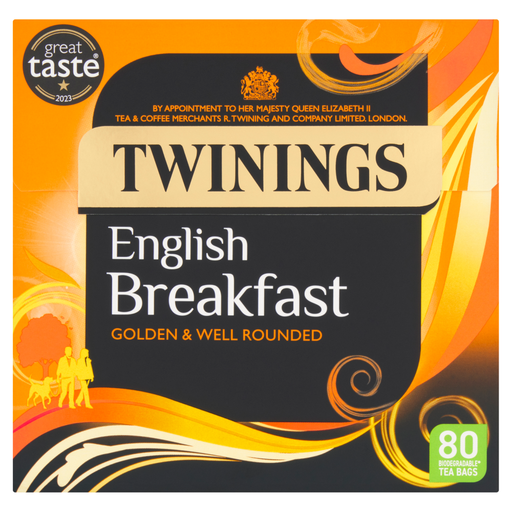
Consider this English Breakfast blend if you prefer the full-bodied style Twinings describes. Follow the pack’s brewing directions when judging its strength.
 No image available
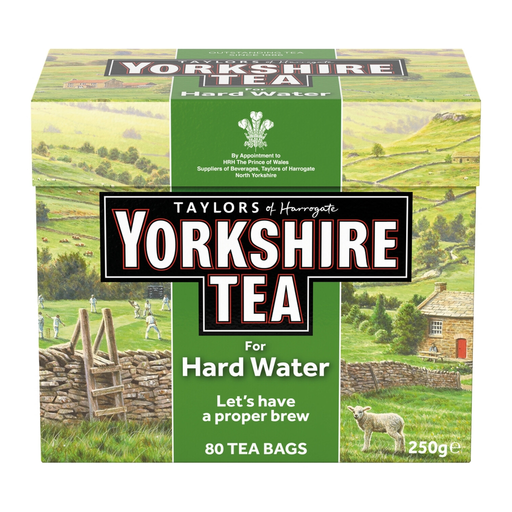
A blend labelled for hard water, relevant if your usual tea brews darker or thicker in your tap water. Yorkshire Tea attributes that effect to minerals in hard water; check the pack for brewing instructions.
 No image available
This decaf everyday black tea is labelled Organic and Fairtrade. It combines a caffeine-reduction choice with those sourcing labels; check the current pack if an exact residual caffeine amount matters.
 No image available
A decaffeinated tea-bag option for a routine breakfast cup. Check the delivered pack’s brewing instructions to adjust the cup to your taste.
 No image available
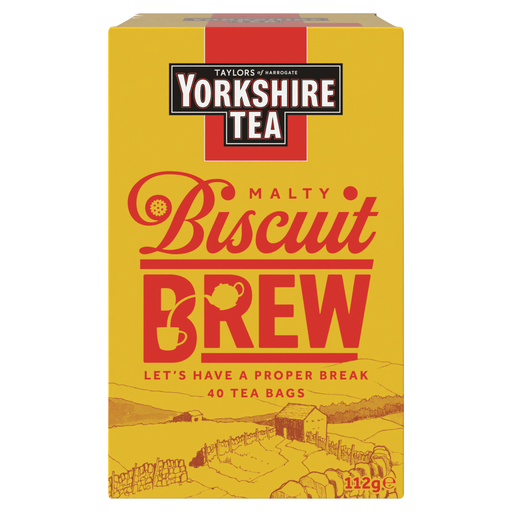
A flavoured black tea for someone who wants a biscuity cup rather than plain breakfast tea. Its product information states 3% natural flavouring and a 3–5 minute brewing range.
Choose English Breakfast if you want a fuller-bodied black-tea profile; Twinings and Clipper describe that character in their respective blends. An everyday blend makes sense if you prefer a standard routine cup. Follow the brewing directions before judging either tea’s strength.
Consider it if you know your supply is hard or your usual tea repeatedly brews darker or thicker than you like. Yorkshire Tea says minerals in hard water can cause those changes; a hard-water-labelled blend is a choice for that condition, not a universal upgrade.
Do not assume they contain no caffeine. Check the current pack if you need an exact residual amount. During pregnancy, the NHS advises no more than 200mg of caffeine a day from all sources, including tea.
Check the particular tea’s brewing instructions and give the bag its stated time before changing blends. Yorkshire Tea advises 4–5 minutes for its tea, while the reviewed PG Tips Original listing gives 1–3 minutes, so one timing rule will not suit every product.
Read the ingredient and allergen information on the delivered pack before use, especially if either affects what you can buy. Check certification claims on that same pack rather than assuming they apply to every tea from the brand.