
24/7 Customer Support

Free returns

Same-day & Next-day Delivery

Quality Guaranteed

Unlock Your Welcome Offers: FREE Delivery | Up to 80% OFF | Free 30-day JoyPlus trial
Download the APP
For many of us in the UK, the appeal of Korean cuisine lies in its bold, complex flavours. At the heart of this is kimchi, the spicy, tangy fermented cabbage that brings life to countless dishes. But when you want to enjoy authentic Korean kimchi dishes at home without spending hours in the kitchen, the frozen aisle can be difficult to navigate. Packaging promises an authentic taste, but the reality can often be a let-down.
As the Joybuy Product Recommendation Officer, my role is to help you see past the marketing and make informed choices. Here, we’ll look at the common pitfalls when you buy Korean food online and what to check to ensure you’re getting the flavourful, convenient meal you expect.
Many ready-to-cook Korean meals fail to deliver on their promise. Being aware of these common issues is the first step to avoiding a disappointing dinner.
To find high-quality, easy Korean meals, a quick look at the ingredient list and product description can tell you everything you need to know. Focus on these three areas.
The single most important factor for authentic kimchi products is the kimchi itself. Look for fermented Chinese cabbage (or Napa cabbage) high up on the ingredient list. A specific percentage, such as "Kimchi (27%)", is a good indicator that it's a primary component, not just a flavouring. The presence of ingredients like red pepper powder, garlic, ginger and a form of fish or anchovy sauce (in non-vegan versions) points towards a more traditional fermentation process, which is key to developing that deep, tangy flavour.
For dishes like frozen kimchi dumplings or pancakes, the supporting ingredients are crucial. A well-made filling is a balanced combination of textures and flavours.
The type of wrapper or batter dictates the final texture. A thin, delicate wrapper, often seen on gyoza-style dumplings, is designed for pan-frying to achieve a crispy bottom and steamed top. A thicker, chewier dough, characteristic of traditional kimchi mandu, is more robust and holds up well to steaming, boiling or being added to a kimchi jjigae soup. Some modern dumplings even use a starch-based "skinny dough" for a uniquely chewy and translucent finish. Check the recommended cooking instructions, as they are tailored to the product's specific composition.
Based on these criteria, here are a few options from our catalogue, matched to different tastes and lifestyles.
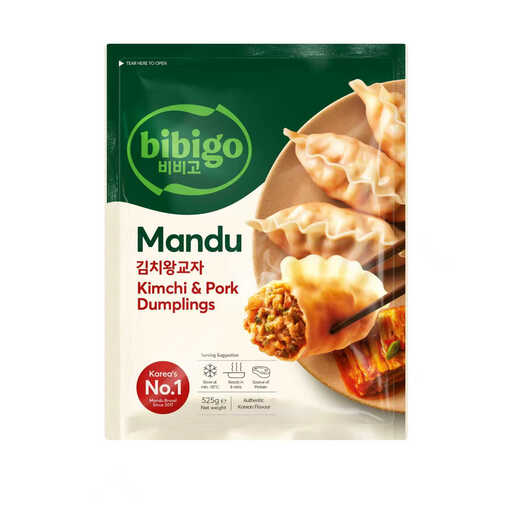
Why This Fits Their Persona: After a long day, you want a quick, reliable and satisfying meal. These dumplings offer a classic flavour combination that is ready in under 10 minutes, providing a restaurant-quality experience with minimal effort.
The filling is generous, with 20% kimchi and 17% pork, avoiding the "scant filling" issue. The flavour is well-balanced, delivering an authentic taste without being overly sweet.
The large mandu size means more filling in each bite. The thin, chewy wrapper crisps up beautifully when pan-fried.

Why This Fits Their Persona: For those who actively seek out fiery flavours, this is the perfect choice. It combines the cult-favourite Buldak hot chicken flavour with kimchi for a truly intense and memorable spicy Korean food experience.
This product leans into its spicy identity, completely avoiding the "authenticity gap" of being too mild. The flavour is bold, distinctive and exactly what fans of the Buldak brand expect.
It delivers a powerful, layered heat from Habanero and Capsicum powders combined with the tangy kimchi. The large 700g pack is great value.
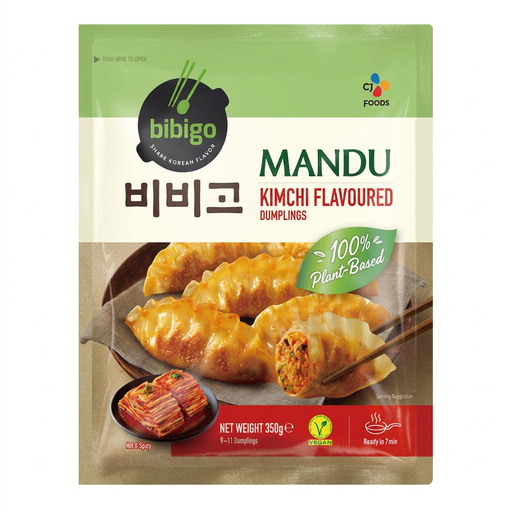
Why This Fits Their Persona: Finding authentic-tasting Korean food that is guaranteed vegan can be a challenge. This product is specifically created for a plant-based diet, using tofu and soy protein to create a satisfying filling without any animal products.
It avoids the trap of bland vegetarian fillings by using a high vegetable content (38%) and textured soy protein, ensuring a substantial bite and rich flavour that stands up to the kimchi.
Clearly labelled as vegan, removing any guesswork. The filling includes dehydrated tofu and a variety of vegetables for a complex texture and taste.
We have compiled a complete, real-time list of products that fully satisfy these strict selection criteria and UK safety regulations.
For the best crispy texture, pan-frying is the ideal method. Heat a few tablespoons of oil in a non-stick frying pan over a medium heat. Place the frozen dumplings flat-side down and fry for 5-7 minutes until the bottoms are golden brown. Then, carefully add about 60ml of water to the pan and immediately cover with a lid. Let the dumplings steam for another 3-4 minutes until the wrappers are translucent and the filling is piping hot.
While both are types of dumplings, there are subtle differences. Mandu is the Korean term for dumplings, and they can come in various shapes and sizes with thicker, chewier dough. They are versatile and can be steamed, boiled, pan-fried or deep-fried. Gyoza are the Japanese version, typically crescent-shaped with a thinner wrapper. They are most commonly pan-fried to create a signature crispy bottom and soft, steamed top.
Yes, absolutely. Adding frozen kimchi dumplings is a fantastic way to make a simple kimchi jjigae soup more substantial and flavourful. There's no need to thaw them first. Simply drop the frozen mandu into the simmering stew about 8-10 minutes before you plan to serve it. They will cook through in the hot broth, absorbing the flavour of the soup while adding their own delicious filling to the mix.