
24/7 Customer Support

Free returns

Same-day & Next-day Delivery

Quality Guaranteed

Unlock Your Welcome Offers: FREE Delivery | Up to 80% OFF | Free 30-day JoyPlus trial
Download the APP
Navigating the world of matcha powder can feel overwhelming. With labels promising everything from ancient ceremonial traditions to modern health boosts, it’s easy to end up with a product that disappoints. Many UK shoppers find themselves with a dull, bitter powder that bears little resemblance to the vibrant, smooth tea they were hoping for.
As the Joybuy Product Recommendation Officer, my role is to help you see past the marketing jargon. Before you decide where to buy matcha in the UK, let’s look at two common pitfalls that lead to a poor purchase and how you can avoid them.
To ensure you get a quality product that suits your needs, focus on these core parameters instead of just the marketing claims.
Understanding the distinction between grades is the most important step in choosing the right matcha.
The source and production method have a significant impact on the final product.
Here are a few options from our catalogue, matched to different needs and preferences to help you make a confident choice.
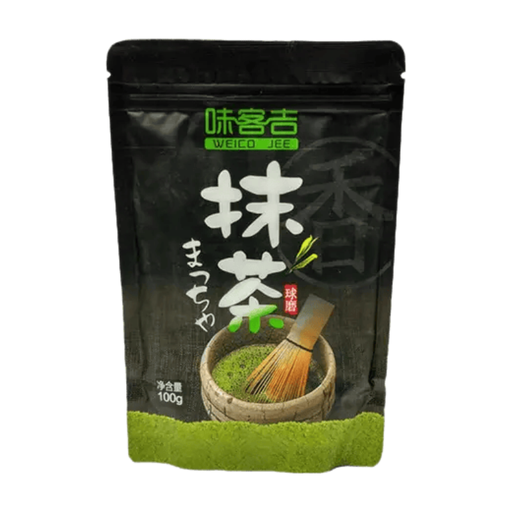
Why This Fits Their Persona: For someone who enjoys a matcha latte or smoothie as part of their daily routine, this 100g pack offers excellent value. It provides a solid matcha green tea flavour that works well when mixed with milk and other ingredients, making it a practical choice for frequent use.
This product avoids the "Ceremonial Mirage" trap by being positioned as a versatile, everyday powder. You are not overpaying for delicate notes that would be lost in a latte, instead getting a reliable product fit for purpose.
The large 100g quantity is economical for daily consumers. Its flavour is robust enough for lattes, smoothies and baking applications.
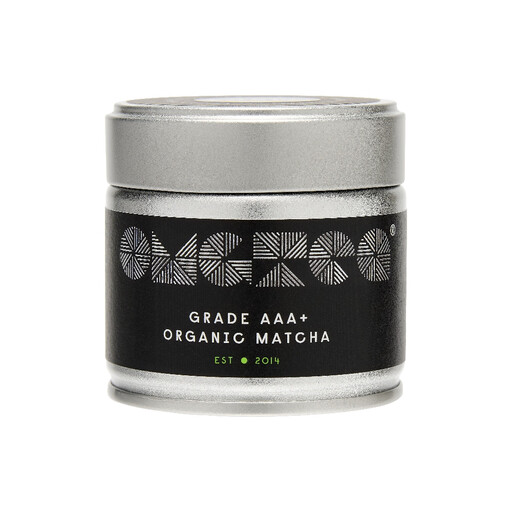
Why This Fits Their Persona: This is for the connoisseur who prepares matcha traditionally and values the authentic experience. It is crafted from first-harvest, shade-grown, stone-ground leaves, delivering the quality expected for preparing usucha (thin tea) or koicha (thick tea).
It completely sidesteps the "Colour Deception" with a brilliant, radiant jade green colour. Its description specifies it is stone-ground from the first harvest, providing verifiable quality markers that justify its premium ceremonial status.
This is a high-grade organic Japanese matcha with a naturally sweet, creamy and umami-rich flavour profile with zero bitterness. It is designed for purists.
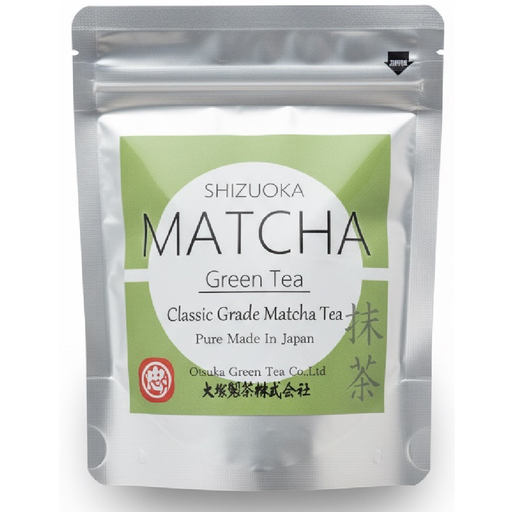
Why This Fits Their Persona: This is an excellent starting point for those wanting to experience authentic Japanese matcha. Sourced from Shizuoka, it offers a genuine taste of a quality product without the price tag of a top-tier ceremonial grade, making it an accessible upgrade from generic powders.
It provides a clear origin from a renowned Japanese tea region. Its balanced flavour and vibrant colour offer a reliable benchmark for what good matcha should be, helping you avoid the trap of low-quality, dull-coloured powders.
It is a 100% pure, stone-ground matcha from Shizuoka, Japan. Its classic grade offers a balanced blend of umami and gentle bitterness, making it versatile for drinking straight or in lattes.
We have compiled a complete, real-time list of products that fully satisfy these strict selection criteria and UK safety regulations.
Fresh matcha has a vibrant green colour and a sweet, grassy aroma. If your matcha has turned a dull, brownish-green and has lost its pleasant smell, it has likely oxidised and will taste flat and bitter. To preserve freshness, always store your matcha in an airtight container in a cool, dark place, preferably the refrigerator after opening.
High-quality, finely ground matcha is very electrostatic and prone to clumping, especially in the UK's humid climate. This is a sign of a fine grind, not a flaw. To ensure a smooth, clump-free drink, always sift the matcha powder through a small, fine-meshed tea strainer into your bowl before adding water. This breaks up the clumps and aerates the tea, allowing it to dissolve perfectly.