
24/7 Customer Support

Free returns

Same-day & Next-day Delivery

Quality Guaranteed

Unlock Your Welcome Offers: FREE Delivery | Up to 80% OFF | Free 30-day JoyPlus trial
Download the APP
Buying sugar online in the UK should be straightforward, but product listings can make a simple cupboard staple seem more complicated than it is. The main decision is not which packet has the most persuasive description; it is whether the sugar’s crystal size, ingredients and pack size suit the way you intend to use it.
Whether you need granulated sugar for tea and coffee, caster sugar for baking or icing sugar for buttercream, checking a few practical details can help prevent wasted money and disappointing results.
Granulated, caster and icing sugar are not interchangeable in every recipe.
A finely milled sugar is not automatically a suitable replacement for granulated sugar. Texture affects dissolving, aeration and the finished appearance of baked goods.
A low-priced packet may contain considerably less sugar than a standard 1kg sugar pack. Compare the cost per kilogram rather than the headline price, particularly when shopping for bulk sugar packs for a café, catering business or frequent home baking.
A smaller packet can still make sense if you use sugar occasionally and have limited cupboard space. Larger packs are more practical for regular users, provided you can store them in a dry, sealed container.
Words such as “premium”, “professional” or “high quality” do not explain whether a product is granulated, caster or icing sugar. Look instead at the ingredient list, net quantity, country-of-origin information and storage instructions.
Some listings also use preference surveys or sustainability statements. These should be treated as supporting information rather than a guarantee that a product will suit every recipe or household.
The most important specification is the sugar’s physical form.
For everyday use, white sugar with medium crystals is a flexible choice. Granulated sugar can sweeten tea and coffee, be added to sauces and work in traditional cakes. Caster sugar is more appropriate where a recipe requires quick dissolving or a smooth mixture. Icing sugar is the practical option for decorating and making smooth frostings.
If you are following a recipe from a cookbook or baking website, use the stated sugar type unless the recipe gives a tested alternative.
Check whether the product is listed as:
For example, Tate & Lyle Cane Icing Sugar lists cane sugar and maize starch. This helps the powder remain easier to handle, but it means the product is not identical to a packet labelled as 100% cane sugar.
Sugar products commonly list no known allergens, but always read the current packaging and online product information if you are buying for someone with a food allergy or dietary requirement. Vegetarian, vegan and kosher suitability should also be confirmed from the product listing where relevant.
Check the net quantity before placing an order. Common options include 454g, 500g, 1kg and 2kg sugar packs. A 500g bag may be sufficient for occasional decorating, while a 2kg caster sugar pack can suit regular baking or small-scale catering.
Store sugar in a cool, dry place, away from steam and strong kitchen odours. Caster and icing sugar can absorb moisture more readily than larger crystals. Reseal opened packaging or transfer it to an airtight container to reduce clumping.
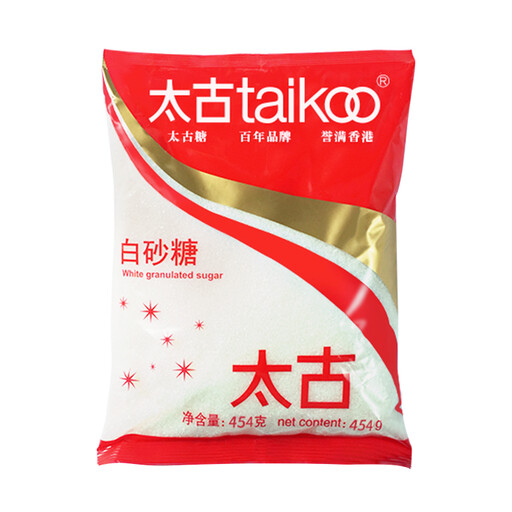
Why This Fits Their Persona: The 454g pack offers an accessible amount for smaller households, occasional bakers or shoppers trying a new white sugar before committing to a larger bag. It is listed for beverages, cooking, baking and desserts.
The clearly stated 454g net quantity makes it easier to compare the actual amount with 1kg sugar packs before buying.
Fine crystals; suitable for drinks, cooking, baking and desserts; listed with no known allergens.
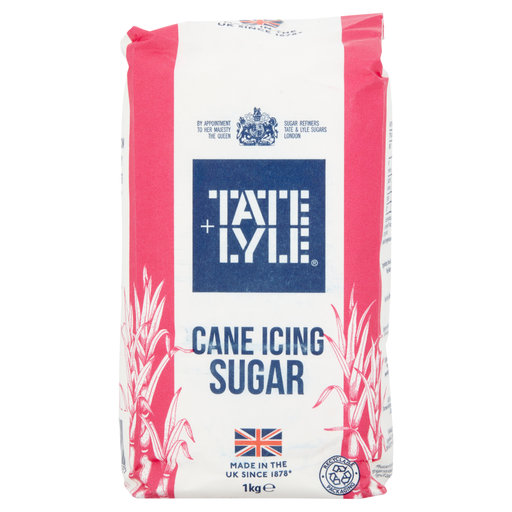
Why This Fits Their Persona: A 1kg icing sugar pack suits home bakers who regularly make buttercream, glazes or decorated cakes and want one clearly defined baking sugar for these tasks.
The product is specifically identified as icing sugar, with its maize starch ingredient shown rather than hidden behind general baking language.
Fine, silky texture; suitable for dusting, glazing and buttercream; listed as suitable for vegetarians and vegans.
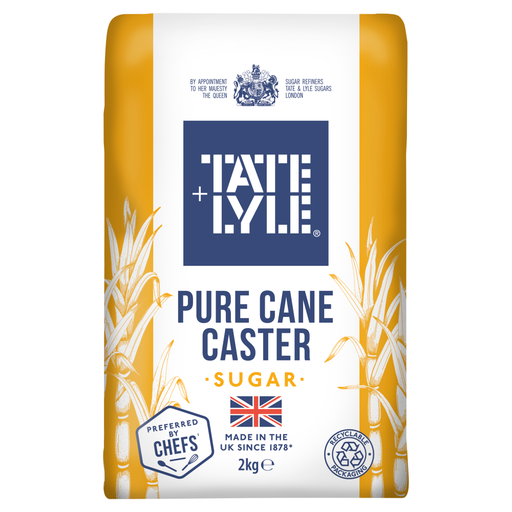
Why This Fits Their Persona: The 2kg format is suited to frequent home bakers, cafés, caterers and households that use caster sugar across cakes, meringues and desserts.
The larger pack is a transparent choice for high-volume use, reducing the need to repeatedly buy small packets. Storage should still be planned before ordering.
100% pure cane sugar listed; fine crystals; suitable for baking and recipes requiring caster sugar.
For a versatile cupboard staple, granulated sugar is generally the most adaptable. Silver Spoon Granulated Sugar 1kg is listed for baking and beverages, while Tate & Lyle Granulated Sugar 1000g is described for tea, coffee, cakes, jams and preserves.
Choose caster sugar when fine crystals are important to the recipe. A 500g pack can suit occasional baking, while a 1kg or 2kg pack may offer more practical value for frequent use. For decoration, buttercream and glazing, choose icing sugar rather than trying to grind granulated sugar at home.
If you are comparing cane sugar with generic white sugar, focus on the ingredient statement and intended use. Cane sugar can be supplied as granulated, caster or icing sugar, so “cane” alone does not identify the texture.
We have compiled a complete, real-time list of products that fully satisfy these strict selection criteria and UK safety regulations.
Yes. Granulated sugar is commonly used for sweetening hot drinks. Medium crystals dissolve more quickly in hot liquid than in cold drinks, where stirring may take longer.
Keep it in a cool, dry cupboard, away from steam and humidity. Reseal the original packet or use an airtight container. If icing sugar or caster sugar becomes lumpy, sieving may restore a smoother texture, provided the product has been stored correctly and the packaging is intact.
It can reduce the price per kilogram, but compare the full product price, delivery cost and storage requirements. A bulk pack is sensible for professional bakers, cafés and larger households that use sugar regularly. For occasional use, a smaller pack may reduce waste and simplify storage.