
24/7 Customer Support

Free returns

Same-day & Next-day Delivery

Quality Guaranteed

Unlock Your Welcome Offers: FREE Delivery | Up to 80% OFF | Free 30-day JoyPlus trial
Download the APP
Buying cake icing and frosting can seem straightforward until you are faced with ready-to-use tubs, ready-to-roll icing, piping icing, buttercream icing and icing sugar. The wrong choice may crack when rolled, lose its shape on a warm kitchen worktop or leave you with far more product than your cake needs.
For UK home bakers, the practical choice depends on the finish required, the amount of decorating involved and how soon the bake needs to be ready.
A large tub or bag is not automatically economical. A ready-to-spread frosting may cover one 20cm cake or several cupcakes, while a 1kg block of fondant icing is intended for a much larger covered cake. Check the stated coverage and serving guidance before comparing prices.
Ready-to-use icing is designed for spreading or piping with minimal preparation. Ready-to-roll icing is a pliable fondant used to cover cakes or shape decorations. Icing sugar is a separate ingredient for making buttercream, glaze or dusting finished bakes.
Using piping icing to cover a whole cake can produce an uneven finish, while trying to pipe a thick fondant may lead to tearing and poor definition.
Some products need refrigeration once opened, while others should be wrapped tightly and kept in a cool, dry place. Moisture, heat and air can alter texture. Always follow the packaging instructions, particularly when baking ahead for birthdays, school events or family gatherings.
For lettering, borders and small details, look for piping icing that flows steadily but holds its shape. The Morrisons Large Piping Icing Tube White 120g is supplied in a pre-filled tube, so it avoids the need for a piping bag and bowl. The product instructions recommend gently kneading the tube before use and replacing the cap tightly to reduce drying and clogging.
For a smooth cake covering, choose ready-to-roll icing. Morrisons Ready To Roll Icing 1kg is described as suitable for covering a 25cm round cake or a 23cm square cake at approximately 6mm thickness. It can also be shaped into simple flowers, figures and borders.
For spreading and filling, vanilla frosting, buttercream icing and cream cheese icing offer different flavour profiles. Cream cheese-style icing is commonly paired with carrot cake and red velvet-style bakes, while vanilla buttercream icing works with sponge, chocolate and cupcake recipes.
Measure the cake before purchasing. A product that covers an 8-inch cake may be suitable for a standard sandwich cake but not a tall or heavily decorated celebration cake. Cupcake coverage also varies according to whether you want a thin swirl or a high piped topping.
For recipes made from scratch, icing sugar is a useful cupboard staple. Tate & Lyle Cane Icing Sugar is sold in 1kg and 500g packs and contains cane sugar and maize starch. The fine texture is suitable for dusting, glazing and preparing buttercream.
Check the label for allergens and dietary suitability rather than relying only on front-of-pack wording. The Morrisons ready-to-roll product is listed as suitable for vegans and vegetarians, but the description notes that it may contain nuts due to manufacturing methods. Morrisons Vanilla Frosting lists no allergens, while Betty Crocker products state that they may contain milk.
Nutritional information also varies considerably. For example, the listed Morrisons Vanilla Frosting contains 417 kcal and 68.1g of sugars per 100g. These figures do not determine whether a product is suitable for a particular recipe, but they help you compare options and portion sizes.

Why This Fits Their Persona: A ready-to-use option for first-time decorators, parents baking with children or anyone who wants to finish cupcakes without preparing buttercream from scratch.
The 400g format is easier to match to a small cake or cupcake project than a bulk pack, and the tub can be stirred and used directly.
Vanilla flavour; suitable for spreading or piping; refrigerate after opening and use within 30 days.

Why This Fits Their Persona: Suits bakers who want a distinctive cream cheese flavour for carrot cake, red velvet-style cakes and cupcakes without making a separate icing mixture.
The pack states that it is ready to spread and can cover and fill an 8-inch cake or cover up to 27 cupcakes, giving a clearer basis for planning.
Ready to spread; suitable for vegetarians; listed as gluten-free; refrigerate leftovers after opening.
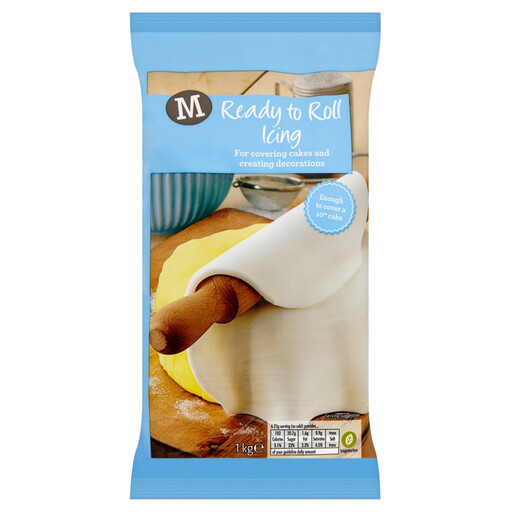
Why This Fits Their Persona: A practical choice for larger celebration cakes, repeated decorating sessions and bakers who need fondant icing for both covering and modelling.
The stated cake dimensions and approximate 6mm thickness help you assess whether the quantity matches your project before opening the pack.
1kg pack; suitable for vegans and vegetarians; can be rolled, covered and shaped into simple decorations.
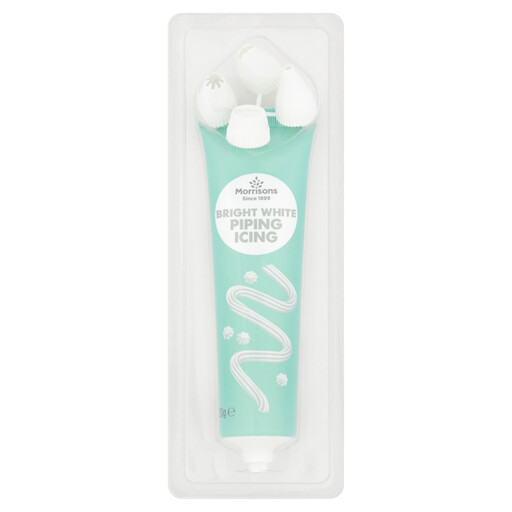
Why This Fits Their Persona: Designed for lettering, borders, lace details and quick cupcake decoration when controlled application matters more than bulk quantity.
Its pre-filled tube avoids estimating how much icing to place in a piping bag and reduces washing-up for smaller decorating jobs.
120g ready-to-use format; white icing; no artificial colours listed; suitable for cakes, cupcakes and biscuits.
We have compiled a complete, real-time list of products that fully satisfy these strict selection criteria and UK safety regulations.
In UK baking, the terms are often used interchangeably. Icing sugar is a fine powdered ingredient, while frosting usually describes a prepared spreadable topping such as vanilla frosting, buttercream icing or cream cheese icing. Fondant icing is typically rolled out to cover a cake.
The amount depends on the cake’s diameter, height and decoration style. Check the pack’s coverage guidance. For example, the listed 1kg ready-to-roll product is intended to cover a 25cm round cake or a 23cm square cake at approximately 6mm thickness, whereas a 400g ready-to-use tub is aimed at an 8-inch cake or multiple cupcakes.
Storage varies by product. Morrisons Vanilla Frosting and Betty Crocker icing instructions state that opened leftovers should be refrigerated and used within 30 days. Ready-to-roll icing should be tightly wrapped and placed in an airtight container so it does not dry out or crack. Always prioritise the storage and use-by guidance printed on the packaging.