
24/7 Customer Support

Free returns

Same-day & Next-day Delivery

Quality Guaranteed

Unlock Your Welcome Offers: FREE Delivery | Up to 80% OFF | Free 30-day JoyPlus trial
Download the APP
Buying car polishing tools can appear straightforward until you compare pad hardness, machine movement, abrasive grade and power options. A low-cost kit may look comprehensive, yet the wrong combination can spread polish unevenly, create new marks or leave you with accessories that do not fit your machine.
Whether you are maintaining a daily car on a UK driveway, carrying out automotive paint correction, restoring metalwork or polishing sealed floors, focus on compatibility and control rather than exaggerated finish claims.
A car polisher can improve the appearance of light swirls, oxidation and surface dullness, but it cannot automatically remove deep damage. If a scratch catches your fingernail, polishing may not be enough. Aggressive cutting can also reduce clear-coat thickness, particularly around panel edges and sharp contours.
For controlled DIY work, a dual action polisher is generally easier to manage than a rotary machine because its oscillating movement can reduce the risk of concentrated heat. A rotary polisher may suit experienced users who need targeted correction, but it demands careful speed and pressure control.
A higher revolutions-per-minute figure does not necessarily mean faster or safer results. Speed must match the compound, pad, surface and task. Lower settings are more suitable for spreading wax or polishing; higher settings may be used for correction, but can generate heat and increase the risk of marking.
Variable speed control is therefore more useful than a single headline RPM figure. Check whether the control is easy to adjust while holding the machine securely.
Polishing pads, backing plates and drill adapters use different attachment systems and sizes. A set may include foam polishing pads, wool pads and sanding discs, but still be unsuitable for your existing machine.
Before ordering, confirm:
For large painted panels, a mains-powered dual action polisher can provide consistent power during longer sessions. The BATOCA 5-inch model listed below has a 1,100 W motor, six speed settings from 2,500 to 5,500 RPM, and removable side and D-shaped handles.
A cordless car polisher is more convenient around vehicles without easy access to a socket. Battery capacity and spare batteries matter more than portability alone. The BATOCA S5 Mini includes two 12 V, 2.0 Ah batteries, three shaft options and 25 mm, 50 mm and 75 mm support plates, making it suited to smaller areas such as headlights, emblems and wheel details.
Use harder foam or polishing sponge pads for more aggressive correction, and softer pads for finishing, brightening or applying wax. Pad colour is not a universal hardness standard, so check the seller’s description rather than relying only on colour.
Faux wool pads can help with cutting or removing fine process marks, but they still require suitable compound, controlled movement and frequent cleaning. Car wax applicator pads are normally softer and designed to distribute product evenly by hand rather than remove significant paint defects.
Wet and dry sanding sheets are selected by grit number. A higher number indicates a finer abrasive. The Silverline 10-pack contains 1200-grit silicon carbide sheets measuring 230 × 280 mm, suitable for fine preparation between coating stages on automotive and metal finishes.
Wet sanding should be approached cautiously. Use light, even strokes, keep the surface lubricated and rinse between grit stages. The supplied information recommends soaking the sheet before use and using a water-and-surfactant mixture. Do not use solvents as lubricants.
For dry sanding, follow the product instructions and use suitable eye, skin and respiratory protection. Crystalline silica dust can be hazardous; avoid creating or breathing dust and follow current UK workplace or household safety guidance. Do not use wet sanding on bare metal unless the instructions specifically permit it.
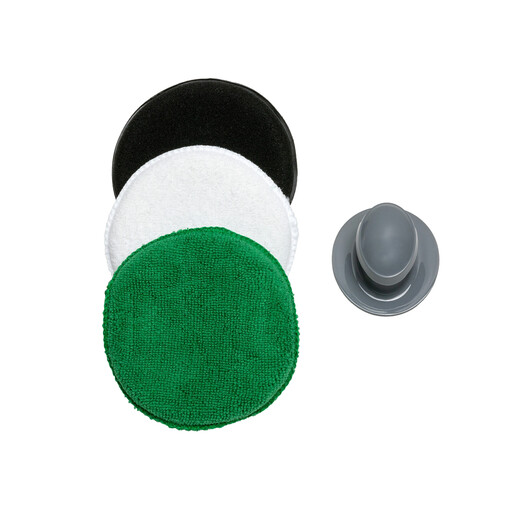
Why This Fits Their Persona: A practical starting point for hand-applied wax, polish and cleaner, particularly where storing or powering a machine is inconvenient in a UK home garage.
It avoids unnecessary machine speed and uses separate pads for different detailing tasks, helping reduce cross-contamination between products.
Three reusable applicator pads with ergonomic handles and hook-and-loop attachment.
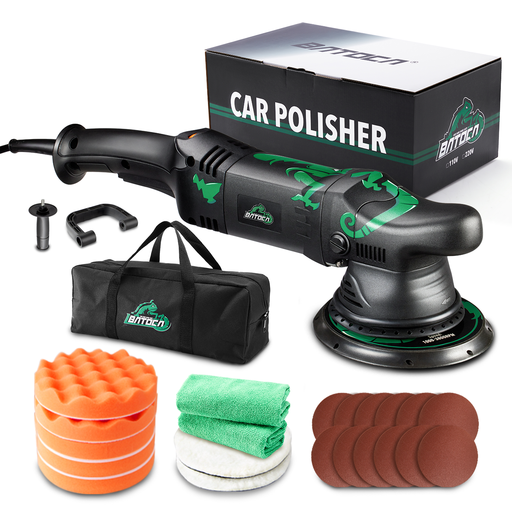
Why This Fits Their Persona: Suitable for regular vehicle care, larger painted areas and users who want adjustable machine control for waxing, buffing, sanding and polishing.
Six variable speeds provide more control than a fixed-speed tool, while the dual action movement is suited to broad panel work.
5-inch backing format, 1,100 W motor and removable side and D-shaped handles.
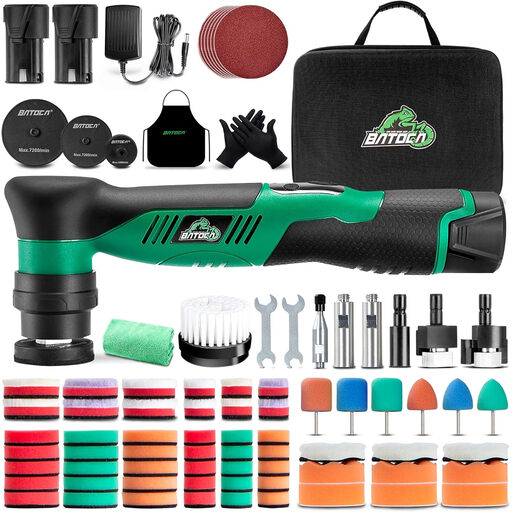
Why This Fits Their Persona: A compact option for detailers, restorers and mechanics working around headlights, badges, wheels, trim and other restricted areas.
The smaller support plates reduce the temptation to use a large pad on narrow surfaces, while interchangeable shafts support rotary and orbital movements.
Two replaceable 12 V batteries, six speed settings and 25 mm, 50 mm and 75 mm pads.
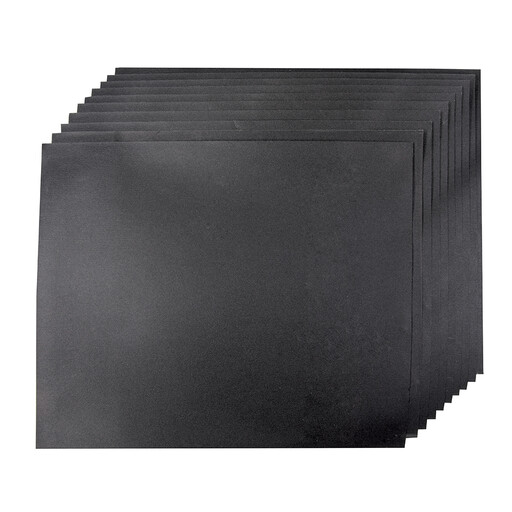
Why This Fits Their Persona: A useful consumable for vehicle restorers, metalworkers and DIY users preparing painted or enamelled surfaces between coating stages.
The clearly stated 1200-grit grade and waterproof latex-impregnated backing make it easier to match the abrasive to fine finishing work.
Ten 230 × 280 mm silicon carbide sheets designed for wet sanding and hand blocks.
The machine is only one part of a safe polishing setup. Car polishing pads should be cleaned after each use and allowed to dry fully. Keep cutting pads separate from finishing pads so leftover abrasive does not create avoidable marks.
For a headlight polishing kit, choose smaller pads and suitable abrasives rather than forcing a full-size pad into a narrow lens area. For metal and silverware, a dedicated metal polishing cloth is usually more appropriate than automotive compound. The Goddard’s cloth is designed for silver items, but check whether a surface is lacquered or coated before use.
A floor polishing machine or electric mop should only be used on compatible sealed flooring. The Bissell SpinWave, for example, is specified for sealed wood, laminate, tile, marble and vinyl, and should not be used on unsealed wood or unglazed ceramic.
We have compiled a complete, real-time list of products that fully satisfy these strict selection criteria and UK safety regulations.
They can be easier to control for broad vehicle panels than rotary machines, but beginners should still start at a low speed, use a clean soft pad and work on a small test area. Avoid holding the machine over edges or one spot for an extended period.
There is no fixed lifespan. Reusable foam, wool and applicator pads can last through multiple jobs when cleaned promptly, dried away from direct heat and inspected before use. Replace any pad that is torn, hardened, heavily contaminated or no longer attaches securely.
Running cost depends on battery replacement, charging and usage frequency. Cordless models avoid extension leads and are convenient for occasional work, while wired machines provide continuous operation without waiting for a battery to recharge. Compare included batteries, charger arrangements and compatible replacement pads before deciding.