
24/7 全天候客户支持

免费退货

当日/次日达

品质保障

开启新人专享福利: 全场免邮 | 低至 2 折 | 免费试用 30 天 JoyPlus 会员
下载 Joybuy
As a Joybuy Product Recommendation Officer, my role is to help you navigate the crowded market of kitchenware. A quality carbon steel wok is essential for anyone in the UK looking to create authentic, flavourful Asian dishes at home. However, many shoppers find themselves with a pan that warps, sticks or simply doesn't work on their hob.
Before you buy, it's crucial to understand a few common pitfalls that lead to disappointment. Many woks are marketed with features that sound impressive but fail in a real-world kitchen setting.
non-stick wok seems like a convenient choice, but many coatings are not designed to withstand the intense, rapid heat required for a proper stir-fry. After a few uses, the surface can scratch or degrade, leading to food sticking and the pan becoming unusable.By understanding these issues, you can make a more informed choice and find a stir fry pan that will serve you well for years.
To avoid the traps, focus on the fundamental specifications that determine a wok's performance. These three parameters are non-negotiable for getting value for money.
The soul of a wok is its material. Carbon steel is favoured for its ability to heat up quickly and retain high temperatures, which is essential for achieving the smoky flavour known as wok hei. However, not all carbon steel woks are the same.
traditional chinese wok. It arrives as a blank slate of silvery-grey metal and requires seasoning before its first use. This process involves heating the wok with oil to create a natural, non-stick patina that improves with every use. It demands some initial effort and ongoing care but rewards you with unparalleled performance and longevity.pre-seasoned wok offers a convenient head start. The manufacturer has already applied the initial layer of seasoning, so it's almost ready to use straight out of the box. It still requires proper care—hand washing and drying thoroughly—to maintain and build upon that foundational non-stick layer.non-stick wok is a practical option. Look for models with durable, multi-layer coatings that are explicitly stated to be free from PFOA and suitable for high-heat cooking. While they don't develop the same patina as a traditional wok, they are simple to use and clean.For the vast majority of UK kitchens, a flat bottom wok is the only practical choice. A flat base ensures direct, stable contact with electric, ceramic and induction hobs, allowing for efficient and even heat distribution.
If you have an induction hob, compatibility is critical. Check that the product is explicitly listed as a wok for induction hob. The base must be magnetic and have a sufficiently wide diameter (typically at least 14-15cm) to activate the induction element properly. A base that is too small will fail to heat or will heat unevenly.
Wok size is measured by its diameter. Choosing the right size prevents overcrowding the pan, which steams food instead of stir-frying it.
Consider if you need a wok with lid, which is useful for steaming, braising or keeping food warm. Some models come as a complete wok set with utensils like a spatula and spoon, offering excellent value for those starting from scratch.
Instead of a single "best" choice, we match woks to different cooking styles and needs. Here are our recommendations based on the criteria that matter.
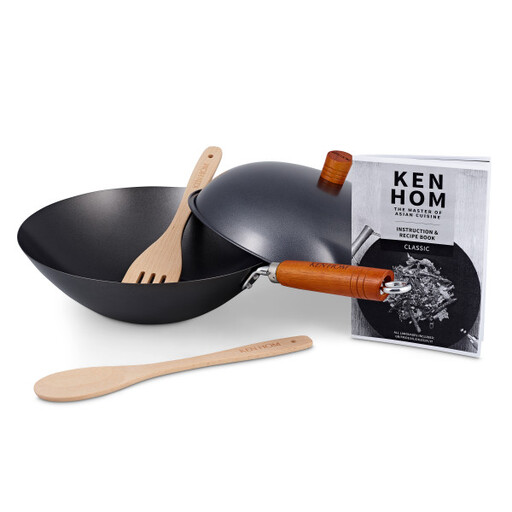
Why This Fits Their Persona: This user wants to start making stir-fries without a steep learning curve. This set removes the intimidation of seasoning and provides all the basic tools needed to get started immediately, including a recipe book for inspiration.
It features a durable, PFOA-free non-stick coating for easy cooking and cleaning, avoiding the "short-lived coating" issue. Its flat base is designed for stability on standard gas, electric and ceramic hobs.
A complete wok set including a glass lid, wooden spatula and spoon. The 31cm size is perfect for cooking meals for 3-4 people.
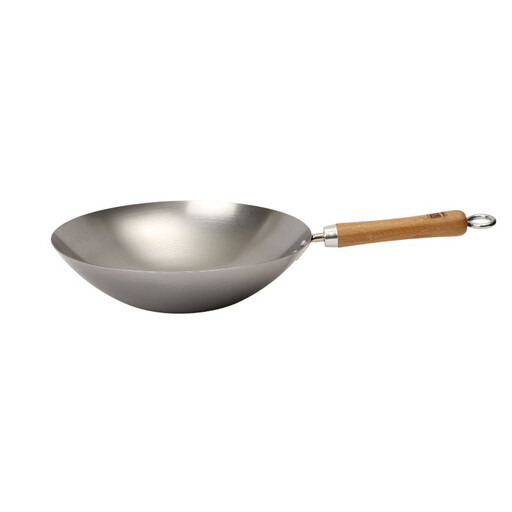
Why This Fits Their Persona: This cook is passionate about authentic flavour and is prepared to season and care for their equipment. They want to build a natural non-stick patina over time and achieve true wok hei in their home cooking.
As an uncoated traditional chinese wok, there is no chemical coating to fail. Its flat base is specifically designed for all modern hobs, including induction, ensuring it avoids the "unstable base" problem.
Made from high-quality carbon steel for rapid, high-heat cooking. It allows the user to develop a personal, naturally non-stick surface that gets better with age.
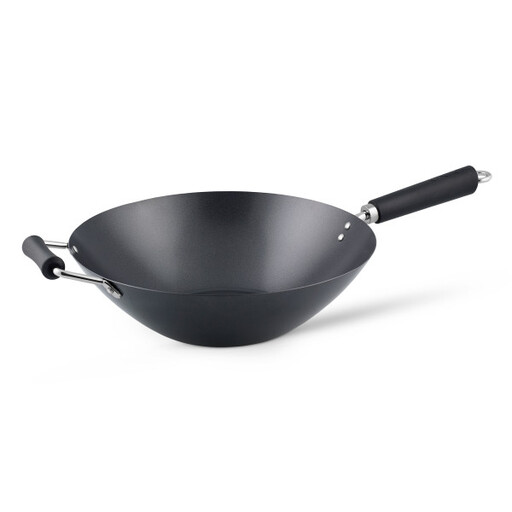
Why This Fits Their Persona: This user cooks for a family of 4-6 and needs a large, reliable and easy-to-clean wok for frequent weeknight meals. Convenience and capacity are their top priorities.
Its large, flat base provides excellent stability and is compatible with all hobs, including induction. The dual-layer non-stick coating is designed for endurance, addressing the issue of flimsy coatings on lesser pans.
The generous 35cm capacity is ideal for large family meals. It is also dishwasher-safe for maximum convenience, a key benefit for any busy household.
We have compiled a complete, real-time list of products that fully satisfy these strict selection criteria and UK safety regulations.
Seasoning creates a natural non-stick surface. First, scrub the new wok with hot, soapy water to remove the factory coating, then dry it completely. Place it on the hob over high heat until it turns a bluish-grey colour. Turn the heat down, add a tablespoon of a high-smoke-point oil (like sunflower or rapeseed oil) and swirl to coat the entire interior. Let it heat for a few minutes until it smokes lightly, then wipe out the excess oil with a paper towel. Repeat this process 2-3 times to build a solid initial layer.
Yes, but only if it is a flat bottom wok that is specifically marked as induction-compatible. Carbon steel is a ferrous metal, so it is naturally magnetic and works with induction. However, the base must be perfectly flat and wide enough to make proper contact with the hob's magnetic ring. Always check the product description for induction suitability.
Rust is the main adversary of carbon steel, but it is easily fixed. It usually happens when the wok is not dried properly after washing. To fix it, simply scrub the rust away with a scouring pad and a little water. Once the rust is gone, rinse the wok, dry it thoroughly on the hob over low heat and re-season the affected area by wiping a thin layer of cooking oil onto the surface.