The sizzle of garlic and ginger hitting a hot wok is the start of something wonderful. For many UK home cooks, recreating the authentic, smoky flavour of a great stir-fry—known as wok hei—is the ultimate goal. Yet, the path to purchasing the right carbon steel wok is often filled with confusion and disappointing results. Many woks simply aren't designed for the typical British kitchen.
As a Joybuy Product Recommendation Officer, my role is to help you navigate the market. Before you make a decision, let's look at a few common pitfalls that lead to wasted money and frustration.
- The Unstable Wok: Traditional round-bottomed woks are made for powerful, open-flame stoves that cradle their shape. Placed on a flat electric, ceramic and induction hob, they wobble precariously and heat unevenly. This is not only inefficient but also a safety hazard.
- The "Non-Stick" Trap: Many pans marketed as a non-stick wok use coatings that are not designed for the intense, high heat required for a proper stir-fry. When subjected to these temperatures, the coating can degrade, peel and release fumes, rendering the pan useless in a short time.
- The Seasoning Mystery: A traditional Chinese wok made from carbon steel requires seasoning—a process of baking oil onto the surface to create a natural non-stick layer. This can seem like a daunting, complex ritual, putting many people off buying what is otherwise an excellent piece of cookware.
Key Factors to Check Before You Buy a Wok
To avoid these issues, focus on a few core parameters. Getting these right is the key to finding a wok that performs well and lasts for years.
Material: Carbon Steel, Stainless Steel or Non-Stick?
The material of your wok dictates its heating properties, weight and maintenance routine.
- Carbon Steel: This is the traditional choice for a reason. It's lightweight, heats up incredibly quickly and is highly responsive to temperature changes. Once seasoned, it develops a superb natural non-stick patina. It requires some maintenance (hand-washing and keeping it dry to prevent rust), but its performance is unmatched for authentic stir-frying.
- Stainless Steel: A stainless steel wok is durable, non-reactive and doesn't rust. However, it heats more slowly than carbon steel and food is more prone to sticking, often requiring more oil during cooking. Some models feature a multi-ply construction with an aluminium or copper core to improve heat distribution.
- Coated (Non-Stick): These are typically made from aluminium with a synthetic non-stick coating. They offer great convenience and are easy to clean, but as mentioned, most cannot withstand the very high heat needed for a good stir-fry. They are better suited for lower-temperature cooking.
Hob Compatibility: Why a Flat Bottom is Non-Negotiable
For almost every home in the UK, a flat bottom wok is the only practical choice. A flat base with a diameter of at least 12-14cm provides the stability needed for electric, ceramic and gas hobs.
For those with induction cooktops, two things are critical: the wok must have a flat base and be made of a magnetic material. This makes a carbon steel wok an excellent wok for induction hob use, as is cast iron or magnetic-grade stainless steel. Always check the product description for explicit induction compatibility.
To Season or Not to Season: The Pre-Seasoned Advantage
The need for seasoning is a major dividing line.
- Uncoated Woks: These arrive as plain metal and you must perform the initial seasoning yourself. This gives you complete control and allows you to build a hard-wearing patina from scratch. It's the choice for purists.
- Pre-Seasoned Woks: A pre-seasoned wok has undergone at least one round of seasoning at the factory. It's ready to use almost immediately, though its non-stick properties will continue to improve with each use. This is a fantastic option for beginners who want the benefits of carbon steel without the initial setup.
Recommended Woks for Every Kitchen
Based on these practical considerations, we've matched a few standout options to different types of home cooks.
MATCH FOR: The Aspiring Home Chef
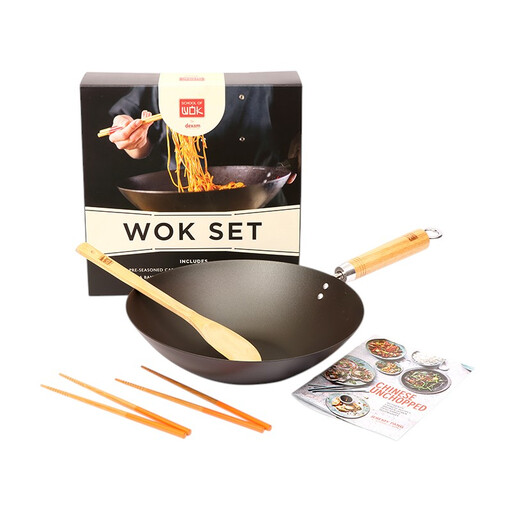
Why This Fits Their Persona: Ideal for those new to Asian cooking, this set removes the initial hurdle of seasoning and provides all the essential tools—including a bamboo spatula and recipes—to start immediately.
How It Avoids the Trap
It comes pre-seasoned, bypassing the complex initial preparation, and its flat base is designed for stable use on modern UK hobs.
Key Advantage & Pros
A complete starter package with a quality pre-seasoned wok, tools and recipes to build confidence.
MATCH FOR: The Convenience-Focused Cook
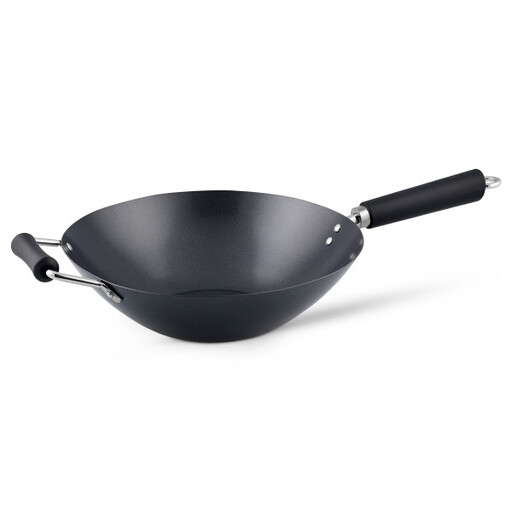
Why This Fits Their Persona: For the busy home cook who wants good stir-fry results without the maintenance of a traditional wok. It's a practical choice for everyday meals on any hob type, including induction.
How It Avoids the Trap
This wok features a robust three-layer non-stick coating designed for higher temperatures, offering convenience without immediate degradation. Its flat bottom wok design ensures it works effectively on induction.
Key Advantage & Pros
Combines the heat conductivity of carbon steel with a durable, easy-to-clean non-stick surface. Dishwasher-safe for ultimate convenience.
MATCH FOR: The Traditionalist
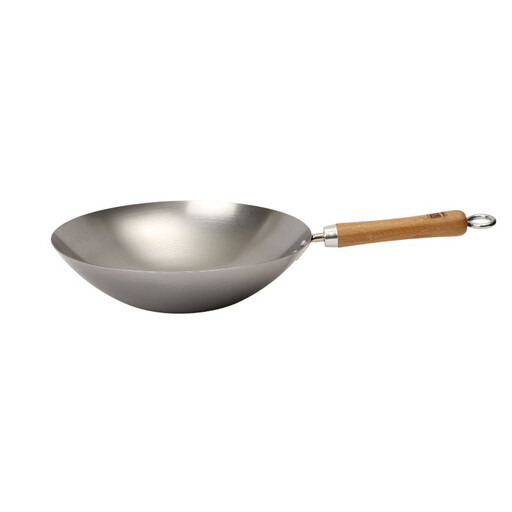
Why This Fits Their Persona: Perfect for the enthusiast who wants to master the art of seasoning and achieve the authentic smoky 'wok hei' flavour that only a traditional, uncoated carbon steel wok can provide.
How It Avoids the Trap
While it requires seasoning, this wok is designed for the high heat that destroys lesser non-stick pans. Its flat bottom makes it practical for modern hobs, bridging tradition with contemporary kitchen setups.
Key Advantage & Pros
Uncoated carbon steel allows for the development of a natural, long-lasting non-stick patina and superior heat retention for authentic results.
Looking for More Options?
We have compiled a complete, real-time list of products that fully satisfy these strict selection criteria and UK safety regulations.
Frequently Asked Questions
How do I season a new carbon steel wok?
Seasoning creates a natural, non-stick surface. The basic process is straightforward:
- Clean: Wash the new wok with hot, soapy water to remove the factory coating. Dry it completely.
- Heat: Place the wok on the hob over high heat. It will start to change colour (often turning blueish).
- Oil: Once hot, reduce the heat to low. Add a tablespoon of a high-smoke-point oil (like sunflower or vegetable oil) and carefully swirl it to coat the entire inner surface.
- Wipe: Use a paper towel held with tongs to wipe the oil all over the inside of the wok. Continue to heat on low for 10-15 minutes, wiping occasionally, until the surface is dark and slick.
- Cool: Let the wok cool completely. Your first layer of seasoning is done. It will improve with every cook.
Will a carbon steel wok work on my induction hob?
Yes, provided it is a flat bottom wok. Carbon steel is a ferrous (iron-based) metal, which is magnetic and therefore compatible with induction technology. The flat base ensures good contact with the hob's surface for efficient and even heating. Always double-check the product specifications for an "induction suitable" label.
Why is my carbon steel wok rusting and how can I fix it?
Rust is a natural property of iron and steel, and it's the most common issue for new owners. It happens when the wok is left wet. The fix is simple:
- Scrub: Use a scouring pad and a little water to scrub away all the rust.
- Rinse & Dry: Rinse the wok thoroughly and dry it completely. The most effective way is to place it on the hob over low heat for a few minutes until every drop of moisture has evaporated.
- Re-season: Apply a very thin layer of cooking oil to the affected area (or the whole wok) with a paper towel.
- Store: Store your wok in a dry place. By always drying it on the hob and applying a light film of oil before storing, you can prevent rust from returning.