For digital card games in a shared bedroom, choose a screen that fits your desk and lets you read cards comfortably before prioritising a high refresh rate. A compact Full HD monitor can suit a shallow desk; a 27-inch QHD monitor offers more pixels for card text and accompanying windows if you have room. Consider a higher refresh rate chiefly if you also play faster games, and check stand adjustment, audio and device connections for the exact model.
Who is this for?
Card players with compact desks
If the desk is shallow or shared with other belongings, screen size and stand position may determine what will fit. The Health and Safety Executive advises placing the top of a screen at eye level and the screen about an arm’s length away.
Players reading cards alongside other windows
Deck lists, chat and strategy material can compete for screen space with the game. A QHD display is worth considering if the desk accommodates it; Dell lists 2560 × 1440 resolution and height, tilt, swivel and pivot adjustment for its 27-inch S2725DS.
Players who also enjoy faster games
If the same monitor will serve card games and faster titles, QHD models with higher refresh rates may be relevant. Dell lists a 144Hz QHD S2725DSM, while ASUS lists up to 180Hz for the QHD TUF Gaming VG27AQ3A; check which display modes your device can use.
What matters when choosing?
Measure the space and decide how much room you need for cards and other windows. Then check how you will position the screen, manage sound and connect any device used for faster games.
| Concern |
What to check |
Who this matters to |
| Desk fit and positioning |
Measure usable desk width and depth, including the stand footprint. Check height adjustment or a suitable VESA mounting option. |
If my desk is shallow, I need space to position the screen without crowding everything else. Around 31% of consumers would put fit and positioning first. |
| Card text and workspace |
Compare native resolution and screen size; a 27-inch model is not necessarily QHD. Consider reflections from the room’s lighting. |
I want to read small card text while keeping a deck list or chat visible. Readability and workspace would be the primary concern for around 31% of consumers. |
| Quiet shared-room use |
Plan where headphone audio will come from, and check the model’s brightness controls and any listed comfort features. |
When someone else is resting, I want sound and screen brightness that I can manage without disturbing them. Around 23% of consumers would prioritise quiet use and viewing comfort. |
| Other games |
Check whether the device, cable and chosen monitor input support the resolution and refresh rate you intend to use together. |
I also play faster games, so I do not want to choose solely for a largely static card-game interface. Mixed-game capability would come first for around 15% of consumers. |
Buying pitfalls
-
Choosing by refresh rate alone
A 144Hz or 180Hz specification does not tell you whether card text will be easy to read or the monitor will fit the desk. Dell, ASUS and LG list high-refresh models with different resolutions and screen sizes.
Choose a size and resolution for your card-game setup first. Give higher refresh rates more weight if faster games are another regular use.
-
Assuming the stand and audio will suit the room
Features differ by model: Acer’s QG271 specification lists neither height adjustment nor built-in speakers, while Dell lists both for the S2725DS. Speakers may also be disruptive when someone else is resting.
Check the exact model’s stand adjustments, mounting pattern and audio connections before ordering.
If the supplied setup cannot place the screen or provide private audio as needed, you may need a suitable arm, riser or headphones.
-
Relying on an eye-comfort label instead of screen placement
BenQ and ASUS list comfort-related display features on particular models, but those features do not establish that a screen will be comfortable in every bedroom. Position and room lighting still matter.
Confirm that you can position the screen appropriately and adjust its brightness for the room; treat listed comfort features as an additional consideration.
-
Assuming the maximum display mode will work with your device
A monitor’s advertised resolution and refresh rate do not establish which combination your computer or console can deliver through a particular connection.
Compare the device’s supported output modes and cable with the monitor’s specifications for the input you plan to use.
Brands to consider for these monitor types
Dell
Dell’s 27-inch QHD S2725DS and S2725DSM illustrate options for card-game readability and general computing, with different listed refresh rates.
- Dell lists 2560 × 1440 resolution, integrated 2 × 5W speakers and height, tilt, swivel and pivot adjustment for the S2725DS.
- The S2725DSM’s listed 144Hz refresh rate matters more if faster games are another use; check the exact model’s dimensions and connections.
BenQ
The 23.8-inch GW2490T is a compact Full HD option to examine when desk fit and stand height matter.
- BenQ lists 100Hz, height adjustment, automatic brightness adjustment, low-blue-light and flicker-free features for the GW2490T.
- It is positioned as a home-office monitor rather than a high-refresh gaming model; check its inputs and display modes for other games.
LG
LG lists both Full HD flat and QHD curved 27-inch models for players who also use their screen for faster games.
- LG specifies a Full HD IPS panel and 180Hz for the 27GS60F-B, and a QHD curved display and 180Hz for the 27GS60QC-B.
- Choose between their resolutions and shapes according to desk fit and card-text needs, not refresh rate alone.
ASUS
The TUF Gaming VG27AQ3A is a 27-inch QHD option when faster games share the card-game setup.
- ASUS lists a Fast IPS panel, up to 180Hz, an anti-glare surface and a flicker-free feature for the VG27AQ3A.
- Check the exact variant’s stand adjustment, ports and desk fit rather than treating its gaming specifications as answers to those needs.
Acer
Acer’s QG271 shows why a gaming model’s ergonomics and audio need checking individually.
- Acer lists a 100 × 100 mm VESA mounting pattern for the QG271.
- Acer’s QG271 specification lists no height adjustment or speakers, so plan its placement and sound arrangements accordingly.
Joybuy product choices
These monitors span compact Full HD, 27-inch QHD and larger curved displays. For a shared bedroom, check desk dimensions and viewing distance before considering the larger screens or their higher refresh rates.
 No image available
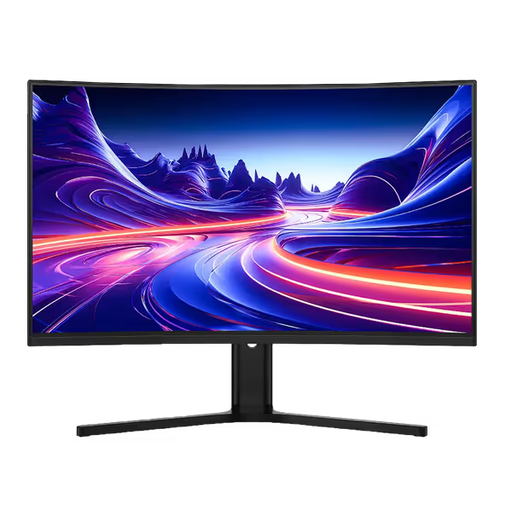
Dahua 32-inch QHD 180Hz Curved Gaming Monitor
Consider this larger screen if you have room for card-game windows alongside other content. The title lists 2560 × 1440 resolution, a VA panel and 180Hz; measure the desk before choosing a 32-inch display and check your device’s intended display mode and audio arrangement.
View on Joybuy
 No image available
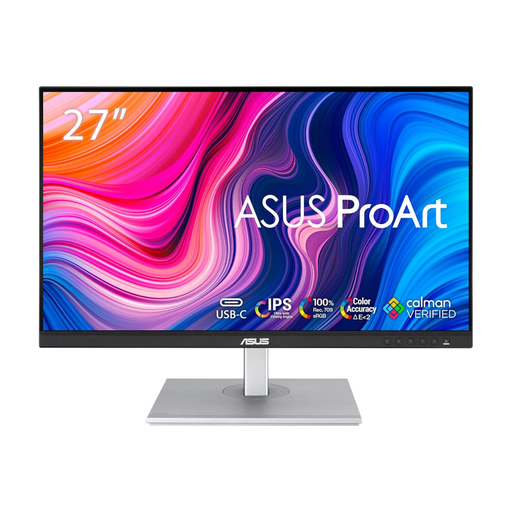
ASUS ProArt PA278CV IPS WQHD
Consider this work-oriented QHD model if card text and accompanying windows matter more to you than high-refresh gaming. Check its dimensions for your desk and confirm the display mode and private-audio connection you intend to use.
View on Joybuy
 No image available
Samsung Odyssey G6 S27DG612 27-inch QHD OLED 240Hz
This model is relevant if faster games are another regular use of your card-game screen. Its title lists a 27-inch QHD OLED panel and 240Hz; check desk fit, the resolution and refresh rate available from your device, and how you will use headphones in the shared room.
View on Joybuy
 No image available
Dahua 34-inch UWQHD 200Hz Curved Gaming Monitor
Consider the ultrawide format only if your desk can accommodate it and you want horizontal room for other windows beside the game. The title lists 3440 × 1440 resolution, a VA panel and 200Hz; measure the available width and depth, then check your device’s display mode and audio connection.
View on Joybuy
 No image available
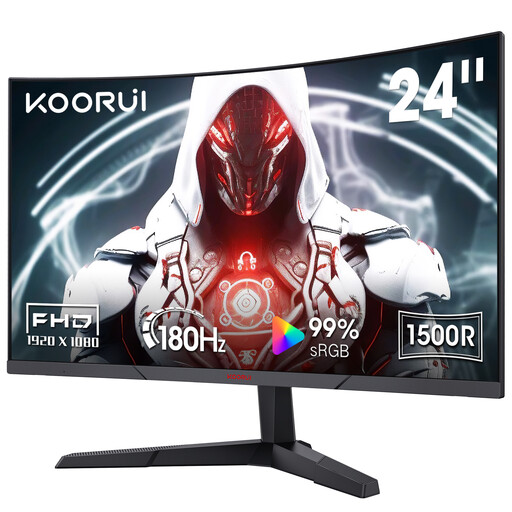
KOORUI MG24A12FV2 24-inch Full HD 180Hz Curved Monitor
This 24-inch model is worth considering for a constrained desk if Full HD provides enough space for your card-game windows. Its title lists a VA panel, 180Hz, tilt adjustment and VESA compatibility; check whether you need separate height adjustment and how you will connect headphones.
View on Joybuy
Frequently asked questions
Do digital card games need a 144Hz or 180Hz monitor?
A high refresh rate should not take priority over desk fit and card readability for this use. It becomes more relevant if you also play faster games; check that your device and chosen connection support the display mode you want.
Are built-in speakers useful in a shared bedroom?
They can serve occasional low-volume use, but headphones give you a way to avoid disturbing someone who is resting. Dell lists speakers on the S2725DS and S2725DSM, whereas Acer lists none for the QG271; confirm where headphones will connect in your setup.
Where should the monitor sit on a bedroom desk?
The Health and Safety Executive advises placing the top of the screen at eye level and the screen about an arm’s length away. Check that the desk has enough depth and that the stand or a suitable mounting arrangement lets you position the screen securely.
What should I do if a monitor bought in the UK develops a fault?
Contact the retailer with your order details and a description of the fault. GOV.UK explains that repair or replacement may be required when a fault is discovered after an item has been accepted; check the applicable statutory remedy separately from any voluntary returns policy or manufacturer warranty.
How should I dispose of an old monitor in the UK?
Check your council’s electrical-equipment collection arrangements or a retailer take-back route before disposing of it. GOV.UK identifies the UK Waste Electrical and Electronic Equipment regulations as the framework for collecting and treating this type of equipment; the available collection route depends on local arrangements.


