
24/7 Customer Support

Free returns

Same-day & Next-day Delivery

Quality Guaranteed

Unlock Your Welcome Offers: FREE Delivery | Up to 80% OFF | Free 30-day JoyPlus trial
Download the APP
Driving a car from before 2017 can feel like a step back in time. While your vehicle might be mechanically sound, it likely lacks the modern infotainment system we now rely on for navigation, hands-free calls and music. The thought of a costly and complex head unit replacement is enough to put anyone off.
A plug and play CarPlay screen offers a simple way to modernise your dashboard. However, the market is flooded with options, and it is easy to make a poor choice. Before you buy, be aware of these common pitfalls that can lead to buyer's remorse.
4K dash cam combo sounds impressive, but the resolution figure is often misleading. Without a quality image sensor and lens, the footage can be grainy and indistinct, especially at night, failing to capture critical details like number plates.To ensure you get a device that is both useful and reliable, focus on these core features rather than just marketing headlines.
For a seamless experience, the device must maintain a rock-solid link to your phone. Look for models that specify Dual-Band Wi-Fi (2.4GHz/5GHz) and Bluetooth 5.0 or higher. This combination provides the speed and stability needed for a responsive wireless Android Auto display and clear audio streaming. Also, check for flexible audio options. A good unit should offer at least three ways to channel sound through your car's speakers: an AUX cable, an FM transmitter and Bluetooth connection to your existing car stereo.
The display is your main interface, so its quality is paramount. A screen resolution of 1600 x 600 pixels or higher on a 10-inch or larger display ensures maps and text are sharp and easy to read. Look for mentions of high brightness or an anti-glare finish for good daytime visibility. The mounting system is equally important. A universal car dashboard screen should come with a robust, adjustable stand with a strong adhesive or locking suction base to keep it secure on UK roads.
When evaluating the integrated dash cam, look beyond the "4K" label. The key is the image sensor. A quality sensor, often from brands like Sony, combined with Wide Dynamic Range (WDR) or High Dynamic Range (HDR) technology, is what delivers clear footage in all lighting conditions. For a complete system with a car screen with backup camera, ensure the rear camera is at least 1080p resolution and has a waterproof rating (e.g., IP67) to withstand British weather. A wide-angle lens of at least 140 degrees for both front and rear cameras is essential to minimise blind spots.
We have identified a few options that align with these practical requirements, matching them to different driver needs.
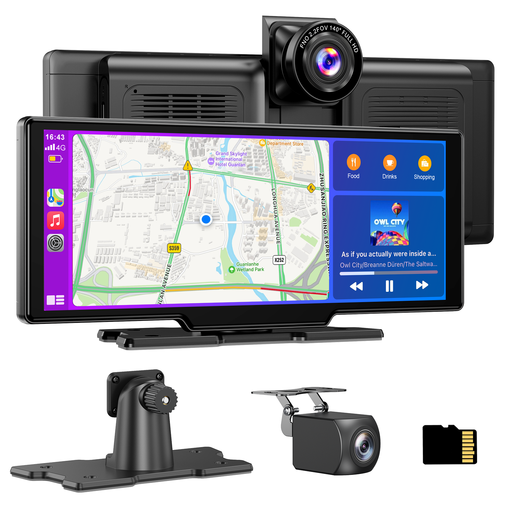
Why This Fits Their Persona: This is for the driver who wants a single, integrated device to handle navigation, media and safety recording without any fuss. It combines a large screen with a complete front and rear camera system, ready to use straight out of the box.
It specifies Dual-Band Wi-Fi for stable connectivity and includes a 1080p waterproof rear camera, avoiding the common pitfalls of poor connections and low-quality secondary cameras.
Includes a 64GB TF card, so no separate purchase is needed. The 1600x600 HD screen provides clear visuals for both navigation and video playback.
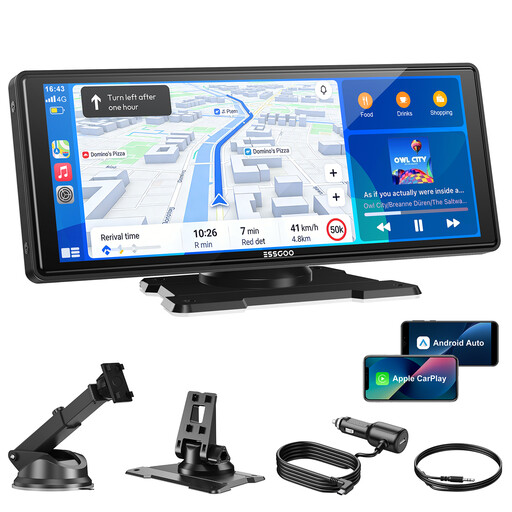
Why This Fits Their Persona: This user's priority is to add CarPlay to an older car for superior navigation and media. They may already own a separate dash cam or simply do not require one, focusing instead on getting the largest, clearest screen for their money.
It focuses on doing one job well. By not bundling a camera, it allocates its value to a high-resolution 1600x600 screen and reliable Dual-Band Wi-Fi and Bluetooth 5.3 for a stable connection.
Offers four distinct audio output options (Bluetooth, FM, AUX, built-in speaker) for universal compatibility. It also supports over-the-air (OTA) updates to keep the software current.
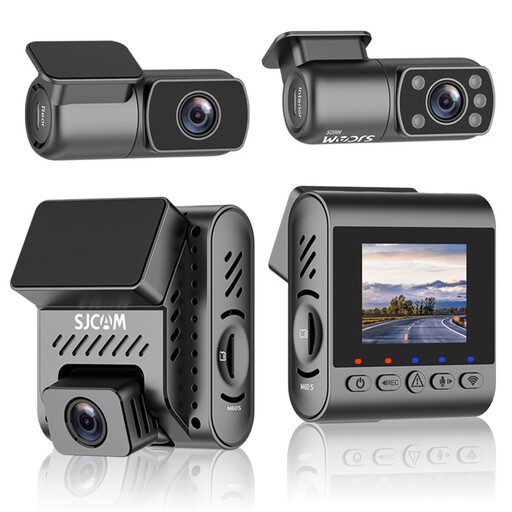
Why This Fits Their Persona: For lorry, van or private hire drivers, evidence is paramount. This user prioritises maximum camera coverage over an integrated display, seeking a dedicated 3-channel recording system (front, rear and interior) for complete peace of mind.
It sidesteps the "4K illusion" by using a high-quality IMX335 sensor and WDR, focusing on true image quality rather than just resolution. This is a dedicated dash cam, not a compromised all-in-one.
Provides comprehensive 360° coverage with front (4K), rear (2K) and interior (1080p) cameras. The interior camera includes infrared (IR) for clear recording inside the cabin, even in complete darkness.
We have compiled a complete, real-time list of products that fully satisfy these strict selection criteria and UK safety regulations.
For most models, installation is straightforward and takes only a few minutes. You simply attach the mount to your dashboard or windscreen, plug the power cable into your car's 12V cigarette lighter socket and the device will power on. The only part that requires more effort is routing the cable for a rear-facing camera, which usually involves tucking the wire along the car's headliner and trim panels.
No, it should not. These devices are designed to draw power from the cigarette lighter socket, which in most vehicles only provides power when the ignition is on. When you turn your car off, the power to the screen is cut, preventing any battery drain. Some models offer a "parking mode" that requires a separate hardwiring kit, which is connected to the car's fuse box, but the standard plug-in setup is safe.
Yes, compatibility is one of their main advantages. As long as your car, van or lorry has a standard 12V-24V power outlet (cigarette lighter socket), you can power the device. Audio can then be transmitted to your car's sound system via the unit's built-in FM transmitter, an AUX cable or by connecting to your factory stereo via Bluetooth, making it a truly universal solution.