
24/7 Customer Support

Free returns

Same-day & Next-day Delivery

Quality Guaranteed

Unlock Your Welcome Offers: FREE Delivery | Up to 80% OFF | Free 30-day JoyPlus trial
Download the APP
Replacing a hob can look straightforward until installation measurements, electrical requirements and pan compatibility start to complicate the decision. A stylish black glass surface may suit your kitchen, but the wrong cut-out size or control layout can make everyday cooking inconvenient.
This guide from the Joybuy Product Recommendation Officer focuses on practical buying decisions for UK homes, including built-in ceramic hobs, electric cookers, induction alternatives and compatible cookware.
A product described as a 60cm ceramic hob may measure approximately 590–600mm wide, while the required worktop opening can vary. Many models use a cut-out close to 560 × 490mm, but this must be checked against the installation manual rather than assumed from the headline width.
Measure:
A 59cm or 60cm hob may fit a standard layout, but the precise dimensions remain important when replacing an older appliance.
A ceramic hob uses radiant heating elements beneath the glass. It generally works with a broad range of flat-bottomed cookware, including stainless steel, cast iron and aluminium.
An induction hob creates heat through a magnetic field, so pans need a suitable magnetic base. A simple magnet test can help: if it sticks firmly to the underside, the pan may be induction-compatible. Always confirm compatibility in the appliance instructions.
Induction can offer rapid response and features such as automatic pan detection, but switching from ceramic to induction may mean replacing some existing pans. Ceramic hobs are more forgiving if you already own a varied cookware collection.
A smooth glass surface remains hot after a zone is switched off. Look for residual heat indicators, which show that a zone may still be hot, and consider a child lock if children live in or regularly visit your household.
Power requirements also deserve attention. Several four-zone models have a connected load around 6–7kW and require hardwiring by a qualified electrician. Do not rely on a standard plug unless the product documentation specifically permits it.
A four-zone ceramic hob is a practical choice for everyday family meals, while a two-zone model can suit a compact flat, studio or secondary kitchen. Check the diameter and position of each zone against your usual pans. Two large zones may be more useful for saucepans and frying pans than four similar small zones.
If you regularly cook several dishes at once, a wider model such as a 77cm hob can provide additional space. However, it requires a larger worktop opening and may not be suitable for a standard replacement installation.
A touch-control hob gives a flat appearance and is easy to wipe around. Some users prefer rotary controls because they offer tactile adjustment and can be easier to operate with damp hands.
Nine power levels provide more adjustment than a simple low-medium-high system. Also look for:
Power management is particularly useful where the appliance can limit total electrical draw when several zones operate together. It does not remove the need for correct installation or suitable household wiring.
Black glass is visually clean-lined, but splashes and marks can be noticeable. Allow the surface to cool, then use a ceramic hob cleaner and a soft cloth. Avoid abrasive pads and do not drag pans across the glass.
Choose flat-bottomed pans that match the zone size. A non-stick wok with a suitable flat base can work on ceramic, gas and induction surfaces, while an induction cookware set should be checked for magnetic compatibility before purchase.
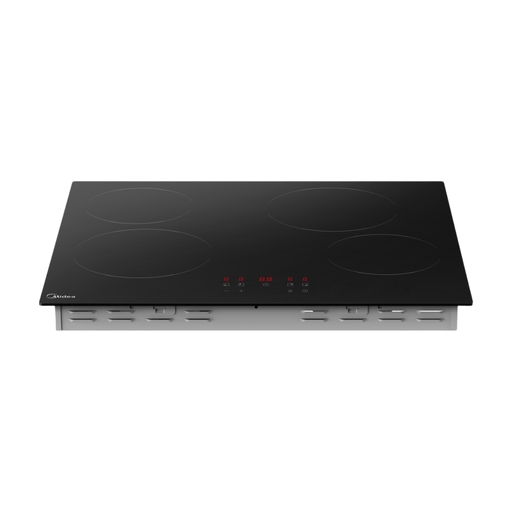
Why This Fits Their Persona: A straightforward 60cm option for replacing an older hob in a standard UK kitchen layout.
Its stated 60cm format, nine power levels, residual heat indicators and child lock address the common need for practical specifications rather than appearance alone.
Four zones, touch controls and a smooth black surface designed for everyday cooking and wipe-clean maintenance.

Why This Fits Their Persona: Suitable for homeowners wanting a frameless black glass finish with touch operation and familiar safety functions.
The listed 592 × 522mm dimensions and 9-stage controls make it easier to compare the actual installation and cooking requirements.
Four HighSpeed ceramic zones, TouchSelect controls, ReStart functionality, child lock and residual heat indicators.

Why This Fits Their Persona: A practical choice for cooks who prefer side-mounted rotary dials over a touch-control hob.
The physical controls avoid relying solely on touch sensors, while the specification confirms compatibility with all pan types.
Four ceramic zones, nine power levels, frameless black glass and a residual heat indicator.
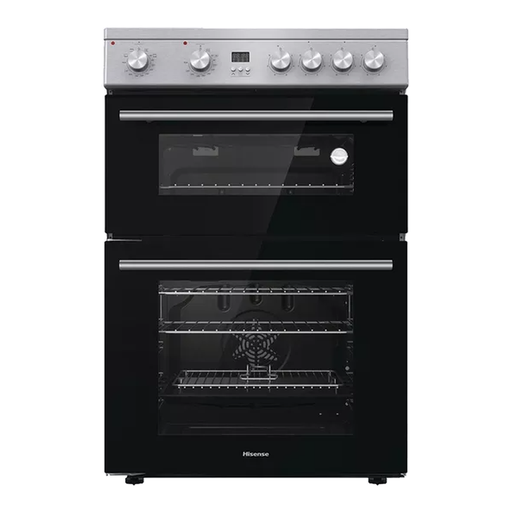
Why This Fits Their Persona: Designed for households needing a hob, two ovens and a grill within one freestanding 60cm appliance.
It is clearly specified as a freestanding electric cooker, helping buyers avoid confusing a built-in hob with a complete cooking appliance.
Four-zone ceramic hob, 68L fan-assisted main oven, 31L top oven with grill and catalytic liners.
We have compiled a complete, real-time list of products that fully satisfy these strict selection criteria and UK safety regulations.
Running cost depends on the appliance’s power, cooking time, household electricity tariff and how many zones are used. Using a pan that matches the zone and covering saucepans with lids can reduce wasted heat. Check the appliance’s connected load, but remember that this is not the same as its actual daily consumption.
Most flat-bottomed pans suitable for electric cooking can be used, provided the manufacturer permits them. Ceramic and induction hobs are different: an induction hob requires magnetic cookware, while a conventional ceramic hob generally does not. Avoid rough or damaged pan bases that could scratch the glass.
Many built-in ceramic hobs are hardwired and require professional installation. Check the product specification, household supply and installation manual before buying. A qualified electrician should complete the connection in line with applicable UK wiring requirements, and the hob should not be used if its glass surface is cracked.