
24/7 Customer Support

Free returns

Same-day & Next-day Delivery

Quality Guaranteed

Unlock Your Welcome Offers: FREE Delivery | Up to 80% OFF | Free 30-day JoyPlus trial
Download the APP
Navigating the world of abrasives can feel overwhelming. Whether you are a seasoned tradesperson or a weekend DIY enthusiast, selecting the correct sandpaper is fundamental to achieving a professional finish. The wrong choice can lead to a damaged surface, wasted time and frustration. This guide is designed to simplify the process, helping you understand the key factors so you can confidently choose the right abrasive for your specific task, from preparing wood to finishing metal.
Before you make a purchase, consider these three essential elements: grit, format and material. Getting these right will ensure your project runs smoothly from start to finish.
Sandpaper grit refers to the size of the abrasive particles. The number is determined by how many particles fit through a one-square-inch mesh. A lower number indicates a coarser grit, while a higher number signifies a finer grit.
For most projects, a mixed grit sandpaper pack offers the flexibility to progress from coarse to fine sanding efficiently.
Sandpaper is available in several formats, each suited to different tools and applications.
The abrasive material determines what surfaces the sandpaper can be used on.
Here are our recommendations for sandpaper products that offer great utility and value for a range of common tasks.

Why It Stands Out: This set is a practical solution for anyone with an orbital or multi-sander. It provides a comprehensive selection of grits for a complete workflow, from initial stripping to final smoothing. The hook-and-loop backing makes changing sheets quick and simple, while the 8-hole design aligns with most sanders for efficient dust extraction.
Pros:
Who is it for? DIYers and professionals who regularly use a 93x185mm orbital or multi-sander and need a reliable stock of sanding sheets for various surface preparation jobs.
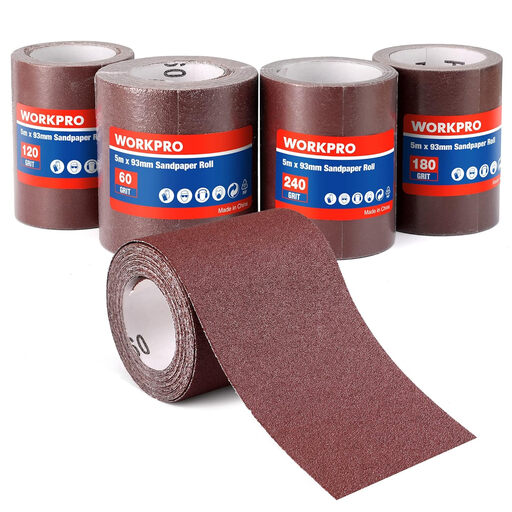
Why It Stands Out: The sandpaper roll format offers excellent economy and versatility. This pack includes four 5-metre rolls in different grits, allowing you to cut custom lengths for hand sanding blocks or power tools. The grit number is clearly printed on the back, so you can easily identify the right paper for the job.
Pros:
Who is it for? Workshop-based users, carpenters and decorators who require sandpaper in various sizes for both hand and power sanding applications.
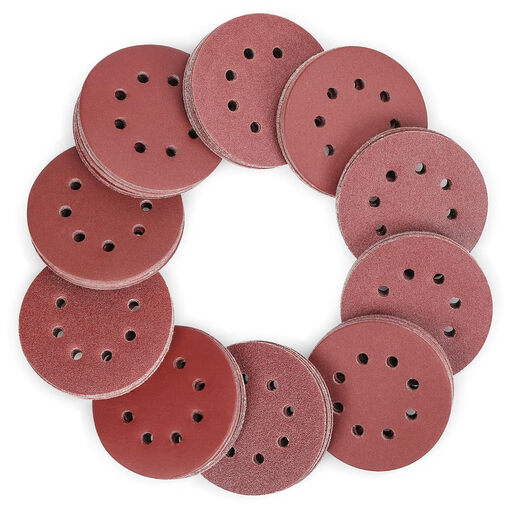
Why It Stands Out: This extensive set of 125mm sanding discs is designed for random orbital sander users who need a full spectrum of grits. With nine different grit values ranging from 60 to 600, it covers everything from heavy stock removal to ultra-fine finishing. The durable aluminium oxide construction and secure Velcro backing make it a reliable choice for demanding jobs.
Pros:
Who is it for? Professional tradespeople and serious DIY enthusiasts who use a 125mm random orbital sander and require a wide variety of grits on hand for diverse projects.
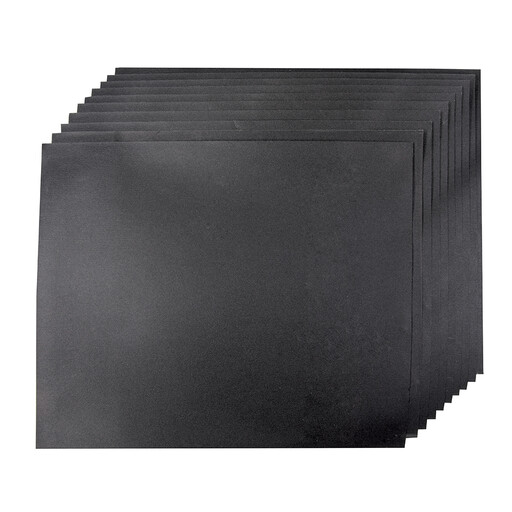
Why It Stands Out: When a flawless, mirror-like finish is required, wet and dry sandpaper is the tool for the job. These 1200-grit silicon carbide sheets are engineered for wet sanding, which helps prevent clogging and reduces dust. The latex-impregnated backing is fully waterproof, making it ideal for achieving a professional finish on automotive paintwork or high-gloss surfaces.
Pros:
Who is it for? Automotive bodywork specialists, model makers and anyone needing to achieve a scratch-free, high-gloss finish on metal, paint or plastics.
Once you have achieved the perfect surface, protecting it is the next step. If your project involves refinishing metal, a durable coating is essential. Explore our curated selection of high-performance metal paints to find the right finish for your work.
1. What sandpaper grit should I use for wood? For removing old finishes or shaping rough wood, start with a coarse grit (60-80). For general smoothing, use a medium grit (100-120). For a fine finish before painting or varnishing, use a fine grit (180-220). Always sand with progressively finer grits to remove the scratches left by the previous one.
2. Can you use the same sandpaper for wood and metal? Yes, aluminium oxide sandpaper is effective on both wood and metal. However, metal is harder and will wear the sandpaper down more quickly. For best results, it is wise to use separate sheets for each material to avoid transferring metal particles onto your wood project.
3. What is the difference between wet and dry sandpaper? Dry sandpaper is for general-purpose use on materials like wood. Wet and dry sandpaper, typically made with a silicon carbide abrasive and waterproof backing, can be used with water or a lubricant. This method helps to clear away dust and debris, prevents the paper from clogging and can produce a much smoother finish, especially on metal and automotive paint.