Teachers handing out individual portraits
A compact printer producing conventional photo handouts can fit a shared classroom table. If school Wi-Fi is restricted, check whether its other connection methods work with approved devices.


Choose the print format before the printer: a compact postcard printer suits individual portrait handouts, an A4 photo printer suits larger displays and wider classroom duties, and an instant-film printer suits a phone-led keepsake activity. Check how many prints the session needs, which media they require, and whether the school approves the proposed device and pupil-image workflow.
A compact printer producing conventional photo handouts can fit a shared classroom table. If school Wi-Fi is restricted, check whether its other connection methods work with approved devices.
If portraits will also become A4 displays, an A4 photo printer may serve that purpose alongside other printing, copying and scanning tasks. Allow for its space and media needs.
When selecting and personalising images is part of the activity, film-based prints offer a different keepsake from conventional photo paper. Confirm that the phone and app workflow is permitted before planning around it.
The three routes produce different physical prints; none replaces the need to plan the school-approved image and equipment workflow.
Choose when: Pupils or families need conventional 100 × 148 mm portrait handouts from a printer that fits on a small table.
Trade-off: Canon UK lists postcard output for the SELPHY CP1500, not A4 displays; plan for compatible ink-and-paper sets.
Choose when: Holiday portraits will also become A4 displays, or the printer will handle broader classroom work.
Trade-off: Check that the larger machine and its ongoing use justify the space and purchase commitment.
Choose when: The activity centres on selecting phone images and making film-based keepsakes.
Trade-off: Fujifilm instax Link WIDE uses instax WIDE film, not standard postcard photo paper or A4 sheets.
| Concern | What to check | Who this matters to |
|---|---|---|
| Compact portrait handouts | Confirm that 100 × 148 mm prints are large enough and that compatible media can cover the planned quantity. | I need to hand each pupil a conventional portrait during the session without taking over a classroom table. Around 40% of consumers put compact handouts first. |
| Larger, multi-use output | Confirm the required display size, paper handling and space for the printer. | If the portraits will go on an A4 display, I also want the machine to serve other classroom printing tasks. Around 30% of consumers prioritise larger or multi-use output. |
| Creative keepsakes | Check the film format, the number of prints needed and whether the phone-led activity is approved. | I want choosing and personalising images to be part of the event, even if the result is film rather than standard photo paper. Around 20% of consumers make that keepsake experience their primary concern. |
| Approved school workflow | Agree which devices and connections may handle pupil images, and follow the school’s equipment-maintenance process. | Before choosing a format, I need to know that staff can capture and print pupils’ images through an approved process. Around 10% of consumers put that workflow first. |
Canon UK lists 100 × 148 mm postcard media for the SELPHY CP1500, Epson lists A4 borderless output for the EcoTank ET-8500, and Fujifilm instax Link WIDE uses film. Those outputs do not serve the same display or handout requirement.
Decide whether the finished portrait must be a postcard handout, an A4 display or a film keepsake before comparing printers.
A classroom session may need one print per pupil plus test prints. Compatible ink-and-paper sets or film must be available in the quantity the activity requires.
Count the intended portraits and test prints, then check the exact compatible media packs before purchase.
The Department for Education identifies images of recognisable individuals as personal data. A convenient printing connection does not establish that the school permits the proposed device, app, storage or sharing process.
Agree how images will be captured, stored, printed, retained or deleted before selecting a connection method.
The Health and Safety Executive advises that portable electrical equipment be maintained in a safe condition, with inspection and testing guided by the equipment and its environment.
Follow the school’s maintenance arrangements and check the printer, leads and cable placement before each session.
Canon UK’s SELPHY CP1500 is a compact option for conventional portrait handouts.
Epson United Kingdom positions the EcoTank ET-8500 for A4 photos as well as printing, copying and scanning.
Fujifilm instax Link WIDE suits an activity built around selecting phone images for film keepsakes.
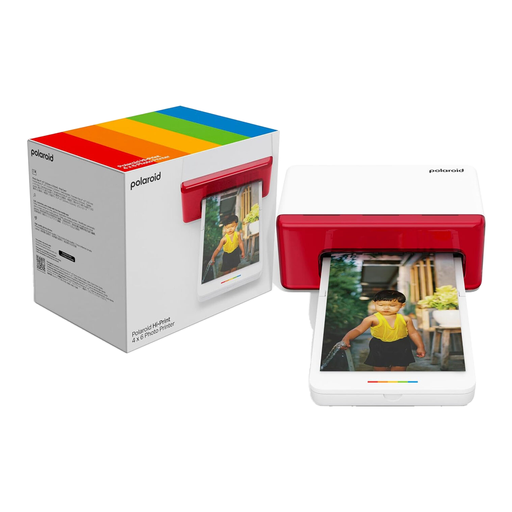
This photo printer is relevant when the classroom needs postcard-format portrait handouts and can use an approved Bluetooth printing workflow.
 No image available
Consider this model for conventional portrait handouts if its 4x6 print format meets the required size. Confirm compatible media for the number of portraits planned, and check that the intended phone, app and pupil-image process are approved by the school.
Printing can be part of an approved school activity, but the school must establish how it will handle the images before using a printer or app. The Department for Education identifies images of recognisable individuals as personal data; follow the school’s arrangements for capturing, storing, printing and sharing them.
The Health and Safety Executive does not describe annual portable-appliance testing as a universal requirement. Follow the school’s risk-based maintenance procedure, including appropriate visual checks and any inspection or testing it requires.
Some models offer other connections: Canon UK lists USB-C and memory-card printing for the SELPHY CP1500, while Fujifilm instax Link WIDE connects through its Bluetooth app. Confirm that the particular printer, source device and image-handling method are permitted by the school.