Joybuy products for planned portions
The machine below is for preparing separate frozen-dessert portions in advance. If your coconut base is only chilled and you want to churn it today, look for a self-freezing compressor machine instead.
 No image available
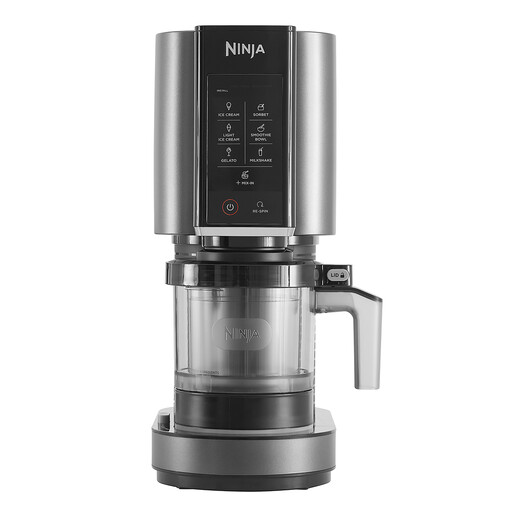
Ninja CREAMi NC300UK Frozen Dessert Maker, Black/Silver, with 3 Tubs
Consider this model for separate, prepared-ahead portions rather than for processing a merely chilled coconut base today.
The product title specifies three tubs, seven programmes and a 1.4L stated capacity. Freeze the base in its tub before processing; the supplied guidance calls for at least 24 hours of freezing.
Check the recipe guidance for the coconut mixture you plan to use rather than assuming a particular texture from the machine's dairy-free options.
View on Joybuy
Questions about coconut ice cream makers
Can I make coconut ice cream today from a chilled mixture?
Yes, if you choose a self-freezing compressor machine and follow its recipe instructions. Cuisinart UK describes its Freeze Ease Pro ICE150U as needing no bowl pre-freezing; a freezer-bowl churner needs its bowl frozen first, while a CREAMi-style processor needs a frozen base.
Can a freezer-bowl machine make dairy-free coconut ice cream?
It can be an option for a planned dairy-free batch when the model's recipe guidance covers that style of dessert. Cuisinart UK describes vegan and dairy-free options for its ICE30BCU, but its bowl must be frozen for 12 hours before use; recipe choice still affects the result.
How should a food business keep a coconut base chilled?
Keep the base chilled while preparing and storing it, and follow the rules applicable to your food business. GOV.UK's food-hygiene guidance states that chilled food must be kept at 8°C or below; check the guidance relevant to where your business operates and your preparation process.
What if my coconut ice cream recipe uses uncooked egg?
Choose an appropriate recipe and follow current food-safety guidance for the eggs and people involved. The Food Standards Agency's assessment described the risk from UK-produced eggs under recognised farm-assurance schemes as very low, not risk-free; pasteurised egg products are an option to consider, particularly for higher-risk or commercial preparation.


