
24/7 Customer Support

Free returns

Same-day & Next-day Delivery

Quality Guaranteed

Unlock Your Welcome Offers: FREE Delivery | Up to 80% OFF | Free 30-day JoyPlus trial
Download the APP
Soft, fresh-smelling clothes are useful, but choosing a Comfort fabric conditioner based only on fragrance or bottle size can lead to disappointing results. The most common purchasing mistakes are easy to overlook:
The right laundry softener should match your household’s washing habits, fragrance preference, fabric types and tolerance for regular replenishment.
Compare the number of washes, not just the millilitres on the front of the bottle. Standard products may require around 30ml for a 4–5kg load, while an ultra-concentrated fabric conditioner can use approximately 15ml for a similar load.
For example, a 900ml bottle labelled for 30 washes and a 960ml bottle labelled for 64 washes have very different dosage requirements. A larger family may prefer a fabric conditioner 80-washes format or a 160-wash mega pack to reduce the number of replacement purchases.
Always check the recommended dose for larger 6–7kg loads. Using more than directed can increase running costs and may leave excess product in the dispenser.
If you are shopping for fabric conditioner for sensitive skin, read the full product description and packaging rather than relying on words such as “gentle”. Comfort Pure products are described as hypoallergenic and suitable for baby clothes, while some versions are dermatologically tested or recommended through the Skin Health Alliance.
These descriptions relate to the product’s stated characteristics and do not replace individual medical advice. Fragranced formulas can still contain perfume ingredients and preservatives that may not suit everyone. If a household member has known sensitivities, review the ingredient list and follow any advice from a healthcare professional.
Also check garment labels. Fabric conditioner may be unsuitable for flame-resistant items and some fluffy fabrics. It is particularly important to follow care instructions for baby clothes, sportswear, towels and specialist textiles.
Households using quick or cold programmes should look for a fabric conditioner for short and cold washes. Several Comfort formulas in this range are described as effective in these cycles, which may suit busy UK households using lower-temperature laundry programmes.
Fragrance is a personal choice:
Bottle construction can also matter. Several listed products use bottles made from 100% recycled plastic, excluding the cap and sleeve, while other products state that the bottle and cap are recyclable. Check local recycling facilities in your area, as acceptance rules vary across UK councils.
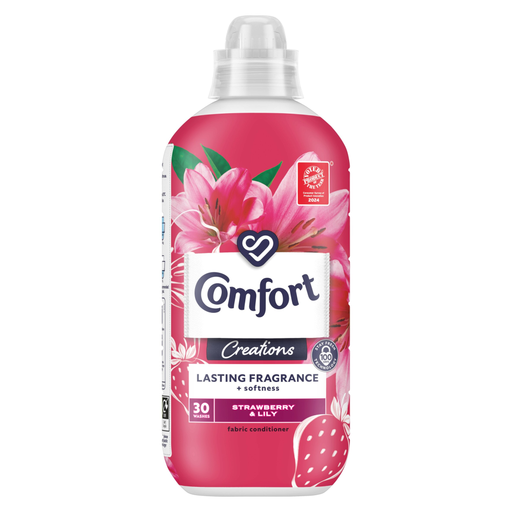
Why This Fits Their Persona: A practical option for smaller households, renters or anyone wanting to try a fruity floral fragrance without committing to a large bottle.
The 30-wash capacity makes the expected usage clear, avoiding assumptions based only on bottle size.
Strawberry and lily fragrance; stated to soften fabrics and help reduce creasing.
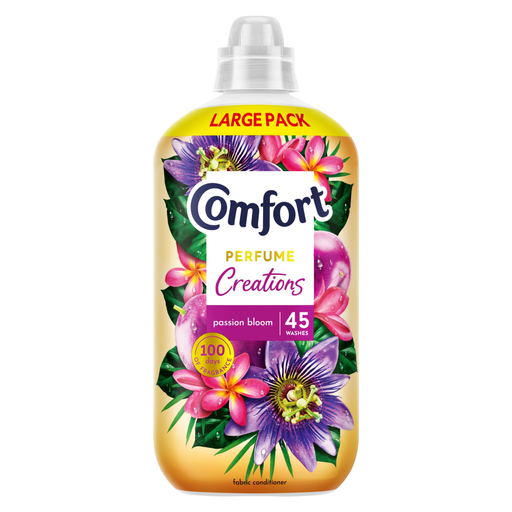
Why This Fits Their Persona: Suitable for shoppers prioritising a distinctive fragrance and freshness features for clothing stored between wears.
Its “up to 100 days” statement is presented as a conditional product claim rather than a guaranteed result for every wash or wardrobe.
Mango, passion flower and frangipani fragrance; product details state suitability for short and cold cycles.
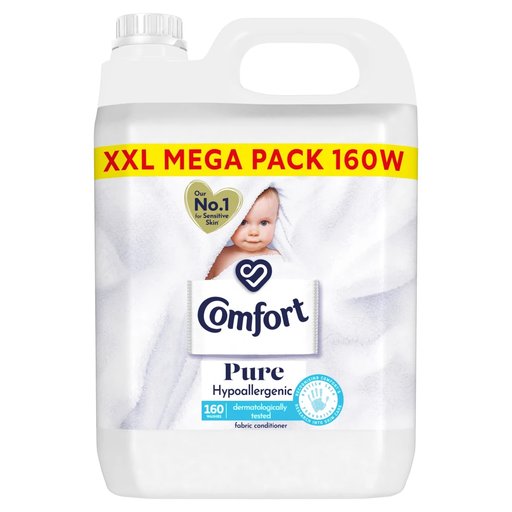
Why This Fits Their Persona: The 160-wash format suits large families and frequent laundry routines that benefit from fewer replacement trips.
The stated wash count gives a clearer basis for comparing cost per wash than the 4.8-litre volume alone.
Hypoallergenic and dermatologically tested according to the listing; described as suitable for baby clothes and sensitive skin.
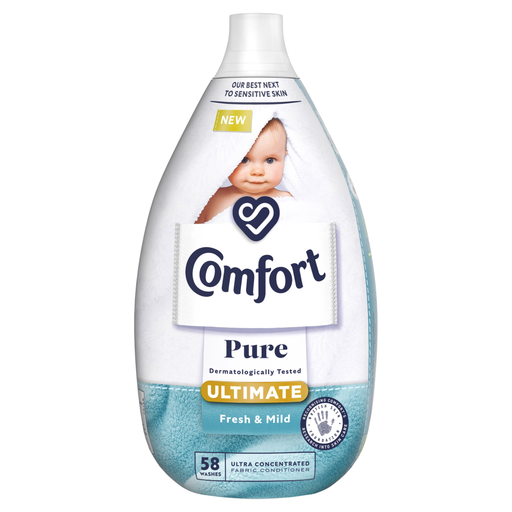
Why This Fits Their Persona: A compact option for households wanting a mild fragrance, sensitive-skin positioning and compatibility with short or cold cycles.
Its stated 15ml dose for a 4–5kg load helps prevent over-pouring, a common cause of poor value with concentrated products.
58 washes from 870ml; delicate fragrance and a bottle made from 100% recycled plastic, excluding cap and sleeve.
Pour the product into the washing machine’s dedicated conditioner compartment, never directly onto clothing. Measure according to the load size and product instructions. Overdosing does not necessarily make clothes softer and can make each bottle run out sooner.
For value comparisons, use this simple calculation:
Product price ÷ stated wash count = approximate cost per wash.
Keep fabric conditioner away from children, avoid eye contact and follow the label if the product is swallowed or causes irritation. Store it as directed and check garment care labels before every new fabric type.
We have compiled a complete, real-time list of products that fully satisfy these strict selection criteria and UK safety regulations.
Some products, including Comfort Pure listings, are described as suitable for newborn and baby clothes. However, check the garment label and ingredient information first. If a baby has sensitive skin or an existing condition, consider advice from a qualified healthcare professional and stop using the product if irritation occurs.
Not automatically. It uses less liquid per wash, but the meaningful comparison is the cost per stated wash. A smaller concentrated bottle can offer more washes than a larger standard formula, provided you measure the recommended dose accurately.
Many current formulas are described as effective in short and cold cycles, including Comfort Pure, Comfort Fresh and selected Comfort Creations products. Follow the product directions, use the correct dispenser and confirm that the garment care label permits the selected wash programme.