Crisps can be the savoury part of a post-workout snack, but they should not replace other food when recovery nutrition matters. For quick recovery, the British Dietetic Association advises carbohydrate-rich food and fluids soon after exercise, while University College London Hospitals NHS Foundation Trust describes carbohydrate-and-protein snacks for use around exercise. If you want crisps, compare the exact pack’s fat, portion and salt information, and consider what else you are eating and drinking.
Who this choice matters to
How soon you will exercise again, and what you will eat alongside the crisps, changes which pack details are useful.
People who want a savoury snack after training
If crisps appeal after an ordinary workout, think of them as one part of the snack. University College London Hospitals NHS Foundation Trust describes snacks containing both carbohydrate and protein for use around exercise.
People exercising again soon
When quick recovery is needed between sessions, flavour and pack format are secondary to the wider food-and-drink choice. The British Dietetic Association advises starting to refuel with carbohydrate-rich foods and fluids as soon as possible after exercise.
Buyers checking salt or allergens
Salt and ingredients can differ between flavours and pack sizes. Read the packet you intend to eat, especially if an allergy, intolerance or advised salt restriction affects your choice.
What to check before choosing
Decide whether the crisps are simply something savoury alongside other food or are being counted on as the whole post-exercise snack. Then compare like-for-like label values and the portion you expect to eat.
| Priority | What to check | Your needs |
|---|
| Recovery food and drink |
Look at carbohydrate and protein in the complete snack or meal, not just the crisp packet. If quick recovery is needed, account for fluids too, as advised by the British Dietetic Association. |
I want something savoury, but I also need to consider what I will eat and drink after training. A packet of crisps need not be the whole snack. |
| Fat content |
Compare fat per 100g for different products, then fat per pack for the amount you might eat. Walkers lists 2.8g fat per 22g pack for Oven Baked Sea Salt; the exact flavour matters. |
If I prefer a lower-fat crisp, I want the label to show the difference. I would still check the rest of the snack rather than treating a baked crisp as a source of protein. |
| Portion and format |
Check the weight of an individual packet or the stated serving size on a sharing bag. Compare multipacks by the number and size of their bags, not the outer pack alone. |
A single packet makes the amount straightforward to see; with a sharing bag, I would decide on a portion before eating. |
| Salt and ingredients |
Read salt per serving and per 100g, plus the ingredients and allergen statement for the exact flavour. The NHS advises adults to have no more than 6g salt a day. |
I need to check how this packet fits with other foods I eat, and I cannot assume another flavour from the same range has the same ingredients. |
Common buying mistakes
-
Making crisps the entire recovery snack
Crisps contain carbohydrate, but the Seabrook Sea Salted bag, for example, lists 1.9g protein per 31.8g, according to Seabrook. University College London Hospitals NHS Foundation Trust describes snacks containing both carbohydrate and protein for use around exercise.
If you are eating for recovery, consider a protein-containing food and a drink alongside the crisps rather than relying on the packet alone.
-
Choosing a multipack without checking its contents
The number of bags says little about their portion sizes or nutrition. A variety pack can also contain flavours with different ingredients.
Check each bag’s weight and the label for the flavour you plan to eat. Decide whether a baked or standard crisp suits your preference before comparing pack formats.
-
Assuming similarly named flavours contain the same salt
Salt figures differ across the product examples: Walkers lists 0.19g per 22g pack for Oven Baked Sea Salt, while Seabrook lists 0.4g per 31.8g bag for Sea Salted. Those are different portion sizes, so they are not a like-for-like comparison.
Use the exact packet’s per-100g figure to compare products and its per-serving figure to see what your portion contains.
-
Relying on another flavour’s allergen information
Ingredients and allergen statements can change with flavour. A plain-sounding product name is not a substitute for reading the packet.
Check the current ingredients and any may-contain statement for the precise product and flavour before eating it.
Brand and product-range references
These examples show why flavour, format and nutrition values must be checked at product level; a brand name alone does not settle the post-workout choice.
Walkers
The range includes standard crisps and Oven Baked products.
- Walkers lists 2.8g fat, 16g carbohydrate, 1.3g protein and 0.19g salt per 22g pack of Oven Baked Sea Salt. Walkers describes that product as having 50% less fat than regular potato crisps.
- Those Sea Salt figures should not be applied to every Oven Baked flavour. Check the exact packet, including its allergen statement.
Tyrrells
Tyrrells describes its potato crisps as made from English potatoes, hand-cooked in small batches with the skins left on.
- The range includes Lightly Sea Salted and other flavours for buyers choosing by flavour and crisp style.
- For a nutrition comparison, use the figures on the particular bag rather than assuming its cooking style determines its fat, protein or salt content.
KETTLE Chips
The range includes hand-cooked potato crisps in flavoured sharing formats.
- KETTLE Chips lists 57.4g carbohydrate and 5.3g protein per 100g for its Sea Salt & Crushed Black Peppercorns product.
- The same product lists 27.3g fat and 1.3g salt per 100g. Check the intended serving rather than treating the sharing bag as one portion.
Seabrook
Seabrook’s Sea Salted crisps are listed in an individual 31.8g bag.
- Seabrook lists 16.7g carbohydrate, 1.9g protein and 0.4g salt per bag, making the labelled portion straightforward to identify.
- The same bag lists 9.7g fat; its portion figures should not be compared directly with another product’s per-100g figures.
McCoy's
McCoy's includes ridged potato crisps such as Salted Flavour.
- McCoy's lists 53g carbohydrate and 6.6g protein per 100g for Salted Flavour.
- The product also lists 32g fat and 1.3g salt per 100g. Read the pack’s serving information to understand the amount you intend to eat.
REAL Hand Cooked Crisps
REAL describes itself as a British-made, family-owned hand-cooked crisp brand, with Sea Salt & Black Pepper among its products.
- REAL lists 58.1g carbohydrate and 6.8g protein per 100g for Sea Salt & Black Pepper.
- That product also lists 25.4g fat and 1.12g salt per 100g; its protein figure does not make a packet a complete post-exercise snack.
Joybuy snack options
These options include baked crisps, other crisp-style snacks and lentil cakes for a savoury snack after exercise. The lentil cakes are not potato crisps. Compare each product’s current label with what else you plan to eat and drink.
 No image available
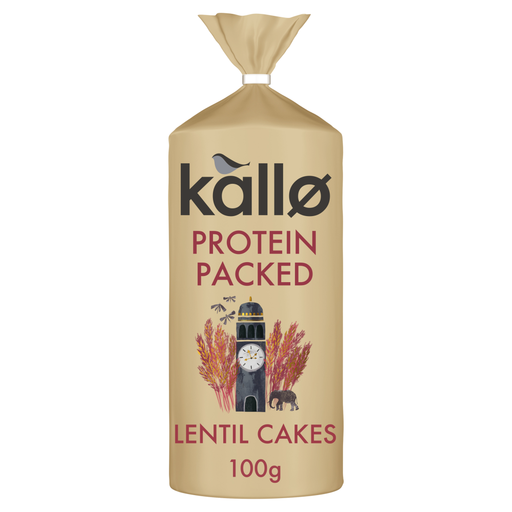
Kallo Protein Packed Lentil Cakes 100g
A lentil-cake alternative if you want a savoury snack rather than potato crisps. The pack is 100g; check its nutrition panel for the portion you intend to eat, and account for fluids after exercise.
View on Joybuy
 No image available
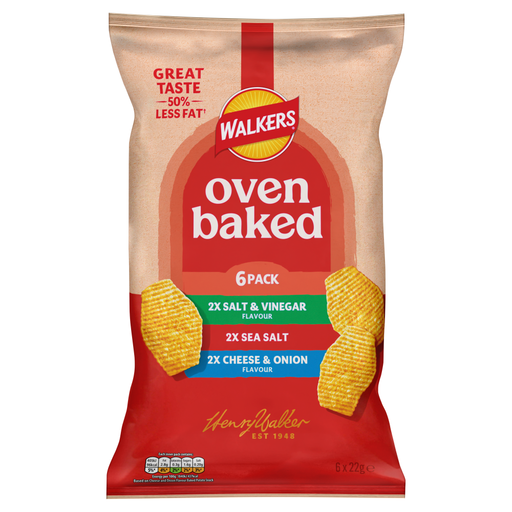
Walkers Oven Baked Variety Pack Crisps 6 x 22g
A baked crisp multipack with six 22g bags if you prefer an individual packet. Walkers describes the variety pack as having 50% less fat than regular potato crisps; check each flavour’s own nutrition and allergen information rather than applying the Sea Salt product’s figures to the whole pack.
View on Joybuy
 No image available
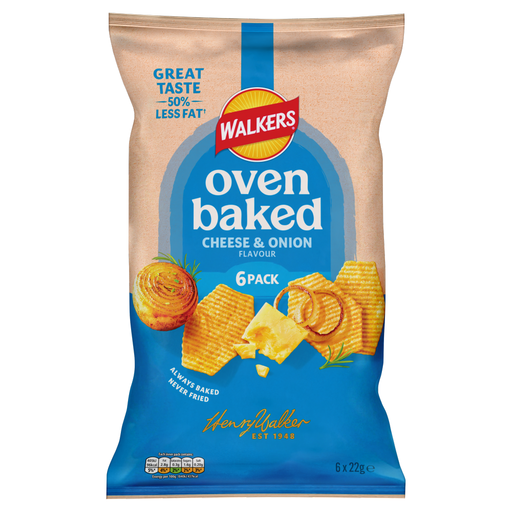
Walkers Oven Baked Cheese & Onion Crisps 6 x 22g
Choose this six-pack if you want the Cheese & Onion flavour in individual 22g bags. Check this flavour’s nutrition and allergen statement, and consider another food alongside it if the snack needs to provide protein.
View on Joybuy
 No image available
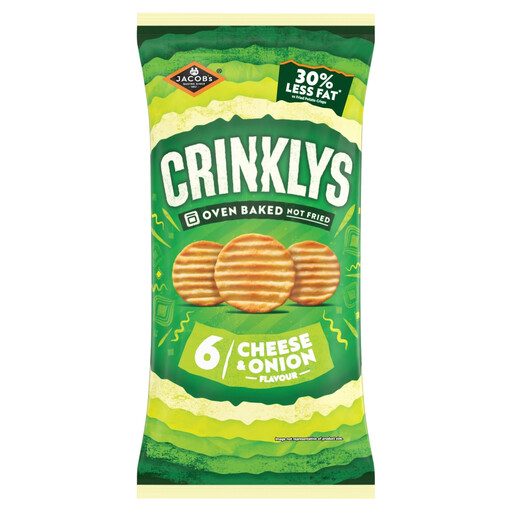
Jacob's Crinklys Cheese & Onion Snacks 6 x 23g
A cheese-and-onion crisp-style snack supplied as six 23g bags. Compare its own per-bag and per-100g label figures with potato crisps, and read the ingredients if wheat or milk affects your choice.
View on Joybuy
 No image available
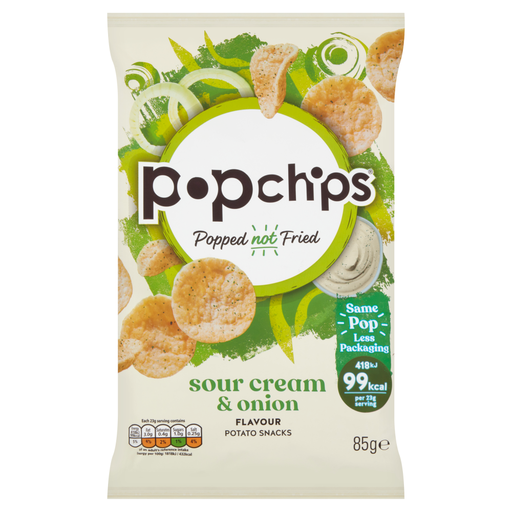
PopChips Sour Cream & Onion 85g
An 85g bag of sour-cream-and-onion crisp-style snacks rather than a set of individual packets. Check the stated serving size when comparing its nutrition with multipacks, and read the ingredient and allergen information for this flavour.
View on Joybuy
Questions about crisps after exercise
Can crisps be my post-workout snack?
They can be part of one, but do not rely on crisps alone when recovery nutrition matters. The British Dietetic Association advises carbohydrate-rich food and fluids when quick recovery is needed, and University College London Hospitals NHS Foundation Trust describes carbohydrate-and-protein snacks for use around exercise.
Which crisp should I compare if I want less fat?
Compare fat per 100g on the exact products, then check the amount in the portion you expect to eat. Walkers lists 2.8g fat per 22g pack of Oven Baked Sea Salt, while REAL lists 25.4g per 100g for Sea Salt & Black Pepper; the different serving bases must not be compared as though they were equal portions. Lower fat does not establish that a crisp packet provides the protein you want from the complete snack.
Should I choose salty crisps after exercise?
Do not use a crisp packet as a substitute for planning what you will drink. The British Dietetic Association advises fluids when quick recovery is needed, while the NHS advises adults to have no more than 6g salt a day. Check the packet’s salt per portion if salt affects your food choices.
What if I need to check for allergens?
Read the ingredients and allergen statement on the exact flavour and pack you intend to eat. Flavour variants can differ, so the label on another product from the same brand is not enough to establish suitability.


