
24/7 Customer Support

Free returns

Same-day & Next-day Delivery

Quality Guaranteed

Unlock Your Welcome Offers: FREE Delivery | Up to 80% OFF | Free 30-day JoyPlus trial
Download the APP
A suitable desk lamp should make a workspace easier to use without creating cable clutter, glare or awkward shadows. Yet product listings often focus on impressive-sounding features while leaving out practical details such as power requirements, adjustment range and bulb compatibility.
Before buying desk lamps for a UK study area, home office or bedside table, watch for three common traps:
Choose the power format around how you use the desk.
A USB desk lamp is practical beside a laptop, monitor or USB power adapter, but check whether the cable and plug arrangement are included. A rechargeable desk lamp can be moved between a desk, bedside table and reading chair, although battery runtime and charging time matter for longer sessions.
Mains-powered lamps are suitable for a permanent home office or study desk. They do not require recharging, but the cable needs to reach a UK socket without crossing a walkway. Always check the product instructions, supplied adapter and relevant safety markings before use.
An adjustable desk lamp should direct light onto your notebook or work surface without forcing you to reposition the whole base. Flexible necks, hinged arms and adjustable lamp heads each offer different levels of control.
Also check the dimensions. A tall lamp may illuminate a wider area but can be unsuitable for a shallow shelf. A clip-on desk lamp saves surface space, but confirm the maximum clamp opening and the weight of the surface supporting it. A stable base is particularly important where the lamp will be moved frequently.
For studying, reading and screen-based work, adjustable brightness is generally more useful than a single fixed output. Step dimming allows you to reduce the light when ambient daylight is strong or increase it during darker evenings.
A warm setting may suit bedside reading, while a neutral white setting can provide clearer task illumination. Look for a diffuser or shaded light source that distributes illumination evenly. Avoid positioning any desk lamp so that the LED is directly reflected in your monitor.
The phrase eye-care desk lamp should not be treated as a health guarantee. Instead, look for clearly stated features such as dimming, diffuser design, flicker information and adjustable positioning. Philips, for example, describes its EyeComfort requirements in terms including flicker, glare, strobe, colour rendition and dimming effects; buyers should still follow the instructions for the specific model.
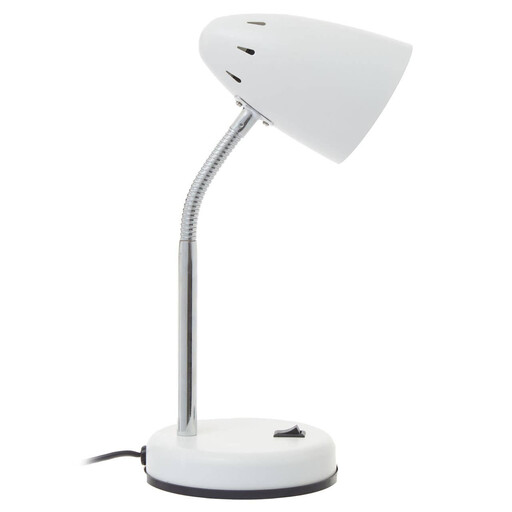
Why This Fits Their Persona: A straightforward option for students or renters wanting a conventional study lamp with a flexible neck and no battery management.
Its chrome gooseneck provides direct positioning rather than relying on a fixed beam. The E27 bulb is replaceable, but it is not included, so factor that into the purchase.
37 cm height, flexible gooseneck and a 95% iron construction. The lamp comes assembled and has a matte white finish.
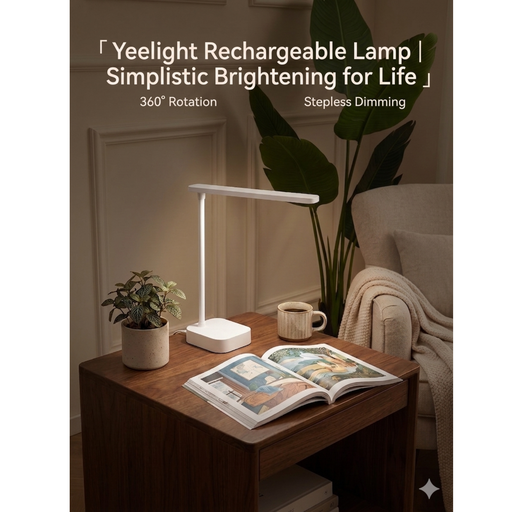
Why This Fits Their Persona: Suitable for readers and home-office users who want portable lighting that can move between rooms without depending on a permanent desk socket.
The rechargeable format avoids a permanently trailing power cable. Its warm lighting and adjustable angles also address the fixed-position problem found with basic lamps.
Portable LED construction, rechargeable operation, warm lighting described as eye-care lighting and adjustable angles.
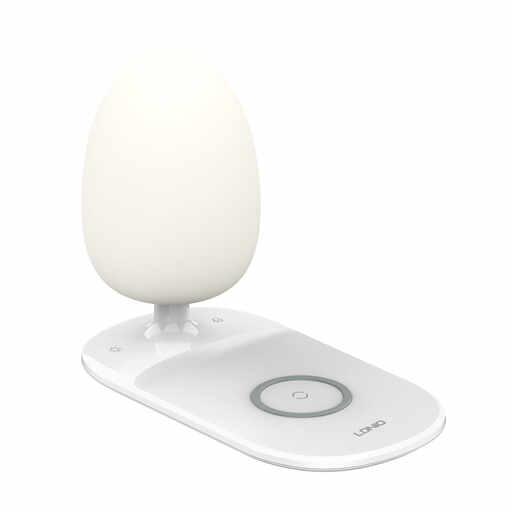
Why This Fits Their Persona: A practical fit for professionals, students and bedside users who need task lighting while charging a compatible phone or earbuds.
It combines lighting and charging in one base, reducing separate accessories. Confirm that your device supports Qi charging and that the lamp has suitable access to USB-C power.
Built-in 15W wireless charging pad, 1-metre USB-C cable, touch controls, multiple brightness levels and an adjustable gooseneck.
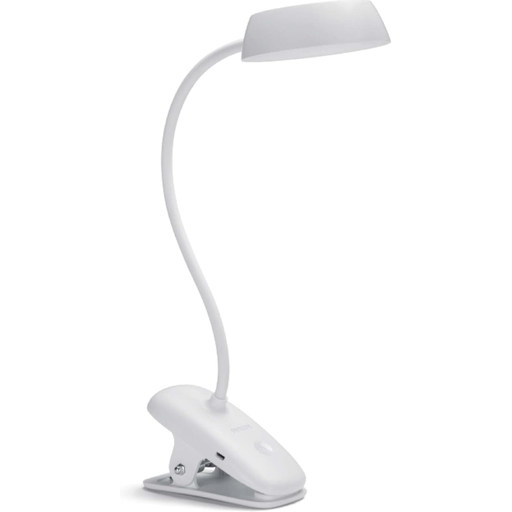
Why This Fits Their Persona: A compact choice for student desks with a small footprint, bunk beds, shelves or work surfaces where a conventional lamp base would take up too much room.
The clip format addresses limited desk space, while step dimming avoids being restricted to one brightness level. Check the listed 250g weight capacity before mounting.
USB rechargeable operation, clip-on design, 3W output, step dimming and dimensions of approximately H380 × W290 × D99mm.
We have compiled a complete, real-time list of products that fully satisfy these strict selection criteria and UK safety regulations.
LED desk lamps generally use less power than equivalent traditional bulbs, but running cost depends on wattage, daily usage and your electricity tariff. A rechargeable desk lamp may reduce cable use, but charging still consumes electricity. Check the stated wattage and avoid assuming that a higher brightness setting is economical.
They can be, provided the lamp offers sufficient brightness, useful dimming and a runtime that covers your study session. Battery performance may vary by brightness level. For extended daily use at one desk, a mains or USB-powered model may be more convenient because it does not require regular recharging.
Position it to illuminate the desk rather than the display. Place it beside or slightly behind the monitor, angle the head towards the work surface and check for reflections. Adjustable desk lamps are useful because you can fine-tune the angle as your seating position changes.