
24/7 Customer Support

Free returns

Same-day & Next-day Delivery

Quality Guaranteed

Unlock Your Welcome Offers: FREE Delivery | Up to 80% OFF | Free 30-day JoyPlus trial
Download the APP
A good dish drainer is an unsung hero of the British kitchen. It keeps your countertops tidy, helps dishes dry efficiently and brings a sense of order to the daily chore of washing up. Yet, choosing one can be surprisingly tricky. Many models look great on the shelf but quickly become a source of frustration, leading to wasted money and a cluttered sink area.
As a Joybuy Product Recommendation Officer, my role is to help you see past the marketing and focus on what truly matters. Before you buy, let's look at the three most common pitfalls that catch people out.
To ensure your new kitchen sink organiser is a help, not a hindrance, focus on these core features.
This is non-negotiable. A quality dish drainer with a drip tray is essential for a clean and hygienic kitchen. Look for designs that actively manage water. Some of the most effective systems include:
The material dictates the lifespan and maintenance of your dish drainer.
Consider your household's needs and your kitchen's layout.
To help you find the right fit, we have matched some practical options to different household needs.
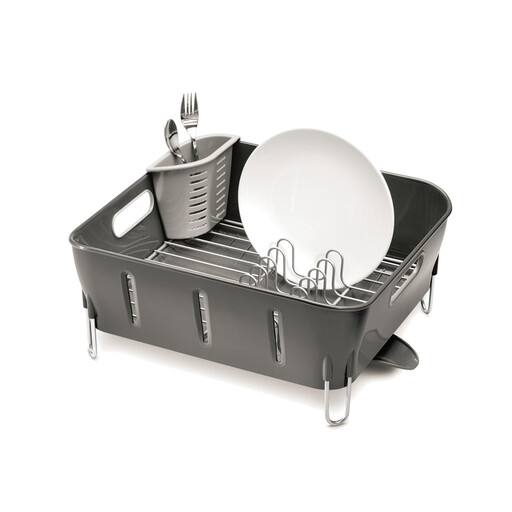
Why This Fits Their Persona: This rack is designed for small spaces. It can be placed on the countertop or directly in the sink to free up work surfaces, a common requirement in city flats and smaller kitchens.
It solves the "Puddle-Former" pitfall with a 360-degree pivoting spout that directs water into the sink from any angle, and its compact size avoids the "One-Size-Fits-None" issue for smaller kitchens.
Versatile in-sink or countertop placement. The innovative drainage spout offers complete flexibility.
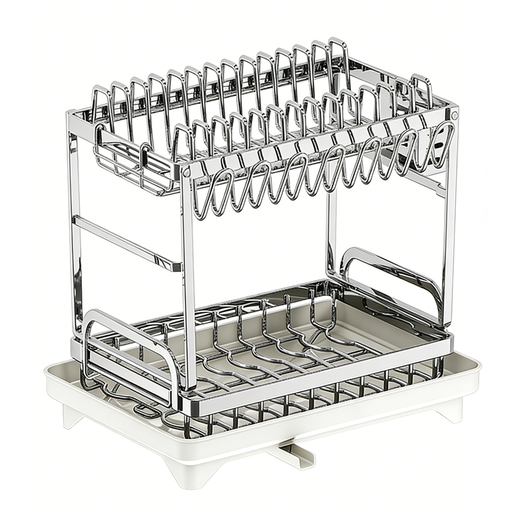
Why This Fits Their Persona: For families dealing with a constant cycle of dishes, capacity is key. This 2-tier design provides ample space for plates, bowls and utensils without taking up excessive counter space.
It avoids the "Rust and Ruin" trap by using durable stainless steel. The large, partitioned capacity is a practical solution for families, and the built-in bottom drain pipe prevents water from pooling.
High capacity with a space-saving 2-tier structure. The stainless steel construction ensures long-term durability.
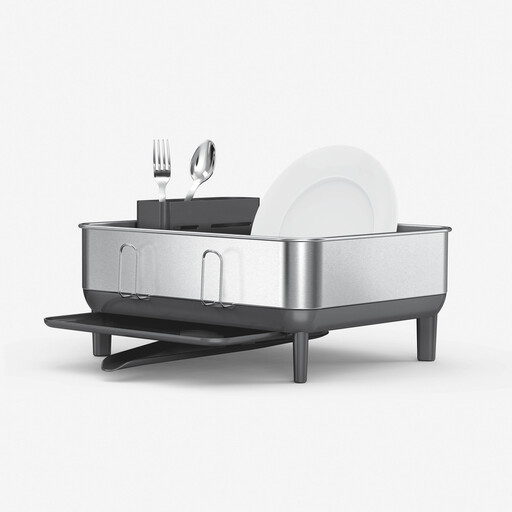
Why This Fits Their Persona: For those who have invested in a modern kitchen with high-end appliances, this rack's solid brushed stainless steel frame and sleek design provide a perfect aesthetic match.
It comprehensively avoids all pitfalls: the premium stainless steel prevents rust, the advanced drainage system with a swivel spout and anti-residue coating stops water pooling, and its thoughtful design is both compact and highly functional.
Fingerprint-proof finish keeps the steel shiny. The hydrophilic coating on the tray helps it dry quickly, preventing residue.
We have compiled a complete, real-time list of products that fully satisfy these strict selection criteria and UK safety regulations.
Regular cleaning is key. At least once a week, empty the rack completely and wash it, along with the drip tray and utensil holder, with warm, soapy water. For stubborn limescale in hard water areas, a solution of white vinegar and water can help dissolve deposits. Most importantly, ensure your rack has good drainage to begin with, as this prevents water from sitting and causing these issues in the first place.
A stainless steel dish drainer is made from an alloy that is inherently resistant to rust and corrosion. It is generally more durable and has a longer lifespan. A coated steel rack has a protective layer of plastic or vinyl over a standard steel frame. While this offers good protection, if the coating gets scratched or peels away, the underlying steel can be exposed to moisture and will begin to rust.
This depends on the model's construction. A well-built 2 tier dish rack with a sturdy frame, often made from thickened stainless steel, is designed to hold a significant weight of standard plates and bowls. However, they are generally not intended for very heavy items like cast-iron skillets or large saucepans. It is always advisable to place heavier items on the bottom tier for stability and check the manufacturer's guidance on load capacity.