Shoppers looking for protein before training
If protein is the main requirement, compare the amount per serving rather than assuming dried fruit will provide it. Fruit can be part of the eating occasion, but it need not be the protein source.


Dried fruit makes more sense as a carbohydrate-led choice than as the protein source for a pre-workout snack: the dates, prunes and apricots examined here list 2.2g–3.3g protein per 100g. If protein is your main reason for buying, pair a portion of fruit with a suitable protein food or choose a protein-led snack instead. Consider when you plan to eat, the portion and the ingredients on the exact pack.
If protein is the main requirement, compare the amount per serving rather than assuming dried fruit will provide it. Fruit can be part of the eating occasion, but it need not be the protein source.
Dates or prunes may suit someone who wants a portable, carbohydrate-led food and gets protein elsewhere. Portion size and the time available before training still matter.
Compare the exact pack’s ingredients and warnings when switching between fruits or brands. Sulphites, preservatives and warnings about occasional pits differ between the examples discussed here.
Decide whether the snack needs to supply protein or mainly carbohydrate, then check the serving, timing and ingredients that fit your plans.
Consider this when: You want dried fruit alongside a separate food that contributes protein.
Allow for: Two foods take more planning, and your usual tolerance matters when eating before exercise.
Consider this when: Carbohydrate and portability matter more to this eating occasion than protein.
Keep in mind: The examined dates and prunes contribute much more carbohydrate than protein per 100g.
Consider this when: You want one item chosen primarily for its protein content.
Check separately: Its carbohydrate content, ingredients and portion may differ from the dried fruit you had in mind.
| Priority | What to check | Your needs |
|---|---|---|
| Protein | Compare protein per serving as well as per 100g. Whitworths Dazzling Dates list 3.3g per 100g; Tesco’s listing for Sunsweet Stoned Prunes gives 2.2g per 100g. | If protein is my main reason for buying, I need to check how much the portion actually contributes or choose another food for that role. |
| Carbohydrate and timing | Check carbohydrate per serving and how the food fits the time before exercise. The British Dietetic Association’s general guidance discusses a low-fat, high-carbohydrate snack or light meal two to three hours beforehand. | A portable carbohydrate-led option appeals to me, but I also need to choose an amount and timing that fit my planned session and usual tolerance. |
| Portion and eating occasion | Measure against the pack’s serving information rather than eating from the bag. NHS 5 A Day guidance counts 30g of dried fruit as one portion and advises eating it at mealtimes rather than between meals to reduce tooth-decay risk. | I want to fit a deliberate portion into a meal before training, rather than graze on dried fruit throughout the day. |
| Ingredients and warnings | Read the current ingredient and allergen information, plus any pit warning. Marks & Spencer Collection Apricots list sulphur dioxide; Tesco’s Sunsweet Stoned Prunes listing names potassium sorbate and warns of occasional pits or pit fragments. | When I change fruit or brand, I need the exact pack to suit my ingredient requirements and how I plan to serve it. |
The examined dried fruits contain some protein, but their labels list substantially more carbohydrate per 100g. A search phrase does not tell you what a serving will contribute.
Compare protein per serving on the product label. If that amount does not meet your purpose, use another food for protein rather than treating the fruit as its substitute.
Without a chosen portion, it is harder to relate what you eat to the label. NHS guidance also advises having dried fruit at mealtimes rather than between meals to reduce tooth-decay risk.
Decide on a portion and how it fits into a meal before opening the pack, instead of grazing on it over a longer period.
The Food Standards Agency notes that sulphur dioxide and sulphites are used in some dried fruits and that people with asthma have a higher risk of reaction. The examined apricots list sulphites, while the examined prunes list a different preservative and carry a pit warning.
Check the current ingredients, allergen declaration and warnings for the particular product, especially when changing fruit type, brand or pack size.
These product-label examples show why the exact fruit and pack matter; a brand name alone does not establish the protein content or ingredients of another product.
Whitworths Dazzling Dates provide a labelled example of a date-based snack.
Sunsweet offers packaged prunes, including the Stoned Prunes product listed by Tesco.
Tesco is a retailer route for comparing specific dried-fruit packs, including its Sunsweet Stoned Prunes listing.
Marks & Spencer provides labelled examples of Collection Apricots and Mixed Dried Fruit.
These options include protein-led snacks for readers looking beyond dried fruit, followed by a date pack for readers choosing dried fruit primarily for carbohydrate. Compare the serving and current ingredients before deciding what fits your pre-workout meal.
 No image available
A savoury lentil-cake option for someone choosing a protein-led snack instead of dried fruit. This is a 100g pack; check its nutrition panel for the amount in the portion you plan to eat.
 No image available
A protein-bar alternative to dried fruit, supplied as twelve 50g bars. Compare the nutrition information for one bar with your intended eating occasion, and check the ingredients and allergen declaration.
 No image available
A peanut-and-chocolate protein-bar option rather than dried fruit, in a pack of four 40g bars. Check nutrition per bar and read the current allergen information if peanuts or other ingredients matter to your choice.
 No image available
Another protein-bar alternative to dried fruit, supplied as four 60g bars. Use the per-bar nutrition information to judge the portion, and check the ingredients and allergens on the pack.
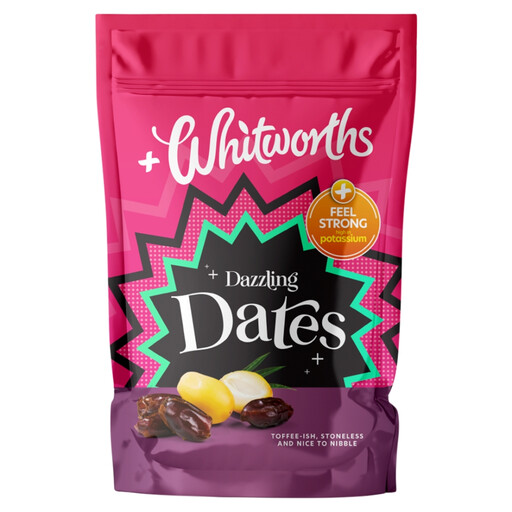 No image available
A 300g dried-date pack for the carbohydrate-led route, not a substitute for a protein-led snack. Check this pack’s nutrition and ingredients rather than applying figures from a different Whitworths date product.
Not if you are relying on the examined products for most of the protein in that snack. Whitworths lists 3.3g protein per 100g of Dazzling Dates; Tesco lists 2.2g per 100g of Sunsweet Stoned Prunes; and Marks & Spencer lists 2.2g per 100g of Collection Apricots. Check the amount in the portion you would actually eat.
It may fit when you want carbohydrate and the portion suits your meal timing and usual food tolerance. For general exercise nutrition, the British Dietetic Association discusses a low-fat, high-carbohydrate snack or light meal two to three hours before exercise; individual requirements vary with training.
Choose the fruit for its carbohydrate content and assess a separate protein food on its own label. This lets you check what each part of the eating occasion contributes instead of assuming dates or prunes supply substantial protein.
NHS 5 A Day guidance advises having dried fruit at mealtimes rather than as a between-meal snack to reduce tooth-decay risk. It counts 30g of dried fruit as one portion, so consider both the amount and how it fits into a meal before training.
Yes. Marks & Spencer Collection Apricots list sulphur dioxide, while Tesco’s Sunsweet Stoned Prunes listing includes potassium sorbate and warns of occasional pits or pit fragments. The Food Standards Agency notes that sulphites in dried fruit particularly matter to people with sensitivity or asthma; read the current pack before buying or serving it.