
24/7 Customer Support

Free returns

Same-day & Next-day Delivery

Quality Guaranteed

Unlock Your Welcome Offers: FREE Delivery | Up to 80% OFF | Free 30-day JoyPlus trial
Download the APP
If you have made the switch to buying whole coffee beans, you have already taken the most important step towards a better cup of coffee. The next crucial stage is the grind. Using a blade grinder can lead to inconsistent particle sizes, resulting in a brew that is simultaneously bitter and sour. An electric burr coffee grinder is the key to unlocking the consistent, flavourful results you find in your favourite coffee shop, right in your own kitchen.
Navigating the market for a new home coffee grinder can be complex, with a wide array of features and specifications to consider. This guide is designed to help you understand the essential features and review a selection of models to help you find the right appliance for your daily coffee ritual.
Before we look at specific models, here are a few key considerations to keep in mind during your search. Understanding these will help you match a grinder to your preferred brewing style, whether that is a rich espresso or a full-bodied French press.
The core of any good grinder is its burrs. A conical burr grinder uses two cone-shaped rings to crush beans into a uniform size, a process that generates less heat and helps preserve the coffee's delicate oils. The number of grind settings is also vital. An adjustable coffee grinder with a wide range of settings—from very fine to very coarse—gives you the versatility to prepare everything from a perfect shot on your espresso grinder to a large batch in a cafetière. Look for a model with at least 20 distinct settings to cover all major brewing methods.
How a grinder dispenses the coffee grounds can significantly impact your workflow. Some models allow you to grind directly into a portafilter, which is ideal for making espresso. Others use timed grinding or pre-set programmes based on the number of cups you wish to brew. Consider features like a removable grounds container for easy transfer and cleaning and a bean hopper large enough to hold a sufficient quantity of beans for your typical usage, reducing the need for constant refilling.
A grinder is an investment that should last. Models with stainless steel or sturdy aluminium alloy bodies offer durability and are easy to keep clean. The material of the burrs themselves is also important; hardened steel and ceramic are common choices known for their longevity and ability to produce a consistent grind over time.
Here are a few electric burr coffee grinders that stand out for their features, performance and suitability for different types of home coffee enthusiasts.
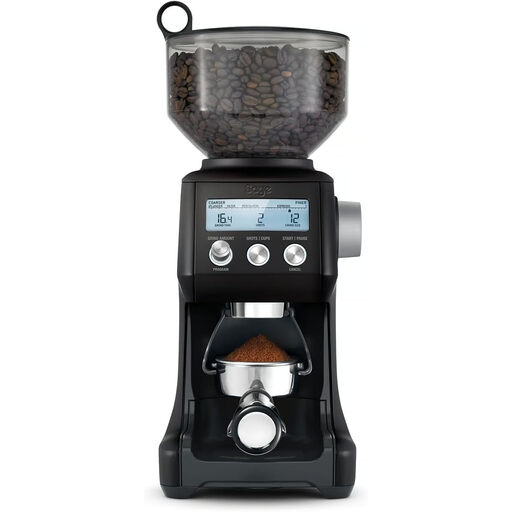
Why It Stands Out: The Sage coffee grinder is engineered for precision. Its standout feature is the impressive 60 grind settings, offering an exceptional level of control for fine-tuning your brew. The intuitive LCD screen and Dosing iQ Technology allow you to programme grind time in 0.2-second increments, ensuring a perfect and repeatable dose every time.
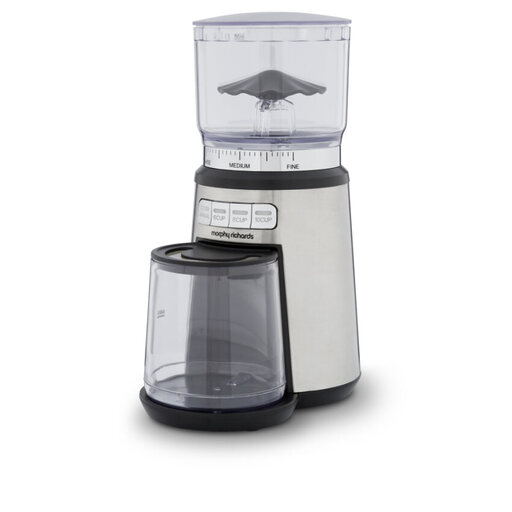
Why It Stands Out: The Morphy Richards coffee grinder offers a fantastic balance of functionality, style and ease of use. With 20 grind settings, it provides ample range for the most common home brewing methods, from fine espresso to a coarse coffee grinder for French press. The removable 200g bean hopper and grinding cup make it simple to fill, use and clean.
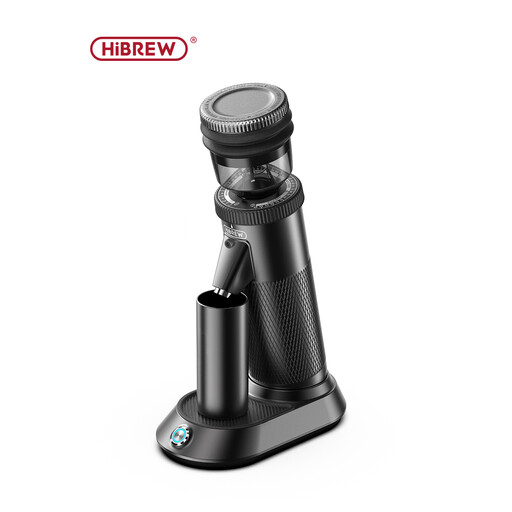
Why It Stands Out: The HiBREW G5 packs impressive features into a compact and sturdy aluminium alloy frame. It offers 36 grind settings and a unique slow-grinding function (400r/min) designed to minimise heat and preserve the coffee's original flavour profile. Thoughtful additions like an anti-static coating at the outlet and a powder discharger help reduce mess and retention.
If the models above do not perfectly match your needs, or if you would like to compare them against a broader selection, there are many other excellent grinders available. To see more choices that cater to different budgets and feature requirements, feel free to browse our complete collection.
[Explore our full range of kitchen grinders here](https://www.joybuy.co.uk/explore/grinder-for-kitchen/0pDToPzV)
Yes, significantly. A blade grinder works like a propeller, randomly chopping beans into uneven pieces. This leads to an inconsistent extraction, where some grounds are over-extracted (bitter) and others are under-extracted (sour). A burr grinder crushes beans between two abrasive surfaces into a uniform size, which is essential for a balanced and flavourful brew.
For espresso, you need a very fine, consistent grind, similar in texture to powdered sugar or fine sand. This creates the necessary resistance for hot, pressurised water to extract flavour evenly in a short amount of time (typically 25-30 seconds). This is why an adjustable coffee grinder with micro-adjustments at the fine end of the scale is so important for espresso.
For optimal performance and taste, it is good practice to clean your grinder regularly. A light cleaning every one to two weeks is recommended. This involves brushing out any loose grounds from the burrs and chute. A deeper clean, where you disassemble the burrs to remove built-up oils and fine particles, should be done every one to two months, depending on usage. This prevents stale coffee oils from tainting the flavour of your fresh beans.