
24/7 Customer Support

Free returns

Same-day & Next-day Delivery

Quality Guaranteed

Unlock Your Welcome Offers: FREE Delivery | Up to 80% OFF | Free 30-day JoyPlus trial
Download the APP
Tackling a painting project, whether it's refreshing a room or reviving a garden fence, can feel like a monumental task. The hours spent with a brush or roller, the struggle to avoid drips and the quest for a perfectly even coat can be frustrating. An electric paint sprayer offers a modern solution, promising to make the job faster while delivering a smooth, professional-looking finish.
However, the market is filled with options, each with different features and specifications. As a Joybuy Product Recommendation Officer, my role is to help you navigate these choices. This guide will break down the key features to consider and highlight some of our top recommendations to help you find the right tool for your next DIY project.
Before diving into specific models, understanding a few key concepts will help you make an informed decision. A good DIY paint sprayer should match the scale and type of your project.
Many modern sprayers use HVLP (High Volume, Low Pressure) technology. This means the tool uses a high volume of air to atomise the paint but at a low pressure. For the user, this translates to greater control, a finer finish and significantly less overspray compared to older high-pressure models. This makes an HVLP paint sprayer an excellent choice for home use, as it minimises paint wastage and mess.
The power of an electric spray gun, measured in watts (W), determines how effectively it can handle different types of paint. Higher wattage generally means the sprayer can cope with thicker paints (higher viscosity).
Look for the maximum viscosity rating, often measured in DIN-s. A sprayer that can handle a higher DIN-s value (e.g., 120 DIN-s) is more versatile and may require less paint thinning. The flow rate, measured in millilitres per minute (ml/min), indicates how quickly the sprayer can apply paint, which is a key factor for large jobs like a wall paint sprayer.
Versatility is crucial. The best tools come with multiple nozzle sizes and adjustable spray patterns.
Based on features that offer power, convenience and versatility for common household projects, here are our standout selections.
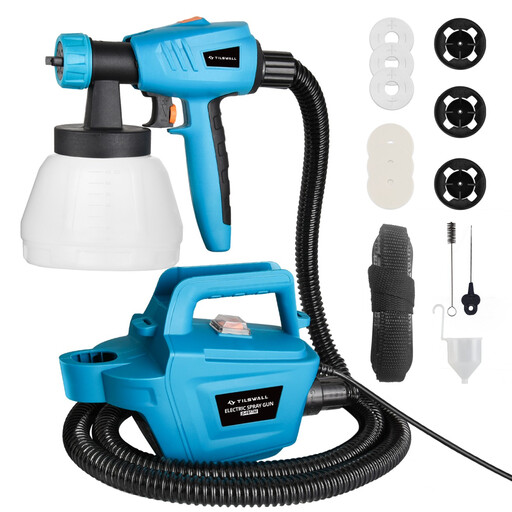
Why It Stands Out: This Tilswall paint sprayer separates the motor from the spray handle. This clever design significantly reduces the weight you hold, minimising fatigue during long painting sessions. Combined with a powerful 800W motor, it's built to handle substantial tasks efficiently.
Pros:
Who is it for? This is an excellent choice for homeowners tackling large-scale indoor or outdoor projects. If you're painting entire rooms, long fences or extensive decking, the power and ergonomic design will be a significant advantage.
View the TILSWALL 800W System on Joybuy
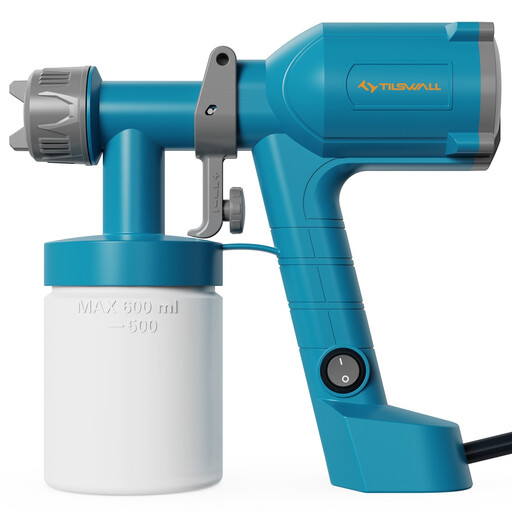
Why It Stands Out: The main feature of this model is its exceptionally lightweight construction. By using advanced materials, it is noticeably lighter than many conventional spray guns, making it incredibly easy to handle, especially for beginners or those working on detailed pieces.
Pros:
Who is it for? This sprayer is ideal for hobbyists, furniture upcyclers and anyone undertaking small to medium-sized projects where comfort and control are more important than raw power and capacity.
View the TILSWALL Ultra-Light Sprayer on Joybuy
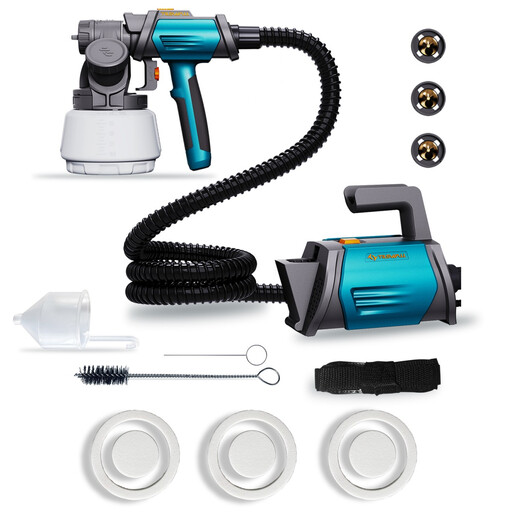
Why It Stands Out: This model combines the power of an 800W motor with thoughtful design features. The innovative side-feed container allows for easy paint refills without detaching the whole canister and its durable brass nozzles offer superior longevity compared to plastic alternatives.
Pros:
Who is it for? This is a great all-rounder for the serious DIY enthusiast who wants one tool to do it all. If your projects range from detailed furniture restoration to painting exterior walls, the wide array of nozzles and powerful motor make this an exceptionally versatile choice.
View the TILSWALL Shark 800 Sprayer on Joybuy
Once you have the right electric paint sprayer, the next step is choosing the perfect paint. If you're considering a fresh, calming look for your walls or furniture, a timeless shade of blue can transform any space.
Explore our curated selection of high-quality blue paint to find the perfect hue for your next project.
Yes, you can use most standard paints, including emulsion, but they almost always need to be thinned first. Your sprayer's manual will specify the maximum viscosity (DIN-s) it can handle. Use the viscosity cup included with your sprayer to test the paint and thin it with the appropriate substance (usually water for emulsion) until it flows through the cup within the recommended time.
For large, open surfaces like walls, ceilings and fences, an electric paint sprayer is significantly faster than a brush or roller. While there is more preparation time involved (masking off areas you don't want to paint), the application itself is incredibly quick and provides a more even, streak-free finish.
Yes, an HVLP paint sprayer is an excellent tool for interior walls. The "low pressure" aspect helps to minimise overspray, meaning less paint mist settles on floors and furniture. This makes them a much cleaner option for indoor use than non-HVLP models and they are capable of producing a very smooth, professional finish.