Offline-first note archivists
You want a removable copy of notes and attachments without relying on cloud storage. Capacity matters, but so does a routine for restoring files from that copy.


Choose a portable HDD for a large research-note archive that mostly stays at a desk; consider a portable SSD if you carry the archive regularly or copy files frequently. Whichever drive you choose, keep the notes elsewhere too: the National Cyber Security Centre advises storing backups separately and not leaving the backup device permanently connected. Check that you can restore files, that every intended computer can read the drive and that you can recover any encryption credentials.
You want a removable copy of notes and attachments without relying on cloud storage. Capacity matters, but so does a routine for restoring files from that copy.
You carry notes between locations and need to check the drive’s connections, portability and stated physical protection against the computers and conditions you use.
Your archive contains sensitive or unpublished material. Plan its format and encryption around every device that needs access, and keep passwords or recovery keys separately from the drive.
For a local research-note archive, start with the need that would decide your purchase: space for attachments, a drive you can carry between computers, protection for confidential files or a backup routine you will maintain.
| Concern | What to check | Who this matters to |
|---|---|---|
| Capacity and recovery | Measure notes and attachments, allow room for growth, and test restoring a separate copy. | If scans, recordings or datasets make my archive large, I need space without treating this drive as my only copy. Around 36% of consumers put capacity and recovery first. |
| Portability and connections | Check the exact drive’s cables, computer ports and operating-system compatibility; assess any stated physical protection. | When I move notes between locations, I need a drive that connects to my computers and suits how often I carry it. Portability and compatibility come first for around 29% of consumers. |
| Confidentiality and access | Choose a format every intended device can use, and plan how to keep encryption credentials recoverable. | For sensitive or unpublished notes, I want to restrict access without locking myself out of the archive. Around 21% of consumers make confidentiality their primary need. |
| Backup routine | Choose a copying routine you can repeat, then eject, disconnect and periodically test the drive. | If copying notes feels cumbersome, I may not keep the archive current; I need a routine I can follow. Ease of backup comes first for around 14% of consumers. |
A backup accessible from the computer may also be exposed during a ransomware incident. The National Cyber Security Centre advises against leaving a backup device permanently connected.
After copying files, safely eject the drive and store it separately. Periodically restore a few representative notes to check the copy.
Apple Support says encrypting an external device with Disk Utility requires erasing it first. Existing files therefore need another location before you begin.
Make and check another copy before changing the format or starting that encryption process.
A drive used across Mac and Windows computers needs a format and, if required, an encryption method that work with the intended devices. Apple Support identifies ExFAT as a Windows-compatible format for volumes over 32GB.
List the computers that must read and write the archive, then decide on the format before transferring your notes.
Microsoft Support says it cannot recreate a lost BitLocker recovery key; Apple Support says an encrypted disk cannot be accessed without its password.
Keep the relevant password or recovery key securely, separately from the drive, and confirm you can locate it.
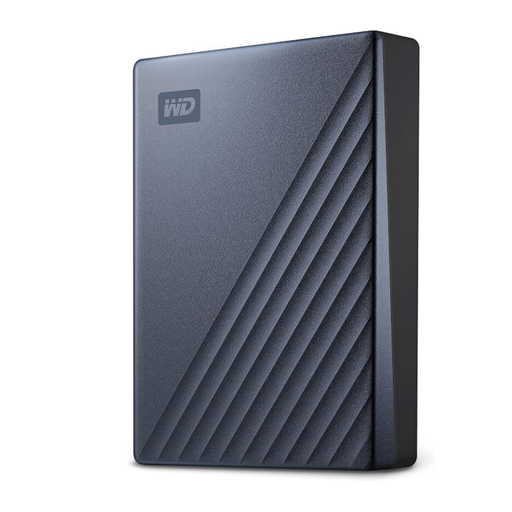
The My Passport portable HDD range is relevant if you want substantial local capacity and are considering its stated password-protection features.
Expansion Portable is a portable HDD line to consider for a straightforward local archive.
The T7 Shield portable SSD line is relevant when an archive is carried regularly and stated physical protection matters.
The StoreJet 25M3C is a portable HDD option for an archive moved between USB-C and USB-A computers.
These portable HDDs and SSDs offer different ways to keep a removable local copy of research notes. Choose the capacity and carrying arrangement that fit your archive, then check the format and backup routine separately.
 No image available
Consider this portable HDD for a sizeable archive that usually stays at a desk. If you move notes between computers, settle the file-system choice before copying them; avoid drops and movement during transfers.
 No image available
Consider this SSD if you regularly carry or transfer your notes. Check your computer’s connection and the archive format; keep the drive away from liquids and excessive moisture.
 No image available
Consider this carried-archive option if its capacity leaves room for your notes to grow. Do not submerge the drive, and keep a separate copy even when using a drive intended for frequent transport.
 No image available
Consider this for a portable local copy if the archive fits within its capacity. Confirm the format before first use, and check access to any encrypted files on the devices that need them.
 No image available
Consider this portable HDD for a larger archive used mainly with a computer. Check the format before using it with a Mac, and choose a separate protection method if your notes are confidential.
Not if it holds the only copy of irreplaceable notes. The National Cyber Security Centre defines a backup as a copy kept in a separate safe location; retain your working files, store the drive separately and check that you can restore files from it.
Disconnect a backup drive when you are not using it for a backup. The National Cyber Security Centre advises against keeping it permanently connected because a ransomware incident can affect data accessible from the computer.
Choose the format before transferring files, based on every computer that must read and write the archive. Apple Support identifies ExFAT as a Windows-compatible format for volumes over 32GB; do not assume an encrypted Mac format will work with Windows.
Yes, if the encryption method works with the computers you intend to use. Microsoft Support says manual BitLocker drive encryption is available on Windows Pro, Enterprise and Education; Apple Support says encrypting an external device with Disk Utility requires erasing it first, so copy existing files elsewhere beforehand.
You may lose access to the encrypted notes. Apple Support says an encrypted disk cannot be accessed without its password, and Microsoft Support says it cannot recreate a lost BitLocker recovery key. Keep the credential securely and separately from the drive.