Festival-goers looking for protein in one bag
If you want a savoury snack between meals, the amount per bag matters. EatProtein states 11g protein in a 25g bag, while Applied Nutrition states 15g in a 50g bag.


For more protein in one bag, compare dedicated protein crisps: EatProtein lists 11g per 25g bag and Applied Nutrition lists 15g per 50g bag, while Walkers Ready Salted lists 1.6g per 25g pack. Check the amount in the portion you will eat alongside salt, ingredients and allergens; a conventional or lentil crisp may make more sense when protein is not your main reason for packing it.
If you want a savoury snack between meals, the amount per bag matters. EatProtein states 11g protein in a 25g bag, while Applied Nutrition states 15g in a 50g bag.
Protein sources differ: Applied Nutrition describes its Protein Chips as pea-protein and gluten-free, while EatProtein says its crisps use soya protein concentrate. Check the exact flavour and pack before buying or sharing.
If protein is not the main priority, conventional or lentil crisps remain options to compare. Tyrrells lists 3.9g protein per 30g serving of its lentil crisps; Walkers Ready Salted lists 1.6g per 25g pack.
Start with the portion you expect to eat, then read the nutrition and ingredient information for that particular pack.
| Priority | What to check | Your needs |
|---|---|---|
| Protein per portion | Compare protein for a whole bag or stated serving, not just per 100g. Pack and serving sizes differ between dedicated protein, lentil and potato crisps. | I want to know how much protein is in the portion I will actually pack and eat. |
| Nutrition labels | Check the pack size, calories, fat and salt alongside protein. Read any traffic-light labels in the context of the stated serving. | I want a quick way to compare several snacks without judging them by protein alone. In the Food Standards Agency and Ipsos Northern Ireland’s 2024 tracker, 49% of 611 Northern Ireland respondents interviewed between 16 September and 23 November said they actively use traffic-light labels when shopping for food. |
| Ingredients and allergens | Read the ingredient list and allergen statements for the exact flavour. A plant-based protein source does not establish that a snack is suitable for every diet or allergy. | Before I share a pack, I need to check whether ingredients such as soya, or a pack’s allergen warnings, matter to anyone eating it. |
| Pack format | Check whether the product is an individual bag, a multipack or a larger box, and how you will keep an opened pack. | Small portions are easier for me to set aside for different points in the day; a larger pack needs more thought once opened. |
The stated portions differ substantially. Tyrrells lists 3.9g per 30g serving of its lentil crisps and Walkers Ready Salted lists 1.6g per 25g pack, compared with 11g per 25g EatProtein bag and 15g per 50g Applied Nutrition bag.
Compare the protein in the whole portion you intend to eat rather than relying on words such as “lentil” or “baked”.
Applied Nutrition lists 210 kcal and less than 1.8g salt for its 50g Protein Chips bag. Walkers lists 96 kcal and 0.19g salt for a smaller, 22g Oven Baked Sea Salt pack; their different sizes matter when comparing the figures.
Read the nutrition information for the amount you expect to eat, particularly if you are packing several bags.
EatProtein says its crisps contain soya protein concentrate, and Walkers states that its Ready Salted crisps are made in a factory that also handles several allergens.
Check the current ingredient list and allergen warnings on each flavour before buying or sharing it.
Its Protein Chips are an option to examine when protein per individual bag is the deciding factor.
Its smaller protein-crisp bags provide another portion size to compare.
Its lentil crisps offer a pulse-based alternative to potato crisps.
Its Ready Salted and Oven Baked Sea Salt lines give two conventional crisp formats to compare.
Lightly Salted is a conventional potato-crisp option where its dietary labelling may be relevant.
Sea Salted is another conventional crisp to consider when checking dietary labels.
These options are seaweed snacks, lentil cakes and konjac snacks rather than dedicated protein crisps. Their different formats make the portion size, ingredients and nutrition label particularly important to check.
 No image available
Three small packs offer separate portions to carry during a festival. This is a seaweed snack, not a protein crisp: compare protein for a 5g pack rather than judging it by a per-100g figure, and check the wheat and soya allergen information.
 No image available
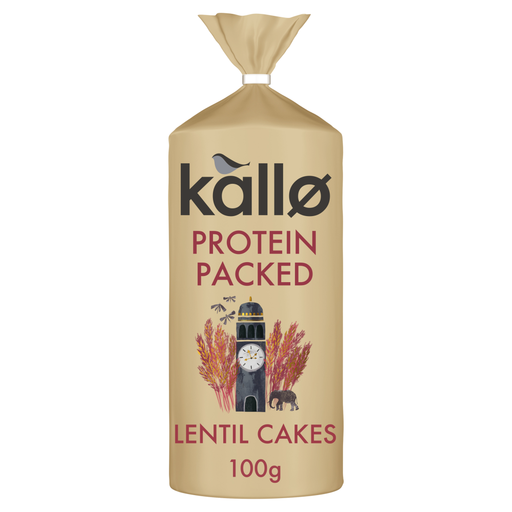
Lentil cakes are a different format from a bag of crisps, and the 100g box may be less convenient if you want separate portions throughout the day. Check the protein amount for your intended portion, storage instructions after opening and the pack’s milk, sesame and soya warnings.
 No image available
The box contains 20 individually packed 18g portions for carrying or sharing. Do not assume this konjac snack meets a protein-focused need because it is called a crisp; check its protein figure and the wheat and soya information on the pack.
Not by itself. Check the ingredients and dietary labelling for the exact flavour; EatProtein says its crisps use soya protein concentrate, but the protein source alone does not establish the status of every other ingredient.
No. Read the current ingredient list and allergen statements for the particular pack before buying or sharing it. EatProtein identifies soya protein concentrate in its crisps, and ingredients and precautionary warnings can differ between products.
Choose between them according to what you want from the snack. Walkers says its Oven Baked Sea Salt crisps contain 50% less fat than regular potato crisps and lists 1.3g protein per 22g pack; EatProtein and Applied Nutrition state 11g and 15g protein per bag respectively, in different-sized packs.