
24/7 Customer Support

Free returns

Same-day & Next-day Delivery

Quality Guaranteed

Unlock Your Welcome Offers: FREE Delivery | Up to 80% OFF | Free 30-day JoyPlus trial
Download the APP
Categories
Running out of freezer space is a familiar frustration. Whether you are trying to fit in the weekly shop, store batch-cooked meals or take advantage of bulk-buy offers, a cramped freezer can make life difficult. A dedicated freestanding freezer offers a straightforward solution, providing the extra capacity you need to stay organised and reduce food waste.
As a Joybuy Product Recommendation Officer, my role is to help you navigate the options. This guide cuts through the clutter to offer practical advice on choosing the right freezer for your home, needs and budget. We will explore the different types available and highlight a few standout models to consider.
Before you start browsing, considering a few key factors will ensure you find a model that fits your lifestyle perfectly.
The first major decision is the style of freezer.
Consider how much you realistically need to store. Capacity is measured in litres; for a small household or as an overflow unit, a mini freezer or table top freezer (around 30-50 litres) might be sufficient. Large families or those who buy in bulk should look for models with 200 litres or more.
Always measure the intended space carefully, leaving a 5cm gap around the back and sides for ventilation. If you plan to keep the appliance in an unheated outbuilding, check that it is rated to operate in low ambient temperatures—often referred to as a garage freezer.
A freezer runs 24/7, so its energy consumption matters. Under the current UK system, appliances are rated from A (most efficient) to G. An energy efficient freezer with a good rating will help keep running costs down.
Also, consider the noise level, measured in decibels (dB). A quiet freezer (under 41dB) is essential for open-plan living spaces or studio flats. Finally, look for useful features like a convertible freezer fridge, which allows you to switch the appliance's function depending on your needs—perfect for Christmas or summer parties.
Here are a few models that offer practical solutions for different households, selected for their features and versatility.
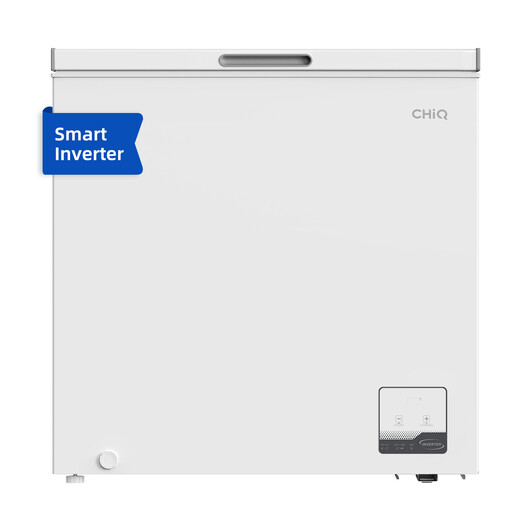
Why It Stands Out: This model combines a huge 199-litre capacity with modern technology. The advanced inverter compressor ensures stable temperatures, quieter operation and better energy efficiency. Its standout feature is the Freezer to Fridge Conversion, allowing you to transform the entire unit into a refrigerator, offering incredible flexibility for seasonal needs.
Pros:
Who is it for? Large families, bulk shoppers and anyone who needs a high-capacity, flexible cooling solution for a garage or utility room.
View Details for the CHiQ 199L Chest Freezer
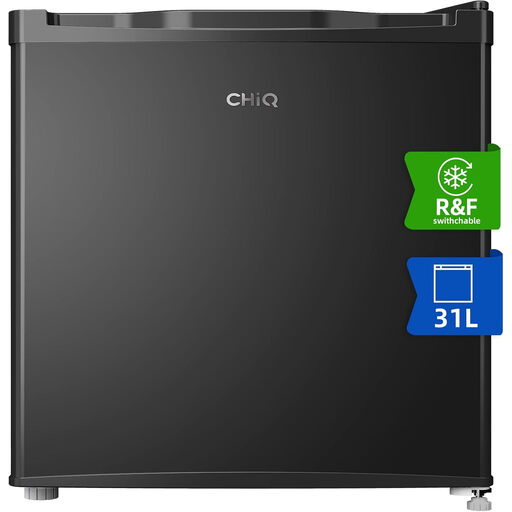
Why It Stands Out: This table top mini freezer is the perfect solution when space is tight. With a 31-litre capacity, it provides essential extra freezing space without a large footprint. It is small enough to sit on a worktop or under a desk and its 4-star freezer rating means it is capable of safely freezing fresh food and storing it long-term.
Pros:
Who is it for? Students, individuals in small flats or anyone needing a small overflow freezer for a home office, caravan or utility room.
View Details for the CHiQ 31L Mini Freezer
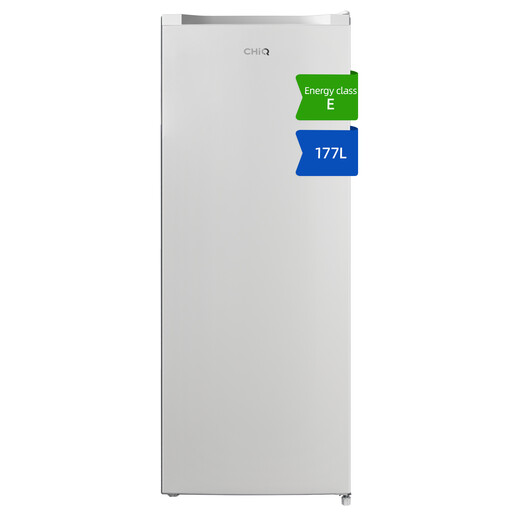
Why It Stands Out: This model proves you do not need a wide space to get great organisation. As a slim freezer measuring just 54.5cm wide, it fits into narrower gaps than standard appliances. Inside, six deep transparent drawers make it simple to categorise and find your frozen goods. Its ultra-quiet 39dB operation makes it ideal for open-plan kitchens.
Pros:
Who is it for? Families and meal preppers who value organisation and have limited kitchen width, but still require substantial storage capacity.
View Details for the CHiQ 54cm Upright Freezer
The models above are just a starting point. If you are looking for a different size, colour or feature set, there is a freestanding freezer to suit every home and budget.
Explore Our Full Range of Freezers
Yes, but it is important to choose the right model. Standard freezers are designed to work within a specific range of ambient temperatures (usually 10°C to 43°C). A UK garage can easily drop below 10°C in winter, which can cause a standard freezer to switch off. Look for a model specifically advertised as a garage freezer or one that is certified to operate in low temperatures (often down to -15°C).
The primary difference is in design and access. An upright freezer has a front-opening door and internal drawers/shelves, making it easy to organise and find items quickly. A chest freezer opens from the top and offers a deep, open space, which is better for large, bulky items but can make it harder to retrieve things from the bottom.
Running costs depend on the freezer's size, energy rating and your electricity tariff. The energy label on every new appliance provides an estimated annual energy consumption in kilowatt-hours (kWh). To calculate the cost, multiply this kWh figure by the price you pay per kWh from your energy supplier. Choosing a model with a better energy rating (closer to 'A') will always result in lower long-term running costs.