Who is choosing for which setup?
The useful starting point is the job the monitor must do with the hardware you already own, not the largest number on its listing.
Competitive PC players
Fast multiplayer play makes attainable frame rates, refresh rate and variable refresh rate (VRR) relevant. TFTCentral discusses smaller, lower-resolution screens as a competitive preference; check that your PC and chosen connection can use the mode you want.
Console mode-match buyers
PS5 and Xbox players need the desired resolution and refresh mode to work on the monitor’s actual HDMI input. PlayStation Support UK and Xbox Support provide console output checks, including PS5’s 1440p test and Xbox’s 4K TV details.
Cinematic and mixed-use desk gamers
For single-player games alongside work or general desktop use, compare resolution, contrast, screen area and stand adjustment as well as refresh rate. A wider display also needs room on the desk and support for the intended aspect ratio in the games you play.
What should you check before choosing?
Check the source device and intended port first. Then weigh motion, image presentation and physical fit according to what would most affect your own purchase.
| Concern |
What to check |
Who this matters to |
| Hardware and connection compatibility |
Match your PC or console output to the monitor’s resolution and refresh modes on the intended port; check the cable needed for that mode. |
If my console or existing graphics output cannot use the monitor’s advertised mode, that specification will not help me. About 33% of consumers put source-and-input compatibility first. |
| Competitive motion |
Compare attainable game frame rates with refresh at the intended resolution and connection; check VRR support for that source. |
For fast multiplayer games, I would rather choose a refresh mode my PC can use than pay attention to a higher headline figure alone. Roughly 27% of consumers prioritise competitive motion. |
| Detail and game presentation |
Compare native resolution, panel and HDR specifications; for ultrawide, check support in your main games. |
When single-player visuals matter most, I care about detail, contrast or a wider view, while accepting that higher-resolution PC gaming asks more of the graphics hardware. About 20% of consumers make image presentation their primary concern. |
| Desk fit and mixed use |
Measure desk width, depth and stand footprint; check the adjustments or mounting options you need. |
If the same screen handles games and everyday desktop tasks, I need it to fit and sit comfortably in my workspace. Approximately 20% of consumers put desk versatility first. |
For a PC focused on high-frame-rate games, 1080p can be worth considering when lower rendering demand matters more than desktop detail. A 1440p display offers a different balance of detail and graphics workload; 4K places more demand on a PC at high frame rates. These resolution choices still depend on the games and output modes your hardware can run.
Ultrawide is a separate screen-format decision, not a replacement for checking resolution or ports: confirm game aspect-ratio support and desk space. For console use, start with the console’s supported modes and the monitor’s HDMI specifications. PlayStation Support UK describes a PS5 1440p output test, while Xbox Support sets out the display requirements for Xbox Series X 4K gaming at 120Hz.
Gaming monitor brands to compare
These ranges offer useful model-specific points of comparison; a feature listed for one monitor should not be assumed across the range.
Alienware
Dell UK lists QHD, 4K and ultrawide QD-OLED models in this gaming-monitor range.
- The AW2725DF illustrates why per-port modes matter: Dell UK lists QHD at 360Hz through DisplayPort and 144Hz through HDMI.
- Check the input on the particular Alienware model you are considering; the AW2725DF’s modes do not describe the whole range.
LG UltraGear
LG UK’s gaming-display range includes OLED, 4K, curved and ultrawide options.
- LG UK lists the 27GS95QE-B as a 27-inch QHD OLED with a 240Hz refresh rate and HDMI 2.1.
- Its stated connection and panel specifications are specific to the 27GS95QE-B; confirm the modes of any other UltraGear model separately.
ASUS TUF Gaming
This range includes a QHD Fast IPS option for buyers comparing high-refresh displays without requiring an OLED panel.
- ASUS United Kingdom describes the VG27AQL3A as a 27-inch QHD, 180Hz Fast IPS monitor with listed adaptive-sync features.
- Confirm the selected connection and source mode for that exact model rather than treating its listed refresh rate as universal.
Samsung Odyssey
Samsung UK lists a 4K high-refresh QD-OLED option within its Odyssey gaming-monitor range.
- Samsung UK specifies a 27-inch 4K QD-OLED panel and 240Hz refresh rate for the Odyssey OLED G8 G80SH.
- Those specifications describe the G80SH, not every Odyssey display; check your source device and intended port against the exact variant.
Joybuy monitors for existing setups
These selections cover ultrawide PC gaming, QHD desk setups and 4K or dual-mode displays. Compare each listed mode with your existing hardware and the connection you will use.
 No image available
Dahua 34-inch UWQHD 200Hz curved gaming monitor
Consider this for PC games that support an ultrawide view, provided the screen and stand fit your desk.
The listed configuration is a curved 3440 × 1440 VA display with a 200Hz headline refresh rate, HDMI and DisplayPort 1.4 connections. Check the refresh mode available on the port you will use; do not assume the headline rate applies to both connections.
View on Joybuy
 No image available
LG UltraGear G8 27G850A 27-inch 4K dual-mode monitor
This is a dual-mode option to investigate if you switch between higher-resolution viewing and faster-paced PC games.
The product name lists a 27-inch 4K UHD Nano IPS display, 240Hz/480Hz dual-mode refresh figures, HDMI 2.1 and DisplayPort 2.1. Before relying on either mode, confirm its resolution and refresh rate on your chosen input and whether your PC or console can output it.
View on Joybuy
 No image available
LG UltraGear 34GX900A-B 34-inch OLED monitor
Consider the ultrawide format if your PC games support it and you have space for a 34-inch screen.
The product name lists an OLED WQHD display and 240Hz refresh rate. Confirm the supported mode on your intended input. The listing cautions about burn-in with static images, which is worth weighing if the screen will also show fixed desktop elements for long periods.
View on Joybuy
 No image available
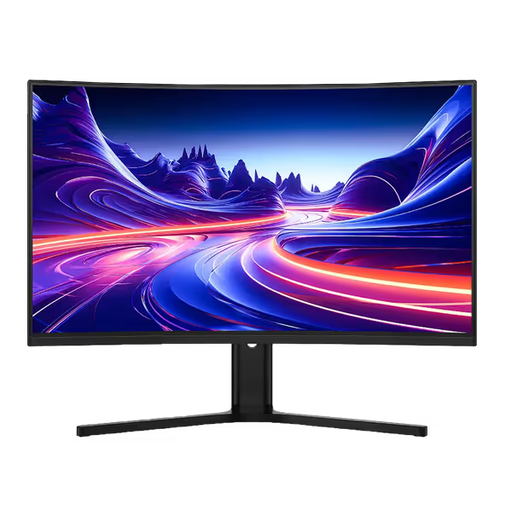
Dahua 32-inch QHD 180Hz curved gaming monitor
This QHD option is worth comparing if you want a larger curved 16:9 screen for desk-based gaming.
The product name specifies 2560 × 1440 resolution, a VA panel, a 180Hz headline refresh rate, HDMI and DisplayPort 1.4 connections. Check the supported refresh rate on your intended port; for console use, also confirm the desired HDMI output and VRR mode.
View on Joybuy
 No image available
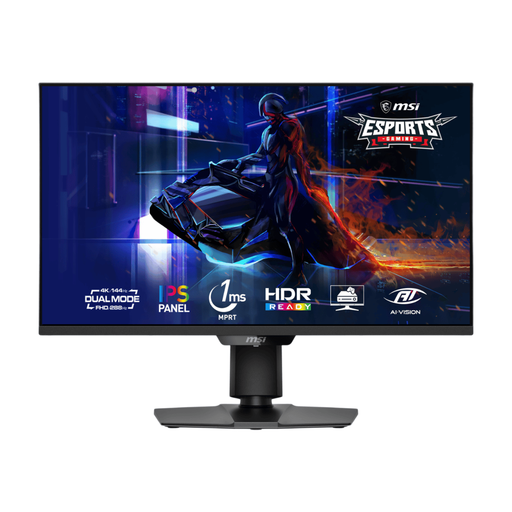
MSI MAG 275UPD E14 27-inch dual-mode monitor
Consider this if you want to compare a 4K mode with a faster Full HD mode on the same desk display.
The product name lists UHD at 144Hz and FHD at 288Hz, with Adaptive Sync. Confirm which mode works through your intended connection and whether your existing hardware can deliver the game performance you want.
View on Joybuy
Gaming monitor questions
How can I check whether my setup can use 4K at 120Hz?
Check the source device, cable and monitor input as one chain. Xbox Support specifies an HDMI 2.1-capable display and an Ultra High Speed HDMI cable for Xbox Series X 4K gaming at 120Hz; its settings show 4K TV details. PlayStation Support UK says PS5 supports 4K 120Hz output with a compatible display. For a PC, compare its graphics output with the monitor’s mode table for the exact input.
Can I use a 1440p gaming monitor with PS5?
Yes, if the connected monitor supports the required output mode through HDMI. PlayStation Support UK provides a PS5 1440p output test covering supported 60Hz or 120Hz, SDR or HDR, and VRR modes; run it for the display you intend to use rather than relying on native resolution alone.
Does HDMI 2.1 guarantee a monitor’s highest refresh rate?
No; read the exact model’s resolution-and-refresh specifications by input. Dell UK lists the Alienware AW2725DF at QHD 360Hz through DisplayPort but QHD 144Hz through HDMI, illustrating why the port used matters more than the headline refresh figure.
What should I check about VRR?
Confirm that the monitor supports VRR on your intended connection and that your PC or console supports the corresponding mode. The Video Electronics Standards Association’s Adaptive-Sync Display programme tests factors including refresh rate, flicker, response time and dropped frames, but certification alone does not establish compatibility with every source setting.
What if a new monitor is faulty in the UK?
The UK Consumer Rights Act 2015 requires goods supplied under a goods contract to be of satisfactory quality. Keep your order record and the product description so you can identify the monitor and explain the fault; that statutory requirement is separate from any retailer’s change-of-mind returns policy.


