For building a virtual zoo on a large screen, start with a 31.5- to 32-inch 4K monitor if your PC can run the game comfortably at 3840 × 2160; choose QHD if lower rendering demand matters more than the extra pixels. A 34-inch ultrawide offers a different, wider screen shape, but check how the game uses 21:9 before choosing it. Treat very high refresh rates and dual modes as reasons to buy only if you also play faster games, and check OLED care if management menus will stay on screen for long sessions.
Who is this choice for?
Detail-first zoo builders
If you spend most of your time placing scenery, shaping habitats and using management menus, a large 4K screen may matter more to you than a very high refresh rate. Frontier Developments describes Planet Zoo as a construction, customisation and management game.
Mixed simulation and action gamers
If zoo-building shares your gaming time with faster titles, consider whether you would use a high-refresh display or switch between resolution-specific modes. LG, for example, specifies separate 4K and Full HD modes for the UltraGear 32GX850A-B.
PC-conscious large-screen buyers
If you want a large screen without assuming your PC can deliver the experience you want at 4K, compare a 32-inch-class QHD option with your intended 4K setup. Check game-specific performance at the resolution and settings you plan to use.
What matters when choosing?
Choose the screen shape and resolution before deciding how much refresh-rate capability you will use. A 34-inch, 3440 × 1440 ultrawide provides a wider format than 16:9; check the game’s 21:9 presentation, your desk space and your PC’s performance before treating it as a substitute for 4K detail.
| Concern |
What to check |
Who this matters to |
| Building detail |
Compare a 3840 × 2160, 16:9 screen with QHD for your intended viewing distance and PC capability. |
I want room to inspect habitats and work with management menus on a large screen. Around 36% of consumers put the detailed building canvas first. |
| Other games |
Check the resolution attached to each refresh rate: LG specifies 4K at 165Hz and Full HD at 330Hz for the 32GX850A-B. |
If I switch from zoo-building to faster games, I want a mode I will actually use for both. Roughly 29% of consumers put that flexibility first. |
| Long sessions |
Check the exact model’s screen finish, adjustment options, OLED-care controls and warranty terms. |
Menus may remain visible while I build, and reflections can affect my desk setup. Around 21% of consumers chiefly prioritise room comfort and OLED practicality. |
| PC demands |
Compare performance at your intended settings and resolution; 2560 × 1440 is a lower-resolution alternative to 3840 × 2160. |
I would rather choose a large QHD screen than rely on untested 4K performance from my current PC. About 14% of consumers put PC demands first. |
Buying pitfalls
-
Assuming recommended PC requirements establish 4K performance
Planet Zoo’s published recommended requirements do not set a 4K resolution, graphics preset or frame-rate target. Meeting them therefore does not answer how the game will run at your chosen monitor setting.
Check your GPU’s outputs and look for game-specific performance evidence at the resolution and settings you intend to use.
If your current PC cannot deliver the experience you want at native resolution, using that setting may require a PC upgrade.
-
Assuming OLED-care features are the same on every model
Static management menus make panel care worth considering. ASUS and Samsung describe different protection features for their respective monitors; neither model’s feature list establishes what another screen provides.
Compare the exact model’s care controls, warranty wording and screen finish against your usual session length and room lighting.
-
Reading the maximum refresh rate as the 4K refresh rate
LG specifies the UltraGear 32GX850A-B at 165Hz in UHD mode and 330Hz in Full HD mode. Its maximum refresh-rate figure describes the lower-resolution mode.
Check the resolution, connection and refresh-rate combination you expect to use most often.
-
Assuming an optional protection plan is included
The Joybuy listing for the LG UltraGear 32GX850A-B distinguishes its stated manufacturer’s warranty from optional protection.
Before ordering, check the seller, included warranty and terms of any optional plan for the exact listing you choose.
Relevant monitor brands
LG UltraGear
The 32GX850A-B is a 4K OLED option for consumers who would use a separate faster Full HD mode as well as a detailed simulation display.
- LG specifies UHD at 165Hz and Full HD at 330Hz for this model.
- The faster mode gives up 4K resolution; check PC performance and OLED-care suitability separately.
Alienware
Dell’s AW3225QF is a curved, 31.6-inch 4K QD-OLED model for consumers who prefer that screen shape and also play faster games.
- Dell specifies 3840 × 2160 at 240Hz, a 1700R curve and height, swivel and tilt adjustment.
- The curve is a matter of viewing preference; 240Hz alone does not establish a benefit for zoo management.
ASUS ROG
The PG32UCDM combines a 4K QD-OLED display with connection features that may matter on a multi-device desk.
- ASUS specifies 240Hz, a KVM feature and USB-C with 90W Power Delivery for this model.
- ASUS describes cooling and care features intended to reduce burn-in risk, not eliminate it; check support terms for prolonged static-interface use.
Samsung Odyssey
The 32-inch Odyssey OLED G80SD is a 4K QD-OLED option for consumers weighing room lighting alongside gaming specifications.
- Samsung specifies 240Hz and describes OLED Glare Free technology for this model.
- Judge the screen finish in relation to your room; Samsung’s stated OLED safeguards are not a guarantee against image retention.
Joybuy monitors for these setups
These monitors cover large-screen 4K, QHD and ultrawide approaches to zoo-building. Choose by the resolution and screen shape your PC and desk can accommodate, then weigh the features you would use in other games.
 No image available
LG UltraGear 32GX850A-B 32-inch dual-mode OLED monitor
Consider this model if you want a 4K screen for building and would also use a faster Full HD mode in other games.
LG specifies 3840 × 2160 at 165Hz and 1920 × 1080 at 330Hz. Check your PC’s 4K performance and the model’s OLED-care and warranty terms for long sessions.
View on Joybuy
 No image available
Dahua 32-inch curved 4K OLED gaming monitor
Consider this curved 4K screen if a large 16:9 building canvas is your priority.
The product title specifies 3840 × 2160, 165Hz and USB-C with 65W power delivery. Check PC performance and the exact model’s OLED-care and warranty terms.
View on Joybuy
 No image available
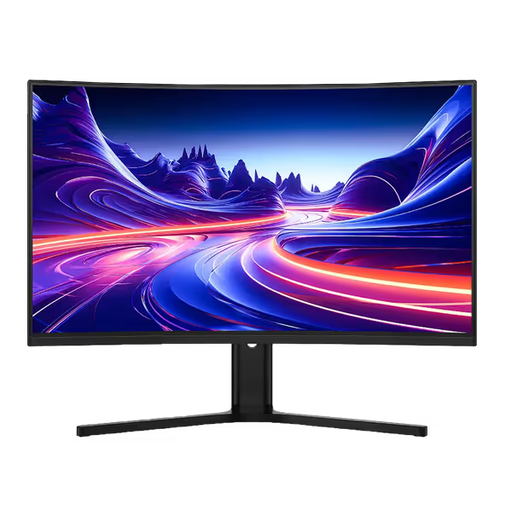
Dahua 32-inch curved QHD 180Hz gaming monitor
Consider QHD if you want a large screen but place lower rendering demand ahead of 4K pixel detail.
The product title specifies 2560 × 1440, a VA panel and 180Hz. Check how your PC runs Planet Zoo at your intended settings.
View on Joybuy
 No image available
CRUA 32-inch 1500R curved QHD gaming monitor
Consider this large QHD option if 4K detail is less important than reducing the resolution your PC must render.
The product title specifies 2560 × 1440, 165Hz, adaptive sync and VESA 100 × 100mm mounting. Check whether its stand or a compatible mount suits your desk.
View on Joybuy
 No image available
Dahua 34-inch curved UWQHD 200Hz gaming monitor
Consider this ultrawide if you prefer a wider screen shape to a 16:9 4K canvas.
The product title specifies 3440 × 1440, a VA panel and 200Hz. Check your desk fit, Planet Zoo’s 21:9 presentation and PC performance at this resolution.
View on Joybuy
Frequently asked questions
Do I need a 240Hz monitor to build a virtual zoo?
No: Planet Zoo’s published PC requirements do not set a 240Hz target. Prioritise a screen size and resolution your PC can use comfortably; 240Hz may matter more if you also play faster games.
Should I choose 4K or QHD for a large zoo-building monitor?
Choose 4K if you want a 3840 × 2160 building canvas and your PC performs acceptably at your intended settings; choose 2560 × 1440 QHD if reducing rendering demand matters more. Planet Zoo’s recommended PC specification does not establish 4K performance.
What should I check before using an OLED monitor for long building sessions?
Check the exact model’s OLED-care controls, warranty wording and screen finish against your room lighting and time spent with static menus. ASUS and Samsung describe safeguards for specific models, but those features do not guarantee that image retention cannot occur.
What should I do with an old monitor when replacing it?
Check your retailer’s take-back options or your local authority’s current recycling instructions. GOV.UK describes waste electrical and electronic equipment regulations as a framework intended to increase recovery, reuse and recycling; the route available to you should be checked locally.


