Panoramic space-sim explorer
If you want room for a cockpit view alongside maps or controls, investigate a 34-inch 3440 × 1440 ultrawide. Check the game's ultrawide support before assuming its view will use the full screen.


A 34-inch ultrawide is worth considering if a broad cockpit view and room for game interfaces matter most, provided its stand fits the desk and your game and computer support the intended display mode. For a shared bedroom, weigh reflections and private audio alongside screen format; if you choose OLED for dark-scene presentation, follow the exact model's guidance for prolonged static HUDs.
If you want room for a cockpit view alongside maps or controls, investigate a 34-inch 3440 × 1440 ultrawide. Check the game's ultrawide support before assuming its view will use the full screen.
If room lighting and another person's sleep or study time shape your setup, check reflections and your headset connection separately. Samsung describes glare-reduction treatment on its Odyssey OLED G8 G85SD, while BenQ lists a headphone jack on the EX3410R.
If the screen will show both games and static desktop content, check desk fit and the exact panel's care guidance. ASUS advises using available OLED Care settings to manage prolonged static imagery on compatible ROG monitors.
Start with the space available for the monitor, then check the game and computer connection against the display mode you want. In a shared bedroom, plan lighting and headset use before deciding whether OLED or a conventional backlit display suits your routine.
| Concern | What to check | Who this matters to |
|---|---|---|
| Game view and interface space | Check the game's ultrawide support and whether your computer and connection can use the intended resolution and refresh rate. | I want my cockpit scene, map and controls to have room without giving up the main view. Around 44% of consumers would put that panoramic space first. |
| Reflections and private audio | Check the exact panel's glare treatment and whether your headset connects through the monitor or source device. | If someone else is sleeping or studying nearby, I need to manage room reflections without playing sound aloud. That shared-room need comes first for around 33% of consumers. |
| Desk fit and prolonged use | Compare the stand footprint with your desk; for OLED, read the model's guidance on static images and care settings. | I use the display for long sessions and leave desktop elements or game HUDs visible, so physical fit and panel care shape my choice. Around 23% of consumers would prioritise those practicalities. |
A diagonal measurement does not show the space taken by the stand. BenQ lists the EX3410R at 795.7 mm wide and 269.7 mm deep with its stand.
Measure usable desk width and depth, leaving room for your keyboard and rear cables. If you plan to use an arm, check the exact VESA pattern and the arm's supported weight.
VESA distinguishes its DisplayHDR certification tiers from similar-looking marketing labels, including “HDR-400”. HDR input support alone does not establish a particular certified tier.
Check the exact model for a named DisplayHDR or DisplayHDR True Black tier before comparing certification claims.
ASUS warns that prolonged static, high-contrast content can cause image persistence. A fixed cockpit HUD or desktop bar makes the exact monitor's care guidance relevant.
Check the model's instructions, use its available screen-saver and logo-brightness controls, and avoid leaving fixed bright elements on screen for prolonged periods.
BenQ's EX3410R has built-in speakers, but their sound is audible in the room; they do not provide a private-audio route for another occupant.
Plan a headset connection and confirm whether it will use the monitor, computer, console or another audio device before ordering.
Dell UK lists 34-inch 3440 × 1440 Alienware gaming monitors, including the 240 Hz AW3426DWM and the 280 Hz QD-OLED AW3426DW.
Samsung UK describes the 34-inch Odyssey OLED G8 G85SD as a 3440 × 1440 QD-OLED monitor with 175 Hz refresh and OLED Glare Free treatment.
ASUS ROG lists the PG34WCDM as a 34-inch 3440 × 1440 curved OLED monitor with 240 Hz refresh and 90 W USB-C.
BenQ UK specifies the EX3410R as a 34-inch 3440 × 1440 curved VA monitor with a headphone jack and 100 × 100 mm VESA mounting.
These monitors offer ultrawide formats to consider for a space-sim setup, including one larger 39-inch option. Compare each model's desk fit, connection and audio route with the needs of your shared room.
 No image available
Consider this model if a 34-inch OLED screen fits your intended cockpit setup. Its title specifies 240 Hz; check that your game, computer and connection can use the mode you want, and follow the model's guidance for static HUDs.
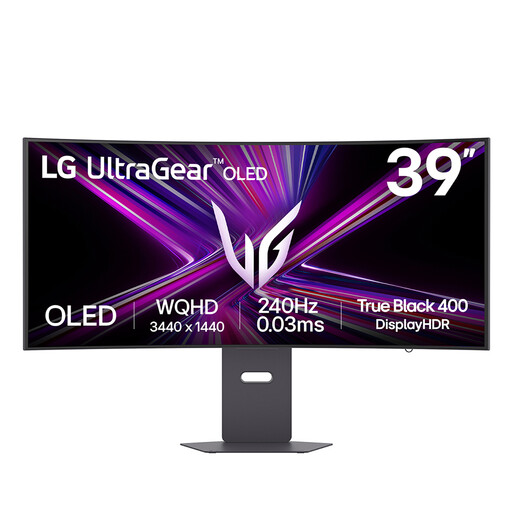 No image available
Consider the 39-inch format only after comparing the stand-equipped dimensions with your available desk space. The title specifies 240 Hz; confirm your intended display mode and read the exact model's OLED care guidance for long sessions.
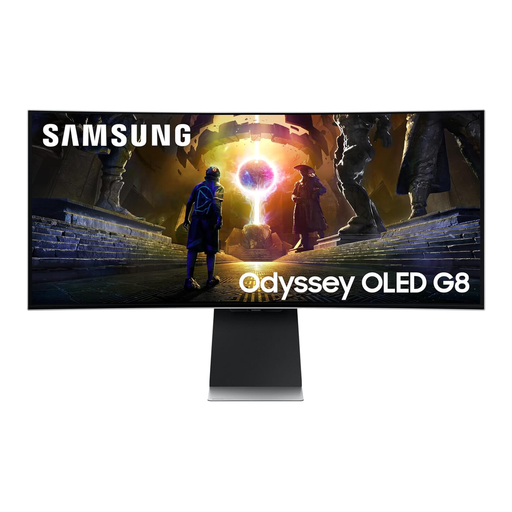 No image available
Samsung UK describes this model's OLED Glare Free treatment, making its coating relevant if room lights face the display. It has a listed 3440 × 1440 resolution and 175 Hz refresh; confirm how you will connect a headset and follow its OLED care guidance.
 No image available
This ultrawide format is worth considering if you want space for a cockpit interface. The title specifies 200 Hz and two HDMI and two DisplayPort 1.4 connections; check the refresh mode supported by your chosen connection, the stand footprint and whether its audio output suits your headset setup.
 No image available
Consider this 34-inch format if it suits the desk space you can set aside for an ultrawide. Check the exact stand dimensions, glare treatment and private-audio connection, as well as the display mode your game and computer can use.
No: its wider format is useful to investigate when game view and interface space are priorities, but the stand must fit your desk. BenQ lists the EX3410R at 795.7 mm wide and 269.7 mm deep with its stand; measure your space against the dimensions of whichever model you choose.
Look for a named certification tier on the exact model rather than treating every HDR label alike. VESA distinguishes DisplayHDR certification from similar-looking wording such as “HDR-400”; compare named tiers only with their stated conditions in mind.
You can consider OLED, but prolonged static, high-contrast imagery requires care. ASUS warns of image-persistence risk and describes Screen Saver and Logo Brightness controls for compatible ROG OLED monitors; read and follow the guidance for the exact model you buy.
Plan to use a headset when someone else is sleeping or studying, rather than relying on monitor speakers. BenQ lists a headphone jack on the EX3410R; for any other monitor, confirm whether the headset should connect to the display, computer, console or another audio device.