For a PC moon-landing or space simulation, choose a 21:9 ultrawide if a broader cockpit view matters most; choose a 4K 16:9 display if terrain and interface detail take priority. Check that your simulator supports the chosen format and that your PC, monitor input and cable can deliver the resolution and refresh rate you want. For dark scenes, compare the exact display and HDR specifications rather than relying on an HDR label alone.
Who these monitors suit
PC space-sim immersion seekers
If a wider view of the cockpit and surroundings is your priority, consider a 21:9 monitor after checking that your PC game supports ultrawide output. RTINGS notes that supported games can show more of their surroundings on an ultrawide than on a standard 16:9 display.
Detail-first lunar explorers
If terrain definition and readable instruments matter more to you than horizontal width, compare a 4K 16:9 display with an ultrawide. Check how your PC handles your intended game and settings at 4K before choosing a high-refresh model.
VA ultrawide shoppers
If you want a curved 3440 × 1440 format without making OLED a requirement, compare VA models by their exact inputs, refresh-rate limits and HDR specifications. The Dahua model listed by Joybuy, for example, has different refresh-rate limits over DisplayPort and HDMI.
What matters when choosing
Decide whether the landing view or fine detail matters more to you, then check the simulator and connection path before giving a high refresh-rate figure much weight.
| Concern | What to check | Who this matters to |
|---|
| Wider simulation view |
Check for 21:9 output in your PC simulator and compare the screen size with your desk space. RTINGS says supported ultrawide games can show more surroundings than standard 16:9 games. |
I want to see more around the cockpit during a simulated landing, provided my game uses the wider format. Around 40% of consumers put that broader view first. |
| Terrain and instrument detail |
Compare 3840 × 2160 with 3440 × 1440 and check how your PC runs the intended game at the chosen resolution. RTINGS identifies 4K as an option for more detailed games. |
Small interface elements and terrain definition matter more to me than extra width, so I would rather assess a 4K 16:9 screen. For around 30% of consumers, detail is the primary concern. |
| Motion at changing frame rates |
Check the monitor and graphics card for a compatible variable refresh rate (VRR) path, then check input and cable limits rather than relying on the headline refresh rate. |
When a demanding scene changes my frame rate, I care most about how motion looks during the approach. Smoothness comes first for around 20% of consumers. |
| VA ultrawide specifications |
Check the exact panel and HDR specifications, plus refresh-rate limits for each input. Joybuy lists the Dahua DHI-LM34-E330CA at 3440 × 1440 and up to 200Hz over DisplayPort 1.4, versus 100Hz over HDMI 2.0. |
I want the 21:9 format without choosing OLED, but the connection limits and dark-scene specifications still need to suit my setup. Around 10% of consumers make that distinction their main concern. |
Buying pitfalls
-
Choosing by the headline refresh rate alone
A monitor’s available refresh rate can depend on its input. Joybuy lists the Dahua DHI-LM34-E330CA at 3440 × 1440 and 200Hz through DisplayPort 1.4, but 100Hz through HDMI 2.0.
Match the monitor input, graphics-card output and cable to the resolution and refresh rate you intend to use. Check the HDR and VRR combination separately if those features matter to you.
-
Assuming a console will use the full ultrawide screen
RTINGS says gaming consoles do not support ultrawide aspect ratios. A 21:9 screen chosen for PC simulation therefore may not give a console game the same wide view.
If a console is part of your setup, check its supported output and how the monitor displays a 16:9 image before choosing an ultrawide.
-
Treating every HDR label as the same picture quality
An HDR label alone does not establish how a monitor will display a dark lunar scene. VESA distinguishes DisplayHDR True Black as a standard for emissive displays; that does not make other HDR labels interchangeable with it.
Compare the exact certification, panel technology, brightness and black-level information for each model, along with reflection handling where it matters in your room.
-
Using a game’s minimum PC specification as a refresh-rate promise
Minimum requirements for running a game do not establish its frame rate at 3440 × 1440 or 4K. Roberts Space Industries says Star Citizen performance and stability can vary with in-game location, server population, background applications and network conditions.
For your own simulator, look for performance information relevant to your graphics card, target resolution and settings before prioritising a high-refresh monitor.
Relevant brands to consider
ASUS ROG
The ASUS ROG Swift OLED PG34WCDN is a 34-inch ultrawide OLED option for a PC setup centred on a wider simulation view.
- ASUS specifies 3440 × 1440, 360Hz and a 0.03ms grey-to-grey response time for this model; the PC and connection still need to support the mode you intend to use.
- ASUS describes model-specific OLED panel-care features and a three-year warranty. Check the applicable warranty terms rather than assuming every OLED model has the same cover.
LG UltraGear
LG’s cited UltraGear models illustrate two distinct choices: a 34-inch 21:9 OLED ultrawide and a 31.5-inch 4K dual-mode OLED display.
- LG specifies its 34GS95QE-B at 3440 × 1440 and 240Hz, while its 32GS95UE-B offers a 4K 240Hz mode and an FHD 480Hz mode. Those modes address different priorities rather than establishing one format as better for every simulator.
- LG marks the exact 32GS95UE-B model discontinued on its UK page. Check the identity and specifications of any current listing or successor before using it as a 4K purchase candidate.
Samsung Odyssey
Samsung specifies the 34-inch Odyssey OLED G8 G85SD as a 3440 × 1440 ultrawide OLED model with a 175Hz refresh rate.
- Samsung describes an OLED Glare Free treatment for managing external-light glare; assess whether its reflection handling suits your room.
- Samsung’s stated 0.03ms grey-to-grey response time is based on its own test conditions, and input-source performance can affect refresh and response behaviour. It is not an independent comparison with other monitors.
Joybuy ultrawide monitor choices
These monitors are choices for a wider PC simulation setup, spanning OLED and VA models. They do not represent the 4K 16:9 route: if fine detail is your priority, keep that format in your comparison before choosing from the ultrawides below.
 No image available
LG UltraGear 34GX900A-B 34-inch OLED WQHD 240Hz monitor
Consider this 34-inch OLED model if your priority is a wider PC simulation view. Check that your simulator supports the format and that your PC output, chosen input and cable can deliver the refresh rate you want.
OLED screens also warrant attention to the model’s screen-care guidance when you use static interface elements for extended periods.
View on Joybuy
 No image available
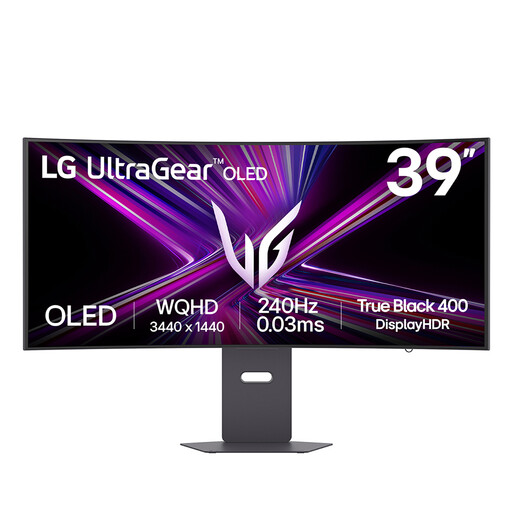
LG UltraGear 39GX900A-B 39-inch OLED QHD 240Hz monitor
The 39-inch screen may suit a desk setup where a larger simulation display is the priority. Confirm its native resolution, the space it needs at your viewing distance and support for the intended game format.
Its title specifies OLED and 240Hz; check the monitor input, graphics-card output and cable for the mode you plan to use.
View on Joybuy
 No image available
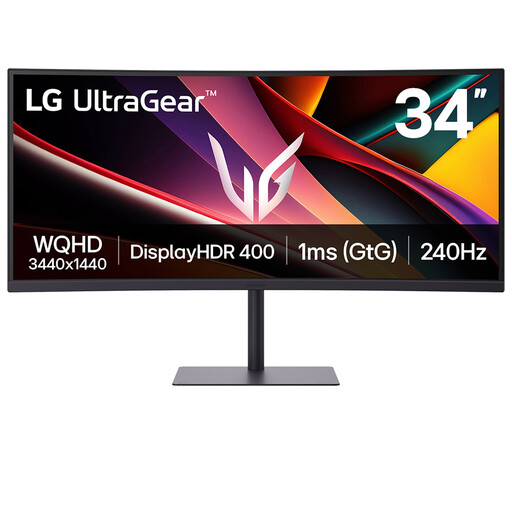
LG UltraGear 34G630A-B 34-inch VA WQHD 240Hz monitor
Consider this VA model if you want a 34-inch gaming screen without making OLED a requirement. Its title specifies WQHD and 240Hz, but the panel type and refresh-rate figure alone do not establish how dark scenes will look.
Check your simulator’s display-format support and the connection required for your intended resolution and refresh rate.
View on Joybuy
 No image available
Lenovo R34w-30 34-inch UWQHD gaming monitor
This 34-inch UWQHD model is worth comparing if screen width is more important to your simulation setup than choosing OLED. Confirm the intended game format and the monitor’s resolution and refresh-rate combination over the input you will use.
For dark scenes, assess the exact panel and HDR specifications rather than treating an HDR label as a picture-quality result.
View on Joybuy
 No image available
Dahua 34-inch curved 3440 × 1440 VA 200Hz monitor
This curved VA monitor suits a comparison centred on the 3440 × 1440 PC simulation format without an OLED requirement. Joybuy lists 200Hz at that resolution through DisplayPort 1.4, versus 100Hz through HDMI 2.0, so check which connection your PC will use.
Check VRR compatibility if changing frame rates matter to you. An HDR10 label alone does not establish the result you will see in dark scenes.
View on Joybuy
Frequently asked questions
Should I choose a 21:9 ultrawide or a 16:9 4K monitor for a simulated moon landing?
Choose 21:9 when a broader view in a supporting PC game matters most; choose 4K 16:9 when detail and conventional framing matter more. RTINGS notes that ultrawides can show more surroundings than standard 16:9 displays in supported games, while 4K can suit more detailed games. Check your simulator and PC before deciding.
Will a console game fill a 34-inch ultrawide screen?
Do not expect native 21:9 console gaming: RTINGS says gaming consoles do not support ultrawide aspect ratios. Check how the particular monitor displays your console’s supported 16:9 output if you intend to share the screen with a PC.
Will my PC run a 3440 × 1440 or 4K monitor at its maximum refresh rate?
Not automatically: the available mode depends on the monitor input, graphics-card output and cable, while the game’s frame rate depends on your PC and settings. Joybuy lists the Dahua DHI-LM34-E330CA at 3440 × 1440 and 200Hz over DisplayPort 1.4 but 100Hz over HDMI 2.0. Check performance for your own simulator before choosing primarily by refresh rate.
Does an HDR label tell me how dark space scenes will look?
No: compare the exact HDR certification, panel technology, brightness and black-level information for the model. VESA’s DisplayHDR True Black standard addresses emissive displays, but its name is not a substitute for checking an individual monitor’s specifications and viewing conditions.


