What matters when choosing?
Choose the screen format around the trainer’s available space, then check whether your computer and connections can drive it. A 32-inch 16:9 display offers another size to assess; it is not a substitute for measuring the actual model.
27-inch 16:9
Consider it when: the display must fit a narrow position or move between the trainer and a desk.
Trade-off: the 16:9 format has less horizontal image space than a 21:9 ultrawide; check each model’s resolution and full dimensions.
32-inch QHD 16:9
Consider it when: you want a larger screen while retaining a 16:9 format, and its measured footprint fits your setup.
Trade-off: it does not provide the horizontal image space of a 21:9 display, and its refresh modes still depend on the PC and connection.
34-inch curved 21:9
Consider it when: you have lateral clearance and value a wider virtual landscape or room for information beside the ride view.
Trade-off: a 3440 × 1440 model needs more space and places greater demands on the computer than lower-resolution options. Zwift notes that lower-end GPUs may affect visual quality and frame rate.
| Concern | What to check | Who this matters to |
|---|
| Fit and mounting |
Measure available width, stand depth and clearance around the bars and fan. For an arm or wall mount, check the VESA pattern, weight rating and supporting structure. |
I need to move safely around the trainer without the screen, stand or cables getting in the way. Around 33% of consumers put physical fit and mounting first. |
| Wider ride view |
Compare aspect ratio and actual screen width, not diagonal size alone; check that the PC supports the chosen native resolution. |
When the ride view is my main focus, I want more room across the screen for the virtual route. Around 27% of consumers make that wider view their primary concern. |
| PC compatibility |
Check the GPU, video output and cable against the desired resolution and refresh mode. Zwift says GPU capability affects visual quality and frame rate. |
If I use one PC for cycling and other games, I need a display mode the machine can actually drive. For around 27% of consumers, compatibility comes first. |
| Long-session panel care |
For OLED, read the exact model’s care guidance and warranty terms for prolonged static on-screen elements. |
My workout dashboard may stay visible throughout a ride, so I want to understand how to care for the panel. Around 13% of consumers prioritise that long-session concern. |
Joybuy monitor choices
These monitors cover 27-inch options for assessing a tighter trainer position, a larger curved QHD option, and 34-inch ultrawides for setups with more lateral room. Compare each model’s full footprint and your PC’s output before choosing.
 No image available
MAG 274QP QD-OLED X24 27-inch monitor
Consider this 27-inch option if the trainer area calls for a smaller screen format; measure its full footprint at the intended position.
The product title specifies a 2560 × 1440 QD-OLED panel, 240 Hz and Adaptive-Sync. Check the PC’s intended output mode and the model’s OLED care guidance.
View on Joybuy
 No image available
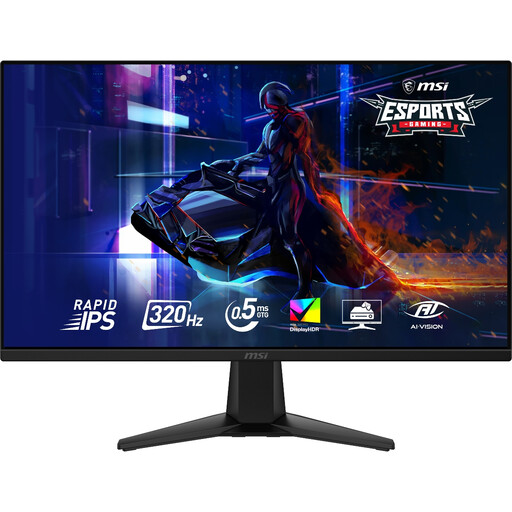
MAG 275QF X32 27-inch Rapid IPS monitor
This 27-inch model is another option to measure against a narrow trainer position, particularly if you also use the screen for PC gaming.
Its title specifies 2560 × 1440, a Rapid IPS panel, 320 Hz and Adaptive-Sync. Check the supported PC output mode and whether its positioning range works for your setup.
View on Joybuy
 No image available
LG UltraGear 34GX900A-B 34-inch OLED monitor
Consider this curved ultrawide if you have room for a wider ride view and a PC suited to its native resolution.
LG specifies a 21:9, 3440 × 1440 OLED display with an 800R curve and 240 Hz. Measure the complete footprint and check the exact model’s OLED care guidance.
View on Joybuy
 No image available
Dahua 34-inch 3440 × 1440 curved VA monitor
This 34-inch ultrawide is for a trainer position with sufficient lateral clearance; check the full stand footprint before placing it.
Its title specifies a curved 3440 × 1440 VA panel, 200 Hz, HDMI and DisplayPort connections. Confirm the refresh mode available through your chosen PC port and cable.
View on Joybuy
 No image available
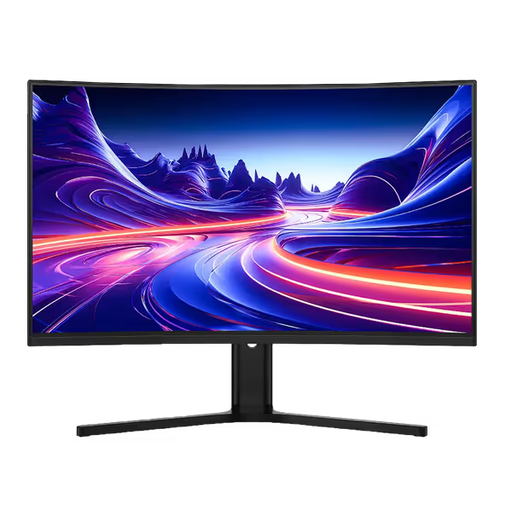
Dahua 32-inch 2560 × 1440 curved VA monitor
Consider this larger QHD screen if a 27-inch display feels too small at your riding position, provided its complete footprint fits.
Its title specifies a curved VA panel, 2560 × 1440, 180 Hz, HDMI and DisplayPort connections. Check the PC’s supported output mode before relying on the maximum refresh rate.
View on Joybuy
Common questions
Will 240 Hz make virtual hill climbs better than 144 Hz or 165 Hz?
Not automatically: the PC, connection and selected resolution must support the refresh mode you want to use. Microsoft says a higher refresh rate can reduce motion blur and screen tearing in gaming, but for a trainer setup, check comfortable placement and stable output before treating maximum refresh rate as the deciding specification.
What should I check before mounting a screen near my trainer?
Measure the screen position and clearance around the bars, fan and cables, then check the monitor’s mounting pattern and weight against the mount and supporting structure. Dell specifies a 100 × 100 mm VESA interface for the G2722HS, but that does not establish compatibility for another monitor or mount.
Can I use an OLED ultrawide with a persistent workout dashboard?
You can consider one, but panel care and the exact model’s warranty terms should be part of the decision. ASUS ROG warns that prolonged static, high-contrast images can cause image persistence or burn-in on OLED displays; follow the applicable protection and cleaning guidance for the monitor you choose.
What should I do with an old monitor in the UK?
Check an appropriate local collection or retailer recycling route for electrical equipment before disposing of it. GOV.UK describes the UK’s waste electrical and electronic equipment rules as intended to reduce disposal through incineration or landfill; confirm which service accepts monitors in your area.


